
Based on international media, public records and personal experience.
👑 Mswati III became king at 18. He was the youngest reigning monarch in the world at the time. He married his first wife on the same day as his coronation.
👑 Eswatini is an absolute monarchy — the king makes all decisions, answers to no parliament, no courts, and no opposition. By tradition, the Queen Mother serves as joint head of state, known as Ndlovukazi or “She-Elephant.” She is seen as the spiritual head of state, while the king handles all practical governance. The current Ndlovukazi is Queen Ntfombi, who has ruled alongside her son since 1986. A Swazi saying captures the relationship: “A king is king through his mother.”
👸 Traditionally, wives are selected through the Reed Dance ceremony, where tens of thousands of unmarried women participate, though not always, as several controversies have shown. The tradition was established by his father Sobhuza II in the 1940s, who used it to end up with 70 wives, 210 children and more than 1,000 grandchildren. His reign of 82 years and 254 days remains the longest verifiable reign of any monarch in recorded history.
🗺️ On his 50th birthday in 2018, the king announced, without prior notice or parliamentary debate, that the country would henceforth be known as Eswatini instead of Swaziland, reverting to its pre-colonial name. One practical reason given was that Swaziland was often confused with Switzerland.
🎗️ Eswatini has the world’s highest HIV infection rate. In 2001, Mswati decreed that women under 18 were forbidden from having sex for five years. Two months later, he took a 17-year-old as his eighth bride – paying a fine of one cow for breaking his own rule.
🚫 Political parties are banned. Candidates can only run as individuals. The king appoints two-thirds of senators and ten deputies himself. The media is muzzled and journalists have been detained and tortured.
😈 When pro-democracy protests erupted in 2021 — with crowds demanding multiparty elections and basic political freedoms — the king had a simple explanation: the demonstrators were “satanic.”
🚗 In 2019, 19 Rolls-Royces and around 120 BMWs were delivered to the country as gifts for his wives. After public outcry, the king banned photography of his cars.
🛍️ In 2012, some of his wives flew to Las Vegas for a shopping trip — 66 people staying in 10 villas at $2,400 per night each. That same year, the king delivered a religious sermon warning his subjects against the love of money.
💍 In September 2024, Mswati married his 16th wife, Nomcebo Zuma, the 22-year-old daughter of former South African president Jacob Zuma. Her father had opposed the marriage from the start. After just three months, Nomcebo left the palace and returned to South Africa, having gone months without seeing her husband. A royal delegation was sent to negotiate her return, but Jacob Zuma refused to even meet them.
⌚ At his 50th birthday celebrations, the king wore a suit studded with diamonds — weighing 6 kg — and a $1.6 million watch on his wrist. Meanwhile, teachers were warning that schoolchildren might go hungry because the government could not afford to feed them.
🎉 At the April 2026 celebrations marking his 58th birthday and 40th year on the throne, citizens, companies and institutions gifted the king over 18 million emalangeni in cash and more than 250 cattle — a tradition known as “tetfulo,” or tribute offerings.
📰 In the days leading up to the 2026 jubilee, local newspapers were noticeably thicker than usual, packed with congratulatory messages, and radio programmes were filled with lengthy royal tributes. The king’s birthday is, after all, a national public holiday.
✈️ Eswatini is Taiwan’s only diplomatic ally on the African continent. When Taiwan’s president planned to attend the jubilee celebrations in April 2026, China pressured Seychelles, Mauritius and Madagascar to revoke overflight permits for his aircraft — the first time in history a Taiwanese president had to cancel an entire foreign trip due to airspace denial. During our visit, the story was all over the local papers — nobody knew how or if he would make it. Two weeks later, he arrived anyway, having flown a long detour over the southern Indian Ocean to avoid Chinese-friendly airspace. China called him a “rat” for his “skulking” visit.
💸 According to The Nation Magazine, King Mswati’s salary for 2026/27 was increased by R50 million. This in a country where, according to the World Bank, over half the population lives below the poverty line.
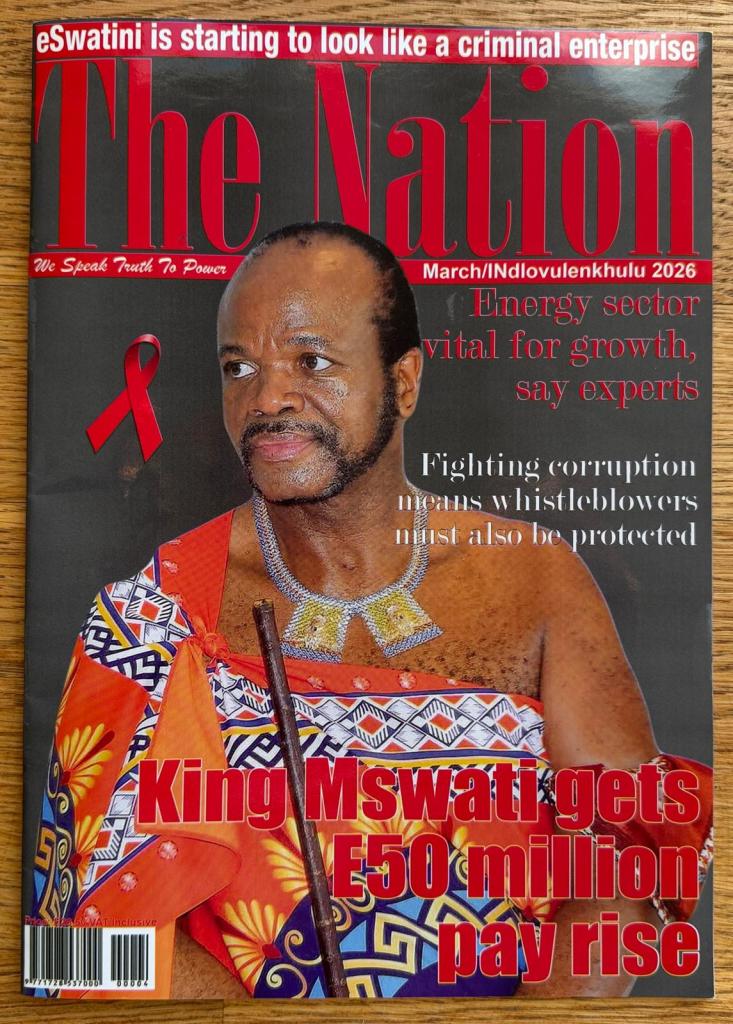
🤐 The royal budget cannot be debated in parliament — doing so would be considered a challenge to the absolute monarch.
🤝 The newspapers and headlines paint a vivid picture of royal excess — and there was certainly plenty to read. But the Eswatini we experienced on the ground was something different altogether. Every single person we met was warm, helpful and welcoming, and beyond the headlines lies a country of rich culture and stunning nature. Whatever the politics, the hospitality was genuine.
Sources and further reading: Wikipedia – Mswati III · Wikipedia – Sobhuza II · Wikipedia – Umhlanga · Britannica · Al Jazeera · Mail & Guardian · Times Live · IOL · AllAfrica · Gulf News · Open Society Foundations · Swaziland News · Bona Magazine · Scrolla Africa · The Citizen · Reuters
 Exploring the Unexpected