
- Date of visit: April 15 2026
- Post office visited: Post Office in Jamestown
- Cost of sending postcard: £0.50
- Postcards available at: Post office, gift shops, museum shop, Longwood house
- Delivery time: will be updated
Saint Helena is a remote volcanic island in the South Atlantic Ocean, roughly midway between Africa and South America, best known as the place of exile of Napoleon Bonaparte.
Before any formal postal system existed, mail relied on passing ships. Letters were often left at agreed coastal locations, most notably at the so-called “dolphin stone,” where sailors would deposit and collect correspondence.
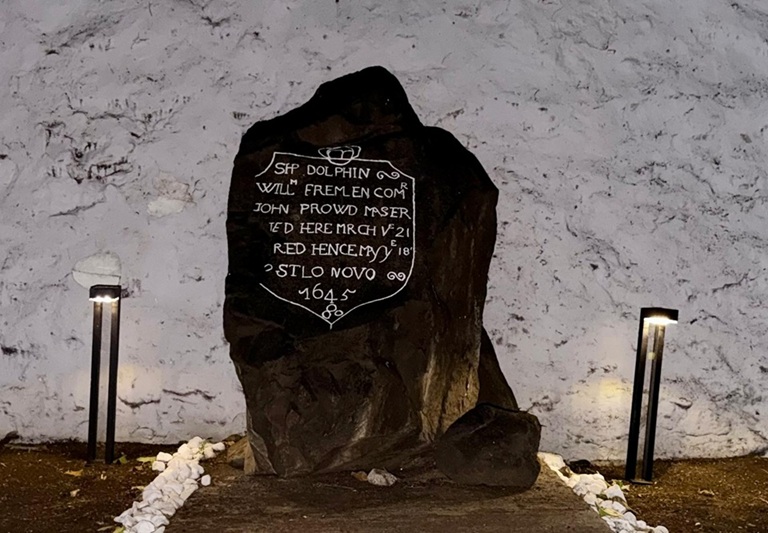
A more structured postal service began in 1815, when the island came under increased administrative importance. Saint Helena issued its first postage stamps in 1856 and developed its own postal identity despite its isolation.
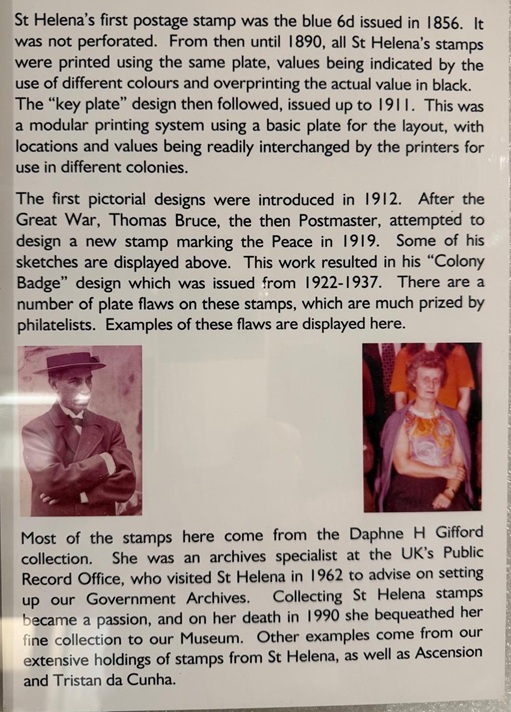
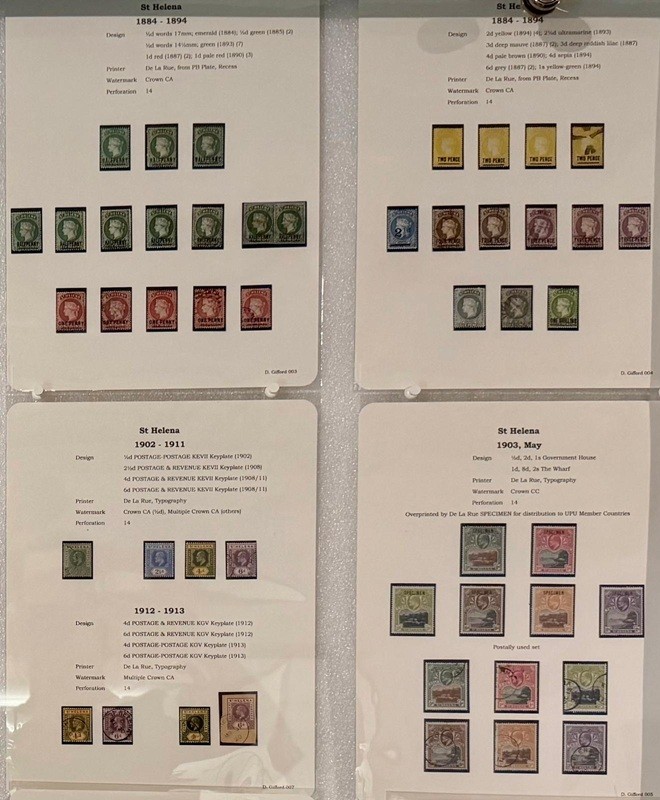
Conditions, however, were not always ideal. Among the more unusual challenges were white ants—termites—which were known to damage stored mail and postal records.
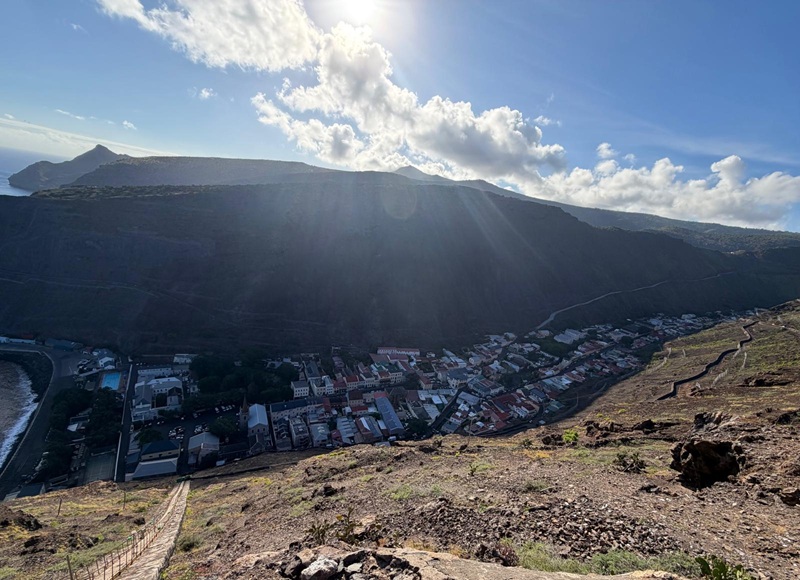
Our personal experience in Saint Helena
Arriving on the island, I had no idea how much trouble termites had caused here in the 19th century—eating through the foundations of many wooden buildings and even a Bible in the church. What we also lacked clear information about was sending mail. We had written in advance, asking about stamp validity and postal routes, but received no reply.
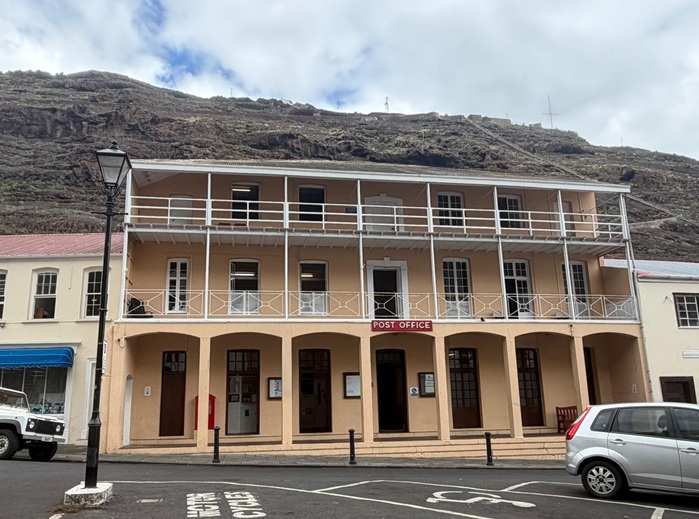
The post office in Jamestown is located in a modest Georgian-style building along the main street. The building had not always served as a post office, but for us it was certainly one of the most beautiful on the island. But it was closed—only because it was Saturday evening.
The notices on the doors suggested that the building serves a broader role. Alongside postal information, there were customs instructions, police reminders about licence renewals—covering everything from driver’s licences to dogs and even firearms—and public marriage notices, complete with names, professions, marital status, and photographs—none of which helped with sending a postcard that evening.
On Monday at nine, when the post office opened, we were among the first in line. We had managed to obtain some Saint Helena stamps from the European philatelic secondary market, but not nearly enough. The local selection of stamps was extensive—there were beautiful issues featuring animals and birds. There were also well-known figures, including Queen Elizabeth II, Napoleon, and Princess Anne, who visited the island in 2002.
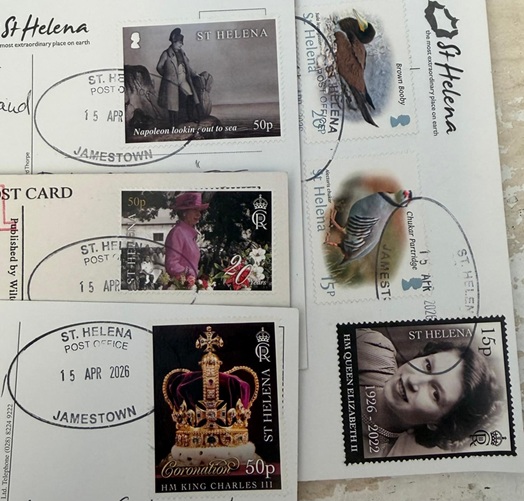
It became clear that stamps issued before 2008 were no longer valid, but since we already had some, we used them on our postcards as additional decoration. The postal rates listed on the website were valid—£0.50 worldwide. When we mentioned that we would like to hand-cancel our stamps ourselves, we were simply handed both the date stamp and an “Air Mail” marking.
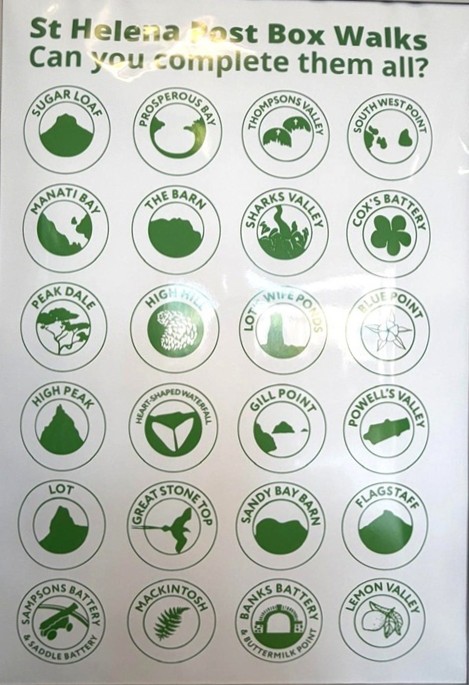
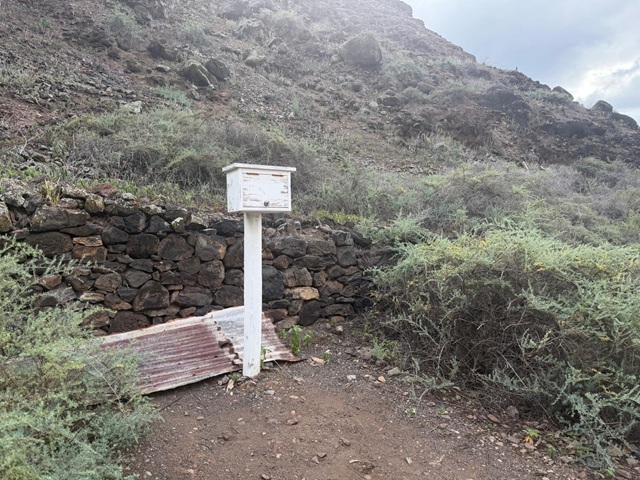
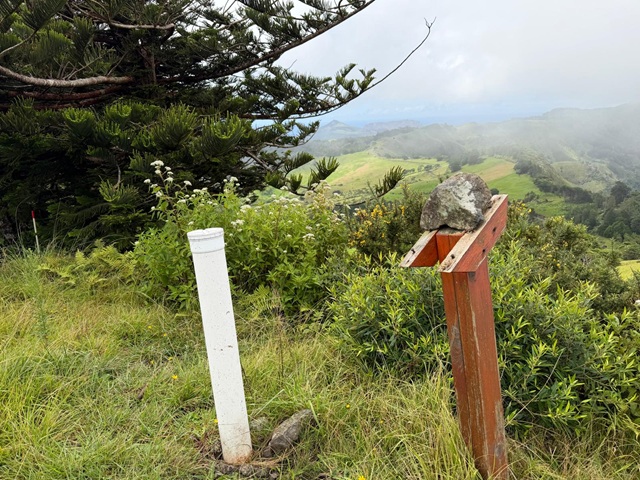
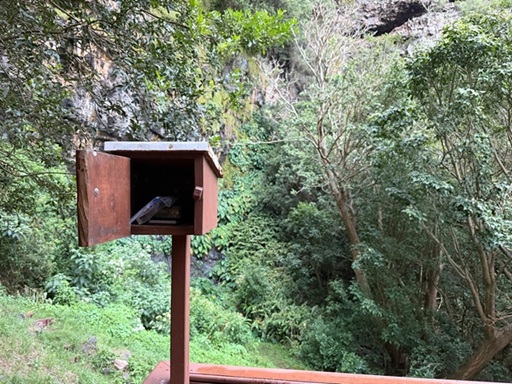
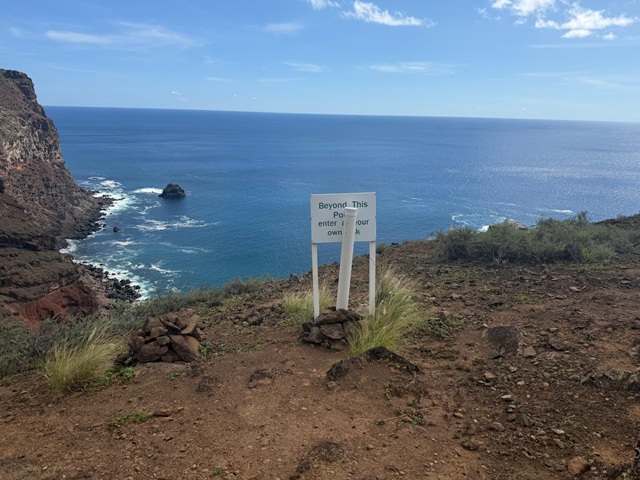
The island had one more postal surprise in store for us, especially for me, as I also enjoy hiking. There are 21 Post Box Walks on Saint Helena. They were established in 2002 by the St Helena Nature Conservation Group (SNCG), the St Helena National Trust (SHNT), and the Q5 Committee. The island’s highest point reaches 818 metres, and most routes descend towards the coast before climbing back up, typically involving 300 to 700 metres of elevation. Even when the distance was only a few kilometres, they tended to be demanding.
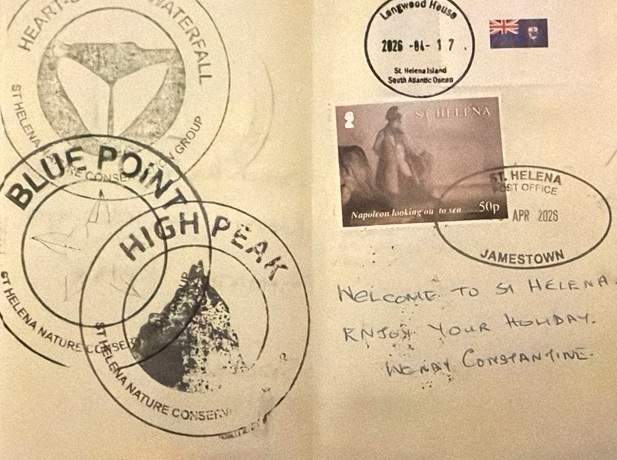
At the end, however, there was always a reward: a postbox or a pipe containing a stamp, an ink pad, and a notebook where you could leave your name and a comment. Time on the island was limited, so I managed to complete five of them—and was quite pleased with that.
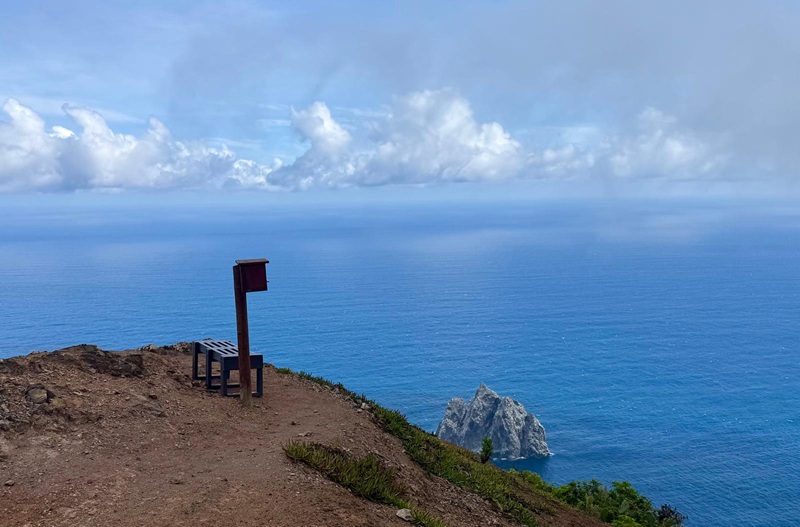
And of course, every day the post office was open, we found ourselves there, sometimes briefly, sometimes for longer. As the week was coming to an end, we said goodbye to the postal staff. The flight from Johannesburg operates only once a week, and it was time to leave. Or at least so we thought.
While waiting at the airport, we learned that due to strong winds the plane would not land and had returned to Johannesburg. The island was not ready to let us go. For how long, we did not know at the time.
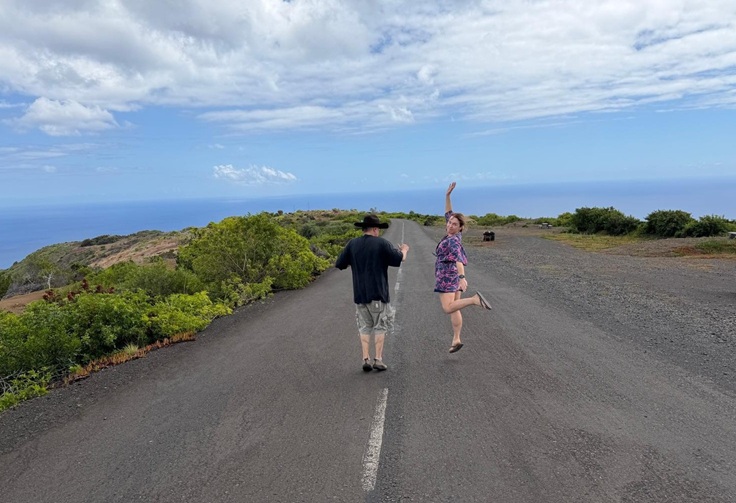
When the plane finally did land and depart two days later, we asked at the post office when our postcards would leave the island. The answer was uncertain: not before May, hopefully in the first half of the month.
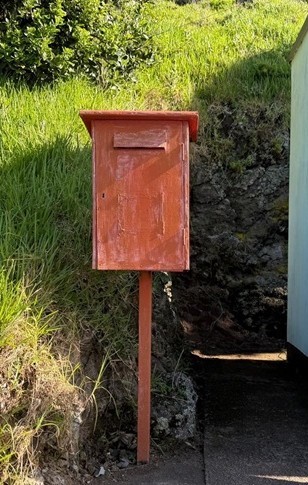
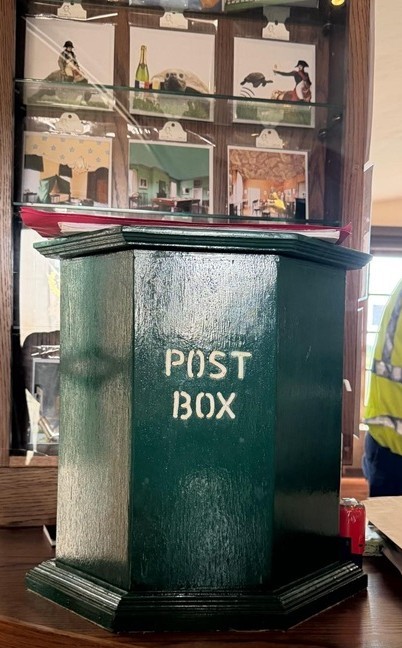
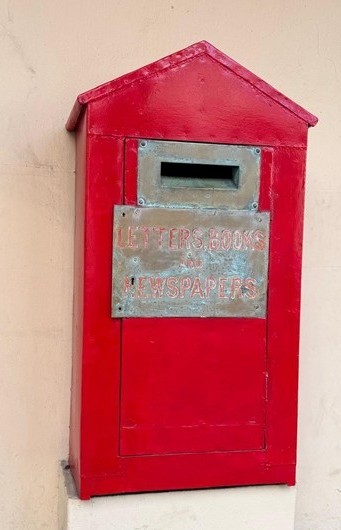
Now all that remains is to wait for the postcards to reach their destinations. Patience is required, as this depends not only on people but also on nature.
If you would like to read more of my observations from the island, I have written them here: https://nexttrip123.com/2026/04/23/my-observations-from-saint-helena/
Something to read while waiting.
If you’d like to read future entries from my Post Office Diaries, you can subscribe here.
 Exploring the Unexpected
This one made me smile! I love the postbox hike photos…and of course the chance of when your mail will arrive! Another wonderful adventure 🙂
LikeLike