
- Date of visit: February 19, February 23, March 02, 2009
- Post office visited: Stanley Post Office in Falkland, South Georgia Post Office, Villa Las Estrellas Post Office on King George Island (South Shetland Islands)
- Cost of sending postcard: 0,72 GBP and 500 CLP
- Postcards available at: Post Offices
- Delivery time to Estonia: 14 days from Falkland, 30 days from South Georgia, 26 days from King George Island
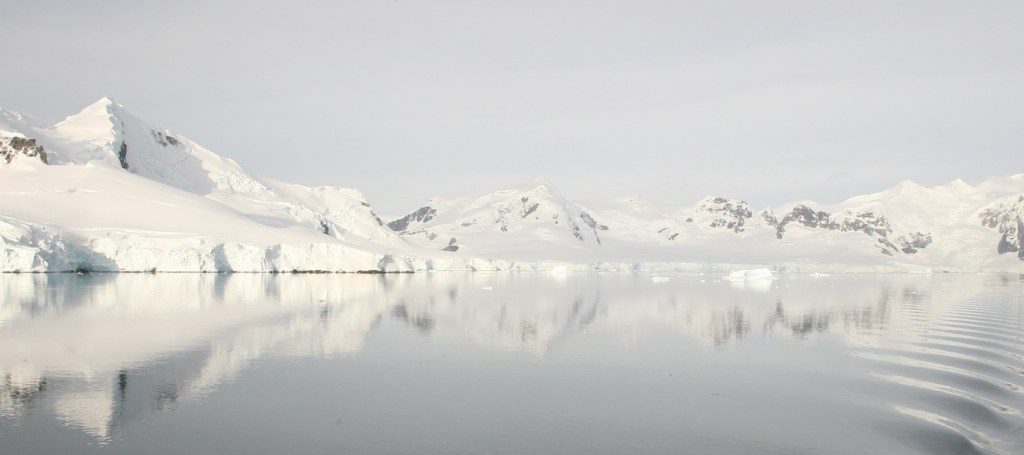
Antarctica is far from just a frozen wasteland, but a world in itself — vast, silent, and breathtakingly remote, yet bound together by international cooperation. Covering some 14.2 million square kilometres, almost entirely within the Antarctic Circle, it holds about 70% of the planet’s fresh water, locked beneath layers of ice.
Although several nations once laid overlapping territorial claims, the 1959 Antarctic Treaty set those disputes aside, declaring the continent a place dedicated to peace, science, and collaboration. Today, more than 50 countries maintain over 70 research stations scattered across the continent and surrounding islands.
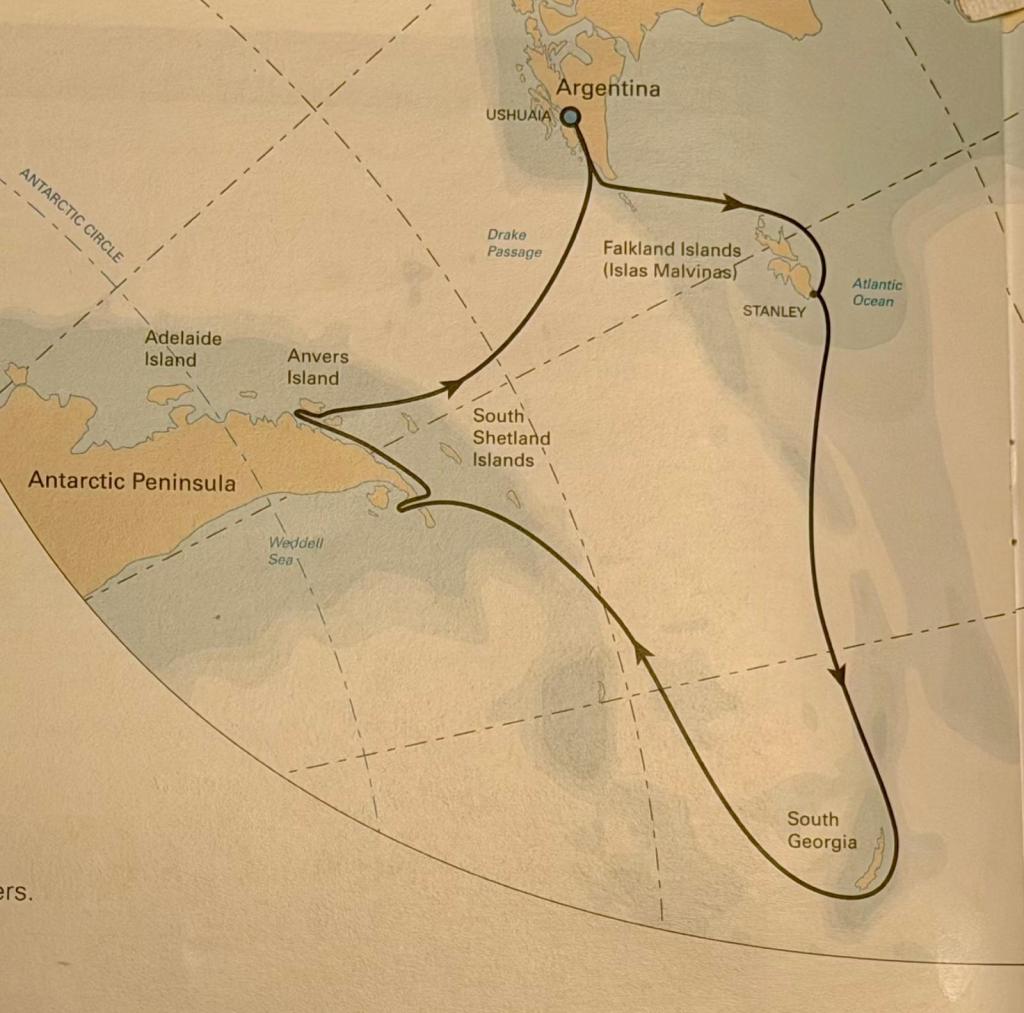
Geographically, nearby territories like the Falkland Islands, South Georgia, and King George Island lie outside the Antarctic mainland, yet they are part of the greater Antarctic region. They serve as gateways to the frozen continent — and as home to some of the southernmost post offices on Earth, where mail is still stamped and sent from the edge of the world.
Three Post Offices and One Unfinished Journey
Our journey began in Tallinn, Estonia, travelling with the Albion Reisid toward the very edge of the world — through Argentina, from the capital Buenos Aires to Ushuaia, the southernmost city on Earth and the main gateway for ships heading to Antarctica. With a few small stops along the way, it took about a week to get there. The excitement was contagious, the group cheerful and curious, ready for adventure — even for me, though I already knew I wouldn’t be boarding the ship.
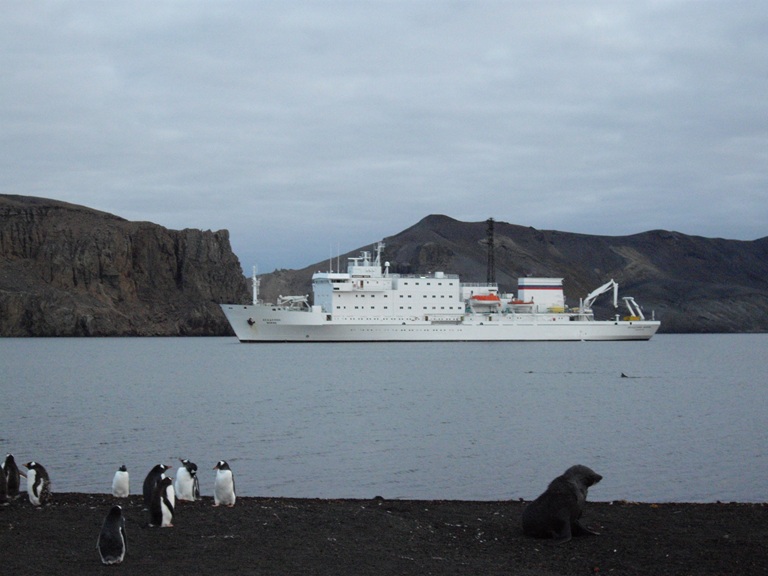
The expedition to Antarctica was operated by Quark Expeditions, aboard the Akademik Ioffe — a 111-metre Russian research vessel built in 1988, designed for ice navigation and the unpredictable moods of the Southern Ocean.
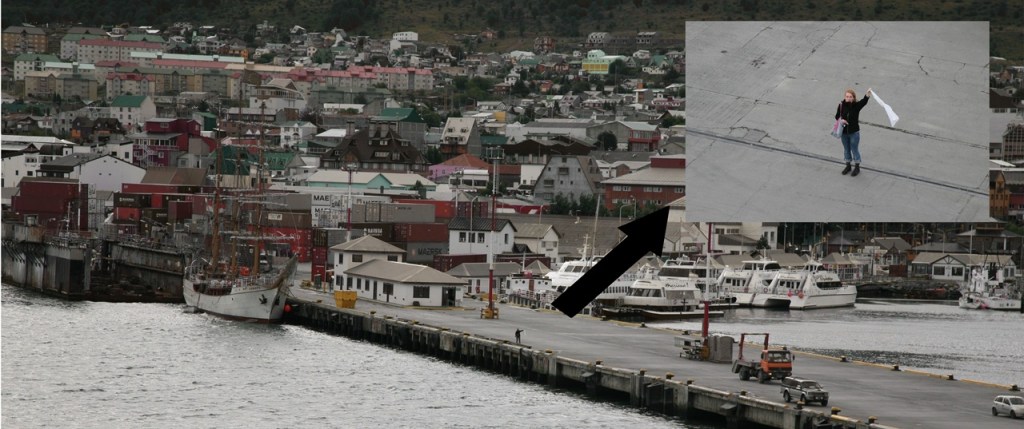
When the Akademik Ioffe cast off from Ushuaia that February morning, I was the only one left standing on the pier, waving. I had travelled all the way there with the group — but not to sail. The reason was simple: my ten-year-old daughter Kirke was waiting back home in Estonia, and the thought of being away from her for another 20 days, after already travelling halfway around the globe, was too much.
And, to be honest, I also had a terrifying fear of seasickness.
The crew even teased me, offering at the last moment to “just come along” as they released the lines — but I stayed behind. Watching the ship disappear into the soft grey of the Beagle Channel was both beautiful and hard — a quiet mix of longing and the lingering question of whether I had made the right choice after all.
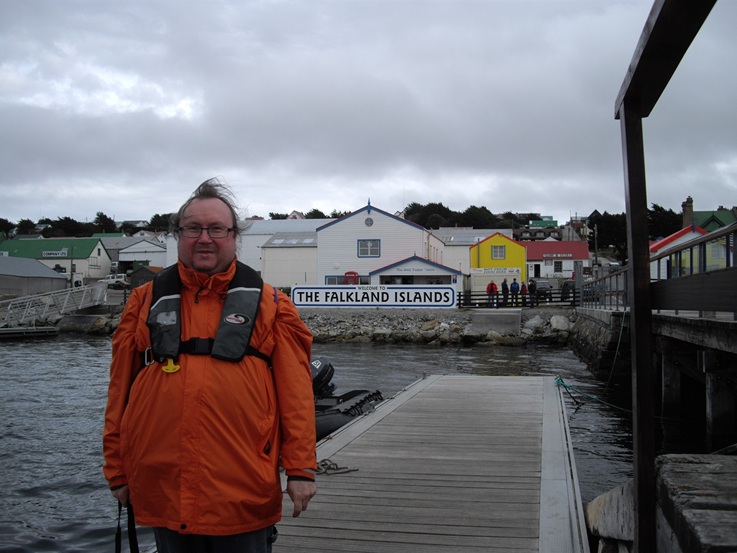
Among those on board was Andry, armed with seven thick volumes of Stephen King’s The Dark Tower — the perfect companion for the long, stormy evenings ahead.
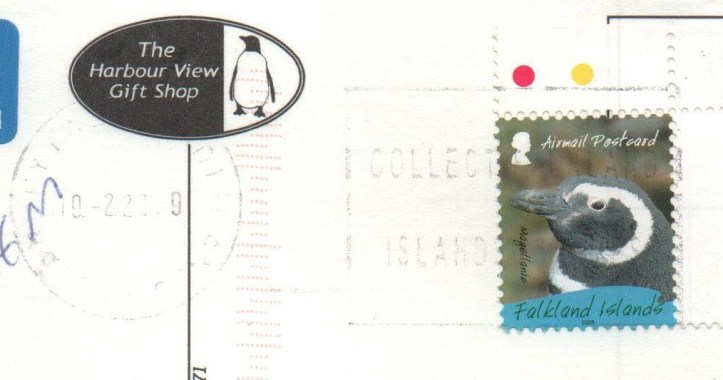
On the third day after leaving the Beagle Channel, the ship reached its first stop — Stanley, the capital of the Falkland Islands. Settled in 1843, Stanley is a small town of just over 2,000 people and the administrative centre of this British Overseas Territory. Postcards were sold both in souvenir shops around town and at the post office itself, which had a proper philately section — the Falklands issue their own stamps. A cheerful clerk sold postcards and stamps, and sending a card anywhere in the world cost 72 pence — the same price to this day.
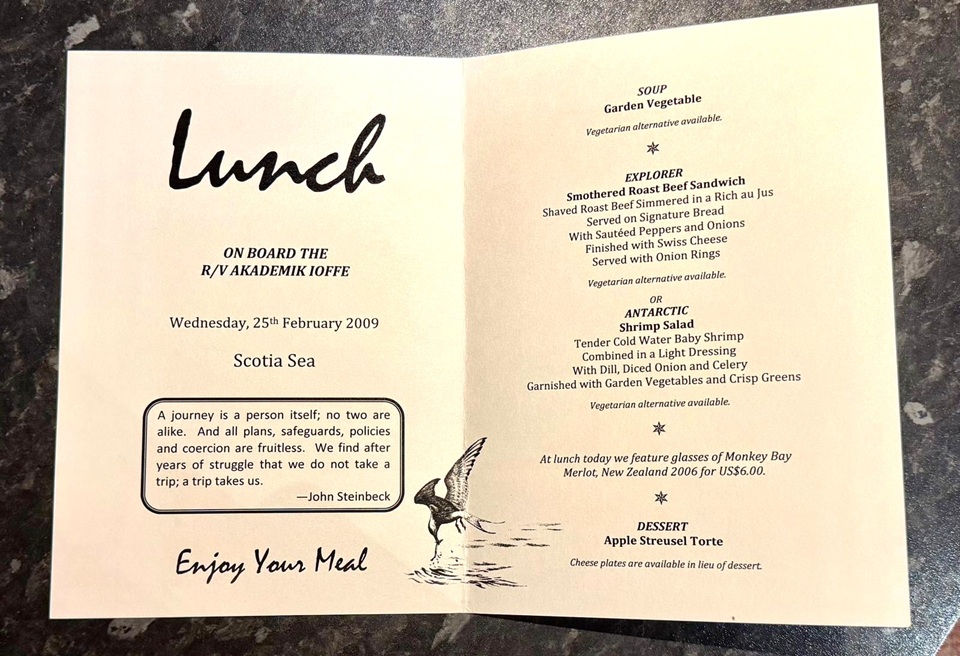
From there, the Akademik Ioffe set course for South Georgia, — a stretch of sea notorious for its fierce storms. During that leg, the waves rose to nearly eight metres, and for a couple of days the number of people showing up in the dining room dropped dramatically as many passengers succumbed to seasickness. The ship itself handled it all with steady grace, and Andry, miraculously, remained unaffected. The menus he later brought home were small works of art — each day’s meals accompanied by a thoughtful quote about travel or the human spirit.

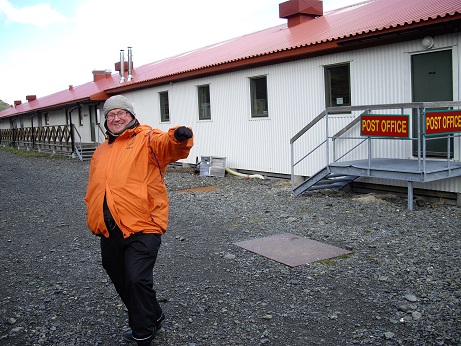
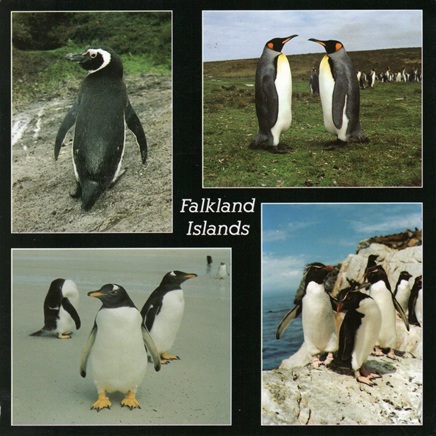
In Grytviken was the South Georgia Museum, and nearby the island’s post office and shop. It opens only when cruise ships arrive; otherwise, the settlement lies quiet, home only to a handful of scientists and government staff at King Edward Point. Like in the Falklands, the currency was the British pound, and the post office offered its own distinctive South Georgia stamps and postcards. Postcards sent from here first travels back to the Falklands, and only then onward to the rest of the world.
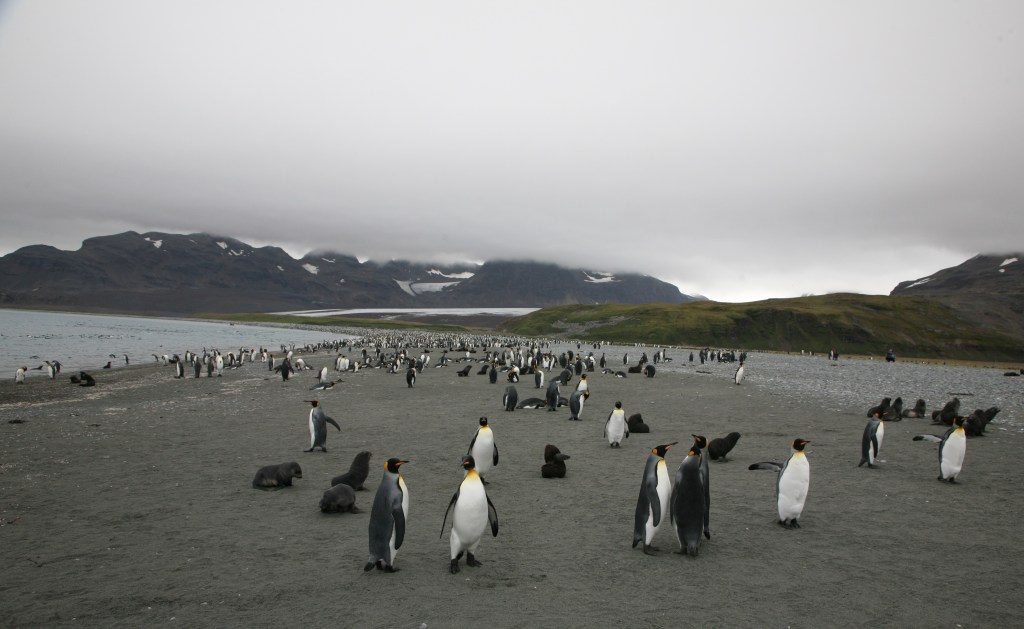
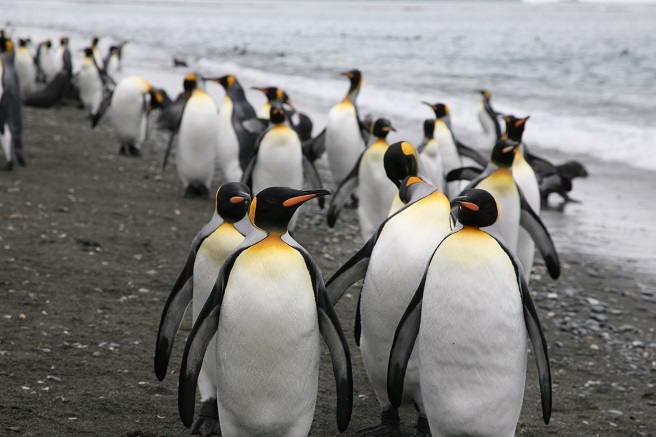
Getting to the post office was an adventure in itself — no roads, just a narrow path winding past dozing elephant seals who had no intention of moving. After mailing his postcards, Andry sat down on a rock to read his book, and soon a few curious penguins waddled over to see what the human was doing.
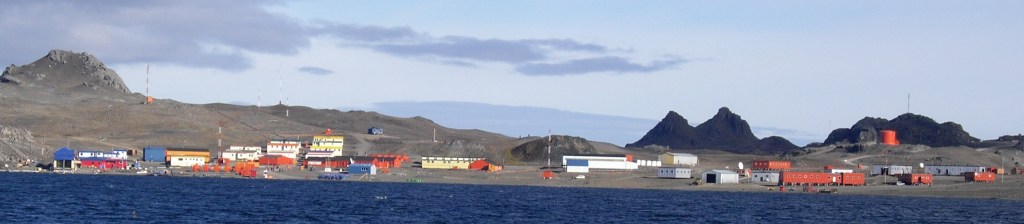
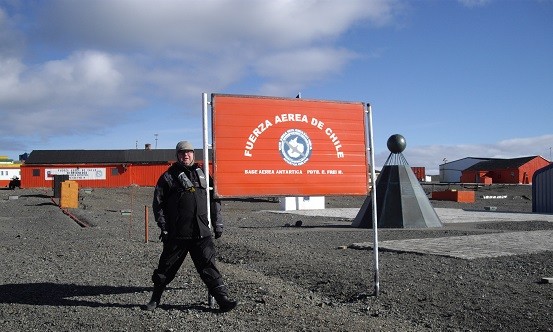
The last post-office stop of the voyage was on King George Island (Isla Rey Jorge — or Vaterloo, as it’s called in Russian), at Chile’s Base Presidente Eduardo Frei Montalva. The research station and post office, located in the small village of Villa Las Estrellas, sold Antarctica-themed postcards, while the stamps were the same as those used in mainland Chile. Since the research station and the village both belong to Chile, postage rates were in Chilean pesos — about 500 pesos to send a card. The cancellation mark, however, was unique — proudly stamped with the words “Antártica Chilena.” All outgoing mail is first routed through Punta Arenas, where it enters the regular Chilean postal system before continuing on to the rest of the world.

Just about 200 metres away stood Russia’s Bellingshausen Station — not an official post office, but said to have a small mailbox near Trinity Church, one of the world’s southernmost churches, reportedly permanently staffed by a priest.
The two bases are so close it would have been only a short walk between them, but the crew strongly advised against crossing onto the Russian territory — unless you were a citizen, you’d need a visa even here, at the end of the world.
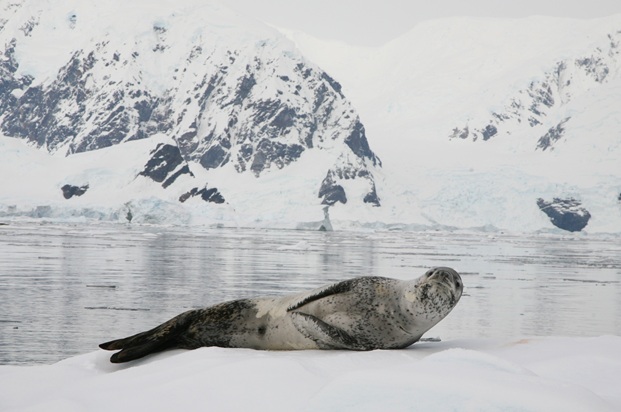
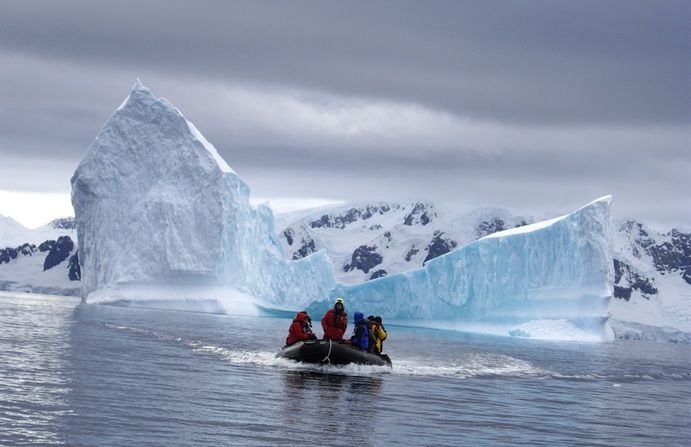
In the days that followed, the Akademik Ioffe made landings on the Antarctic Peninsula, where the travellers observed majestic birds, seals, and drifting icebergs before finally returning to Ushuaia — and from there, travelling once again through Buenos Aires all the way back to Estonia. Amid all this, Andry managed to finish reading all seven volumes of Stephen King he had brought along.
At that time, neither of us had yet heard of Postcrossing, so there was no travel mode to mark the cards — something we started using on our journeys later.
Andry arrived home before the postcards he had sent from Antarctica — carrying back a camera full of breathtaking photos and stories vivid enough to make me feel as though I had been there too, even while I spent that precious time at home with my daughter.
Bye for now — and thank you for travelling with us to the far south.
If you’d like to read future entries from this post office diary, you can subscribe here.
 Exploring the Unexpected
What an amazing story, yet again! It’s funny that you mentioned this as a pre-postcrossing adventure. I often think about all the places I went to before I joined…I could have sent so many cards in travel mode from “rare” countries! My only regret now is not sending more postcards to myself from those places either 😦
LikeLiked by 1 person
Even though we sent postcards home from almost every place we visited, I still know exactly what you mean! When I write about an old post office experience and can’t find a card in my own collection, I go to my sister’s place — we sent them one every time as well. They’ve decorated their hallway with our postcards, arranging them in frames with two to four cards each, and it looks truly creative. It’s very easy to find a postcard we once sent to their family there!
If you’d like, send me your address — I’ll send you a postcard from my next trip, outside the giveaway. That is, if we find a post office that’s open, manage to get postcards and stamps, and nothing unexpected happens along the way! 😉
LikeLiked by 1 person