
- Visit date: February 02 2024
- The visited post office: Ikeia Post Office, General PO Lagos Island, Philatelic Bureau.
- Cost of sending mail: 1500 (1,2 EUR) Naira Worldwide
- Postcard availability: Sheraton Hotel, Nike Art Gallery
- Postcard Delivery Times: registered postcards 3+ months, unregistered 1+ month. Unstamped postcards haven’t arrived jet.
The Basics Behind Nigeria’s Postal Service
Nigeria, the most populous country in Africa with a population of over 200 million, is bordered by Benin to the west, Niger to the north, Chad to the northeast, and Cameroon to the east and southeast, with its southern coast bordering the Gulf of Guinea, highlighting the importance of an effective postal service in this region.
Before formal post offices, local systems were used for communication, often relying on messengers and word-of-mouth. Then came the British, who established a more structured postal service that initially served mainly their own administrative and commercial needs. In the late 1800s, postal agencies appeared in places like Lagos, using stamps from other British colonies such as Great Britain and the Gold Coast.
Lagos, a significant port city, began using its own postage stamps in 1874. The stamps were initially designed with the profile of Queen Victoria and inscribed with “Lagos”. Lagos eventually became part of the Colony and Protectorate of Nigeria in 1914, bringing a unified postal system with unified stamps. In 1914, the stamps of Southern Nigeria were overprinted with “Nigeria” and used as the first stamps of the new colony.
In 1960, the Federal Republic of Nigeria became an independent country, and this marked a new chapter in its postal history. The first stamps of independent Nigeria were issued on October 1, 1960, celebrating the country’s newfound freedom and reflecting the rich culture and history of Nigeria. Nigeria also joined the Universal Postal Union (UPU) in 1961.
Nigeria’s postal service, NIPOST, has evolved since independence, with over 3000 post offices. Despite digital challenges, NIPOST is still vital for many.
Sources: Postal History of Nigeria, Nigeria
Our Visit to Lagos Post Offices,
Our arrival in Lagos, Nigeria’s largest city (though not its capital), was on January 31, 2024. Our taxi driver agreed to stop at the Ikeja post office en route from hotel to our hotel so we could buy some stamps. Inflation in Nigeria is really high and, even though we had been planning this trip for a while, we discovered in the post office that the cost of sending a postcard had tripled in just a few months. This was understandable, as the value of the local currency, the Naira, had fallen dramatically since May of the previous year.
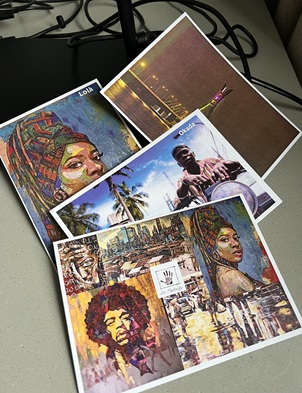
Already on our first day, we also discovered that postcards are not easy to find. Our hotel gift shop, the Radisson Blue, didn’t sell them, nor could we find them in any shops nearby. It wasn’t until we checked the lobby of the Sheraton on a neighboring street that we found them for sale. Andry picked out 15 postcards, which were priced at 2000 Naira each (about $1.50 USD). However, by the time he reached the cashier, just five minutes later, the price had jumped to 3000 Naira (about $2.20 USD). After a bit of haggling with the shop assistant, we managed to agree on the original price. The two post offices we later visited, nor the philatelic department, didn’t sell any postcards.
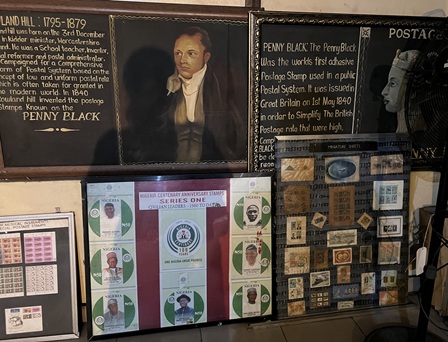
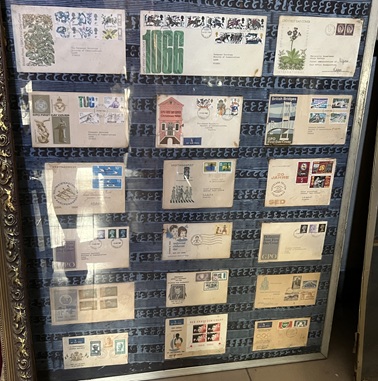
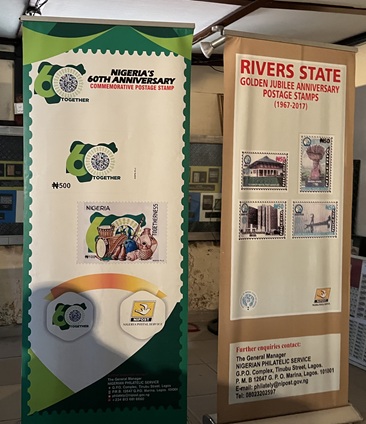
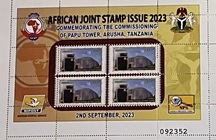
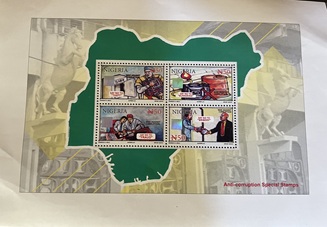
Stamps and postcards in hand, we decided to head to the main post office the next day, where a philatelic department was located in a building next door. We actually started with the philatelic department first. A few steps down from the lively, noisy street, there was a sudden calmness. The walls were covered in displays about the history of stamps and posters of new issues. Three employees were eager to sell us some stamps, and the selection was greater than in the Ikeja Post Office. They especially wanted us to buy First Day Covers and stamp blocks (for much more than their face value), but our main focus was on stamps that we could use to send our postcards. We chose some stamps while listening to their stories. As there were no other visitors, we had their undivided attention. The head of the philatelic department, Abraham, even walked us to the other building on the same grounds, to the post office.
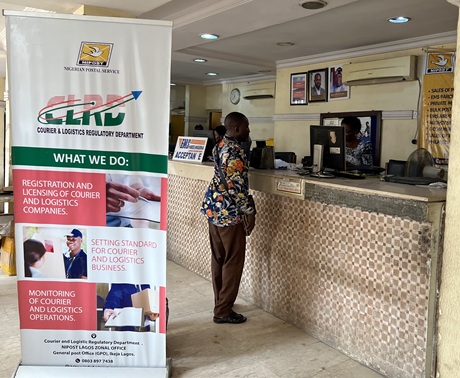
At the post office, where we had hoped to start our postcard sending spree, it turned out that everything was not so simple. An employee told us that the stamps we had previously bought (even the ones we bought next door) couldn’t be used here, though they looked identical. It was the first time we experienced this kind of system. We assumed it was probably due to the fear of stamps being copied. As it turned out later, they did make a partial exception for our previously bought stamps.
After checking the prices for postage, and seeing how reasonable the price difference was for registered mail, we decided to send as many postcards as we could with tracking. We bought as many envelopes as they had (28 each 17 euro cents) and, promising to return the next day to that post office, they let us take them with us to fill them out at our hotel.
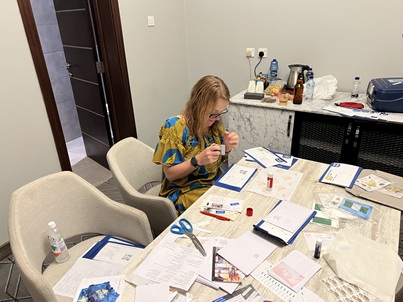
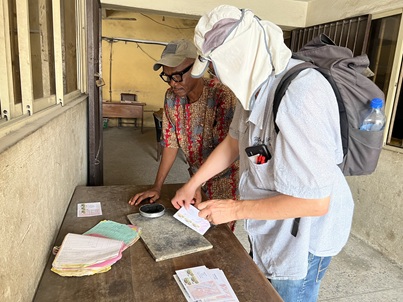
When we returned the next day, with the head of the philatelic department Abraham again with us, we discovered that sending registered mail required a great deal of bureaucracy. For each shipment, we had to fill out a separate form, the post office worker had to write both the recipient and the sender’s address and number manually into a large ledger, and of course, there was a lot of stamping involved. This whole process took us over four hours. The positive side was that this activity connected us with the postal workers and the conversations that unfolded were truly valuable. The whole process added a human dimension. For example, we learned that respecting elders in their society has far more value than in ours. And that teenagers are teenagers everywhere. And that they all had dreams that their children would get better education and have better opportunities in the job market.
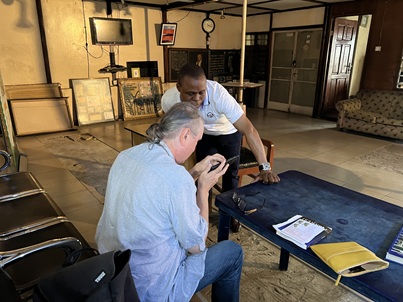
To thank them for their effort, we didn’t want to leave just the sweets we had brought from Estonia. They never expected anything, and nothing was hinted — but after hours of patient help, long past their official closing time, we felt moved to express our appreciation in a more personal way.
So we quietly left a small token of thanks. Not because it was needed, but because we were grateful. When we finally stepped out into the warm Lagos evening, it felt like we were saying goodbye to friends, not just leaving a post office.
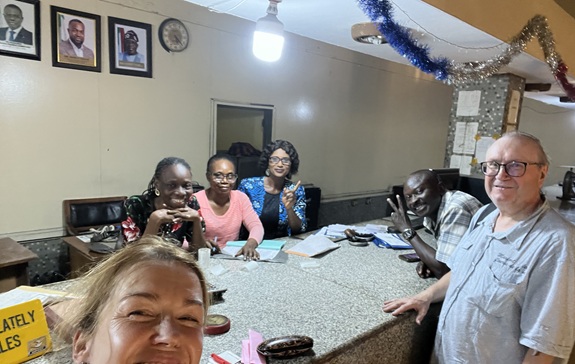
It wasn’t that registered mail was any faster, though. Our regular postcards (with a cancellation mark in the post office) arrived first, then the registered ones started to reach their destinations, while some are still traveling. And those three postcards we dropped into the mailbox on our last day? Well, none of them have arrived yet.
Compared to the chaos and bustle we had experienced in other places in Lagos (which you can read about here on the blog), the post offices we visited felt like oases of calm, where time seemed to slow down and rules were followed.
And so, the postcards of Nigeria began their journey to other countries, carrying with them a little piece of Lagos. And while we’ve long since returned home from our time in Nigeria, we hope that the postcards still on their way, reach their destinations soon.
If you’d like to read future entries from this post office diary, you can subscribe here.
 Exploring the Unexpected
[…] I visited the main post office in Lagos, Nigeria (February 2024), I had a beautiful, spontaneous conversation with the staff. They told me […]
LikeLike