
- Date of visit: Februar 04 2020
- Post office visited: General Post Office in Brades
- Cost of sending postcard: USA, Canada 2,25 EC$, Europe 2,50 EC$ ning Africa , Asia 2,75 EC $. The Eastern Caribbean dollar has been pegged to the US dollar since 7 July 1976 (US$1 = EC$2.70).
- Postcards available at: Hilltop Cafe and various shops in Brades
- Delivery time: 2 weeks to Great Britain, 18 days to Germany, 21 days to the USA
Located in the eastern Caribbean, part of the Lesser Antilles, Montserrat is a small island covering about 100 square kilometres with roughly 5,000 inhabitants; its postal system operates on a correspondingly limited scale. Under British administration since 1632, it remains a British Overseas Territory. Montserrat issued its first postage stamps in 1876 and continued to do so until 2019. Why no stamps have been issued since, I couldn’t find out.
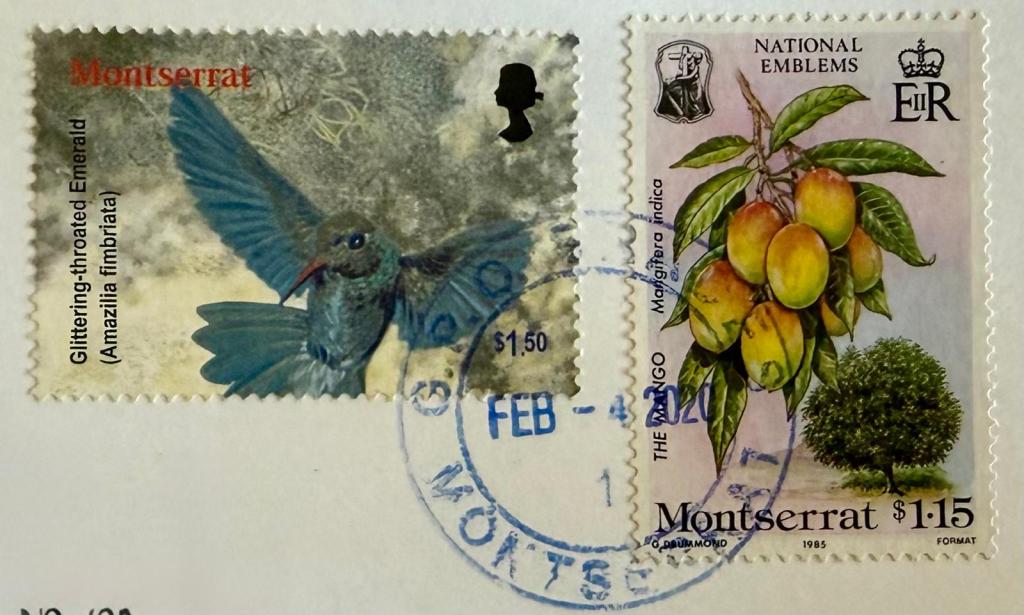
Our visit to Montserrat:
Reaching Montserrat is not entirely straightforward. According to visitmontserrat.com, there are three options: by boat (from Antigua, though at the time of writing it was out of service) or by air, departing from VC Bird International Airport on Antigua. We chose to fly.
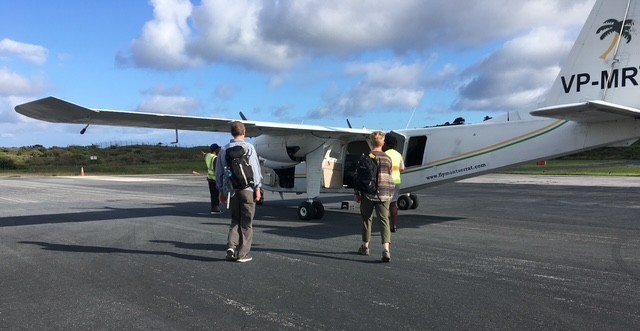
At the small airport in Antigua, the check-in process began with a scale. And not just for luggage! For the first time in my travel history, I was asked to step onto it together with my baggage. Even knowing I was well within the limit, there was a moment of unease before stepping up, as the combined weight per person was not allowed to exceed 300 pounds (136 kg).
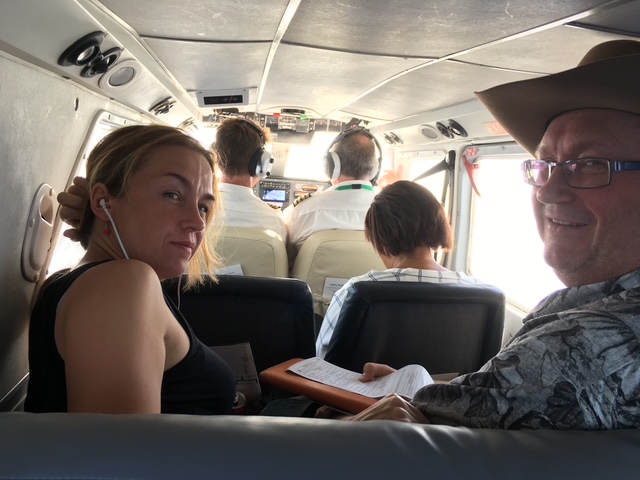
Cleared for departure, we were led to the smallest commercial aircraft I have ever flown on. With two pilots in front, there was room for just six passengers. Every seat was taken. Although there was no space for cabin crew to move about, the pilot still made the usual announcement after take-off: “Welcome on board! Today’s movie would be The Lord of the Rings—all three parts. Drinks will be served in 45 minutes.” A quick look around the cabin was enough to realize that neither seemed particularly likely. The flight itself lasted 20 minutes, so none of the promised comforts had time to materialize.
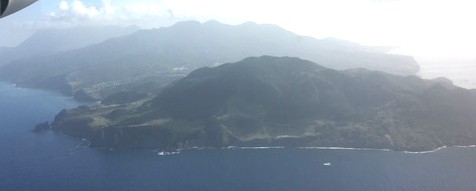
Montserrat from the window of our small aircraft.
Montserrat’s history seems to have two distinct starting points. One is 1632, when the island came under British administration. The other, more recent, is 18 July 1995, when the long-dormant Soufrière Hills volcano became active. The eruptions destroyed the Georgian-era capital Plymouth, forced two-thirds of the population to leave, and reduced the number of residents to fewer than 1,200. Volcanic activity continued until 2010. (for a visual overview of the destruction, see here)
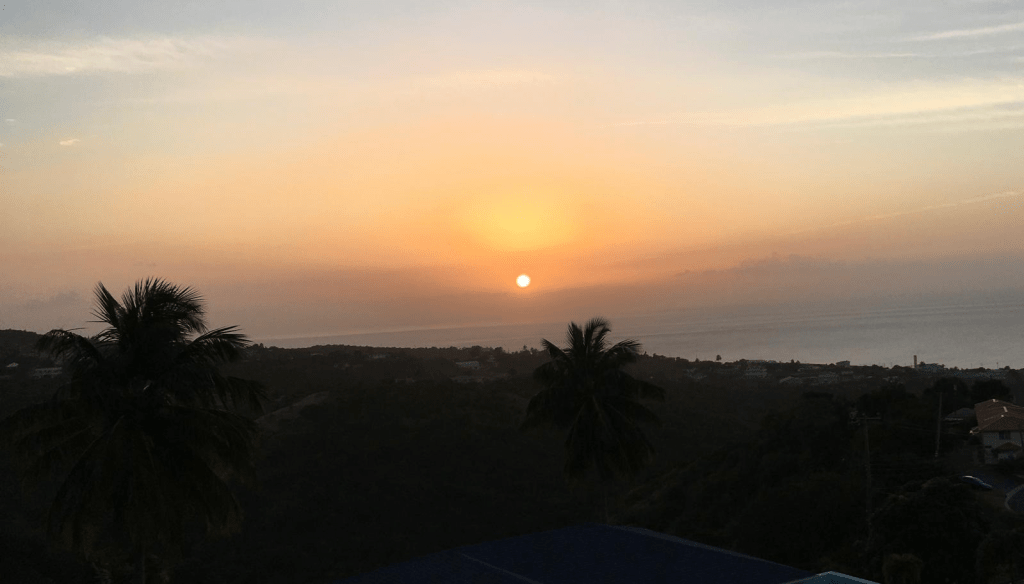
By the time of our visit, the volcano had been quiet for years, and the population had recovered to around 5,000. The former post office in Plymouth had been left behind in the exclusion zone after the eruptions and was no longer in use. The main post office had, of course, moved to Brades, and that was where we headed the following day.
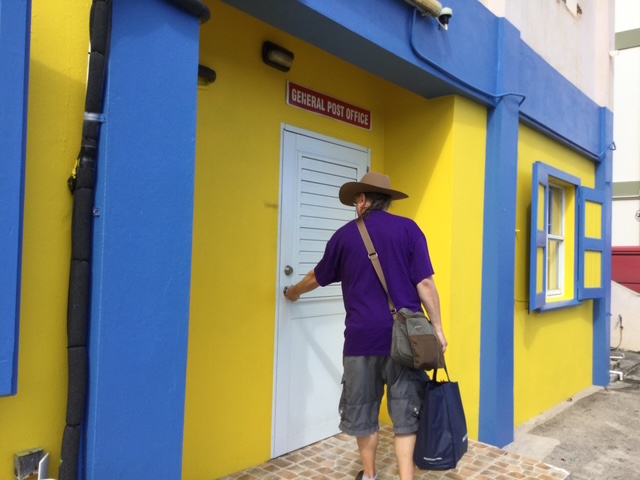
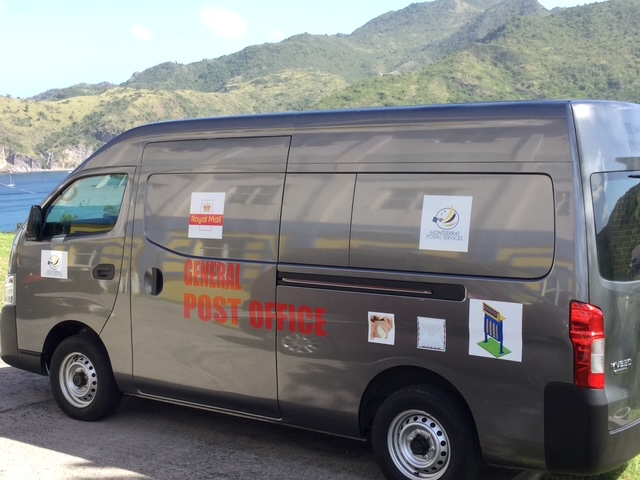
The post office was small but more importantly, fully functional. We were allowed to cancel the stamps on our postcards before they entered the postal system. From there, they traveled to Antigua and Barbuda for sorting before continuing onward. Considering the island’s isolation, delivery times were surprisingly fast: the first card reached the United Kingdom in just two weeks.
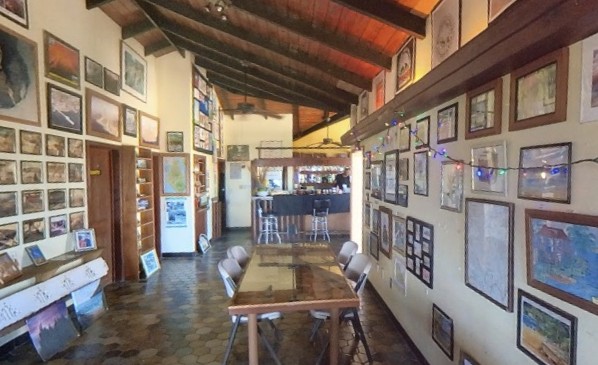
Almost everyone we spoke to on the island returned—sooner rather than later—to the subject of the volcanic eruption. Although there is a museum, the most engaging place to learn about the island’s past turned out to be Hilltop Cafe. Its owner, David, spoke about the island, the eruption, and music.

Away from the noise of larger cities, this is also where George Martin set up AIR Studios in 1979, bringing many well-known musicians to the island.
The café itself was filled with memorabilia and souvenirs and, to our satisfaction, postcards were also for sale.
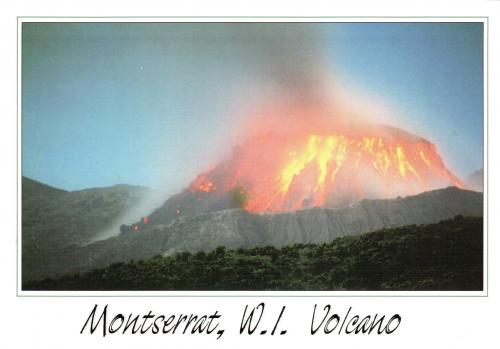
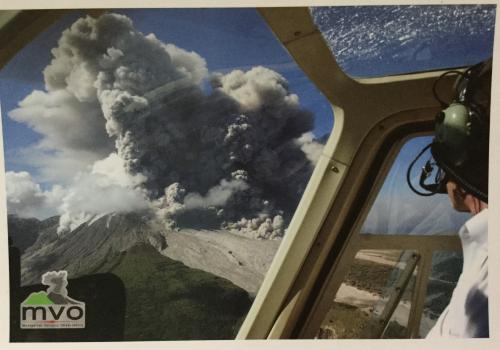
I took the opportunity to ask David my long-standing “elephant question” (a personal inside joke I have been collecting answers to in different countries for over a decade, one day to be explained in more detail). In this case, the question itself was irrelevant, the answer was what mattered, and it came immediately: “Is the elephant golden? And was it sent by the British government?”
Seeing my confusion, he explained. After the eruption, the islanders’ expectations of support from the British government were understandable, but the assistance provided did not meet those expectations. At the time, the UK’s Secretary of State for International Development, Clare Short, remarked that the island’s leaders had unrealistic demands, adding that “they will be wanting golden elephants next.”
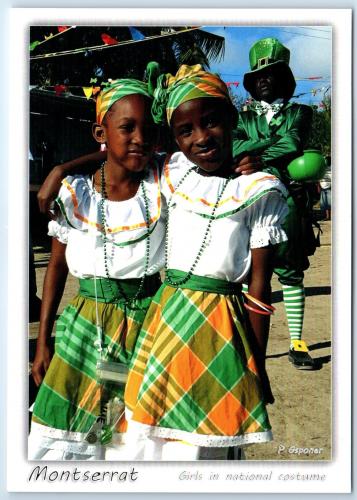
We said goodbye to David, the post office, and the island, and left the same way we had arrived—on the same small aircraft. This time, no film was announced and no drinks were mentioned.
Montserrat stayed with me, mostly as a reminder of how quickly things can change when nature is involved.
If you would like to receive a postcard from other, equally unusual places, registration for the current lottery is still open: https://nexttrip123.com/2026/03/22/postcard-lottery-3/
If you’d like to read future entries from this post office diary, you can subscribe here.
 Exploring the Unexpected