
- Date of visit: October 28 2022
- Post office visited: Dakhla, Amana Poste Maroc
- Cost of sending postcard: Europa 9 MAD (0,81 Eur), USA 15 MAD (1,35 Eur), Asia, Australia 16,7 MAD (1,50 Eur)
- Postcards available at: couldn’t find
- Delivery time: fastest 12 days to Netherlands
Western Sahara – Context and Postal Background
Western Sahara is a United Nations–listed non-self-governing territory in Northwest Africa, covering approximately 272,000 square kilometres. Often referred to as “Africa’s last colony,” it remains one of the continent’s most sparsely populated regions, with roughly 600,000 inhabitants spread across vast desert plains. Its unresolved political status has directly shaped its postal history, which is unusually complex.
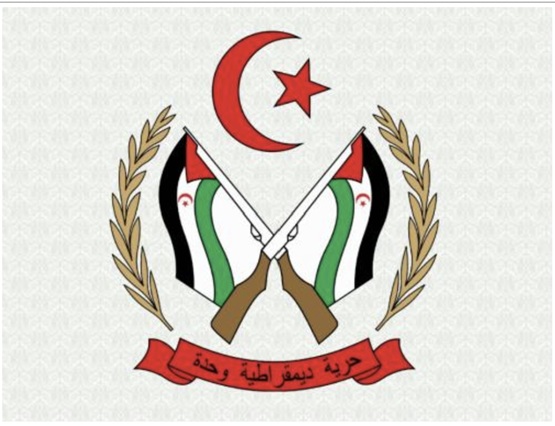
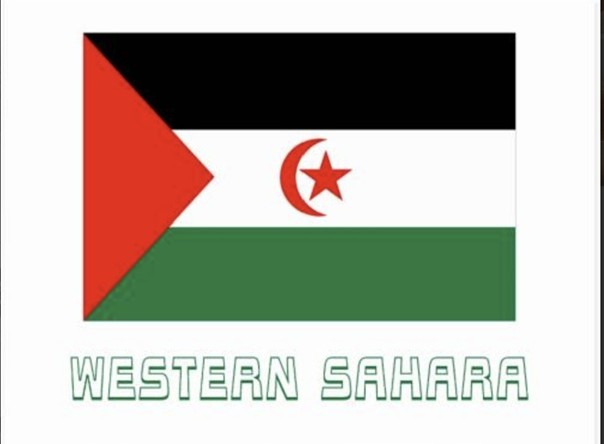
Although various stamps have appeared bearing inscriptions such as República Saharaui, Sahara Occidental, Sahara Occ. RASD, or referencing the Sahrawi Arab Democratic Republic, these issues are linked to the disputed status of the territory and are not recognized by Morocco; Morocco’s postal authorities have informed the Universal Postal Union that they consider such stamps invalid. In the areas under Moroccan administration, the postal system operates through Morocco Post, and only standard Moroccan stamps were available during our visit, including issues emphasizing Moroccan sovereignty over the region.
Our visit to Western Sahara
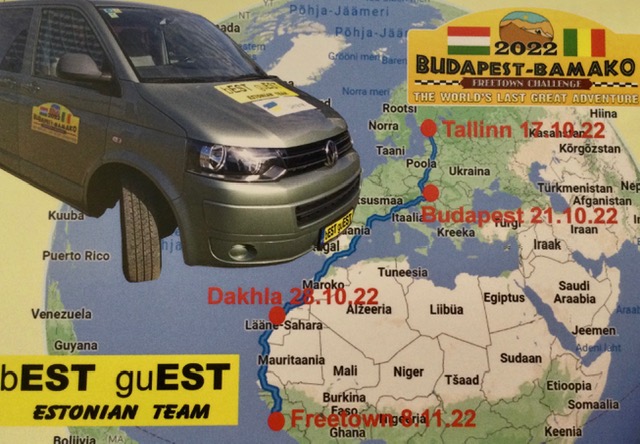
Our visit to Western Sahara formed part of the 17th edition of the Budapest–Bamako Rally in 2022. Officially, the rally starts in Budapest—as the name suggests—though we began our journey in Estonia as Team bEST guEST. In recent years, the route has not finished in Bamako (Mali) for security reasons, ending instead in Freetown (Sierra Leone). Participants are driving at their own pace. Some competed in intermediate challenges in each country; we did not. Our objective, beyond crossing the countries themselves, was simple: to visit a post office in every one of them. We would see the entire rally group at border crossings, but in between only occasional fellow drivers on long stretches.
Entering Western Sahara from Morocco, there was no physical checkpoint or official marker; the only sign of crossing was a thin line on Google Maps on our tablet. By around midday on 27 October, we were already there, driving along wide roads through open desert. The landscape offered remarkable views as the road reached the Atlantic coastline and continued south onto the Río de Oro peninsula.
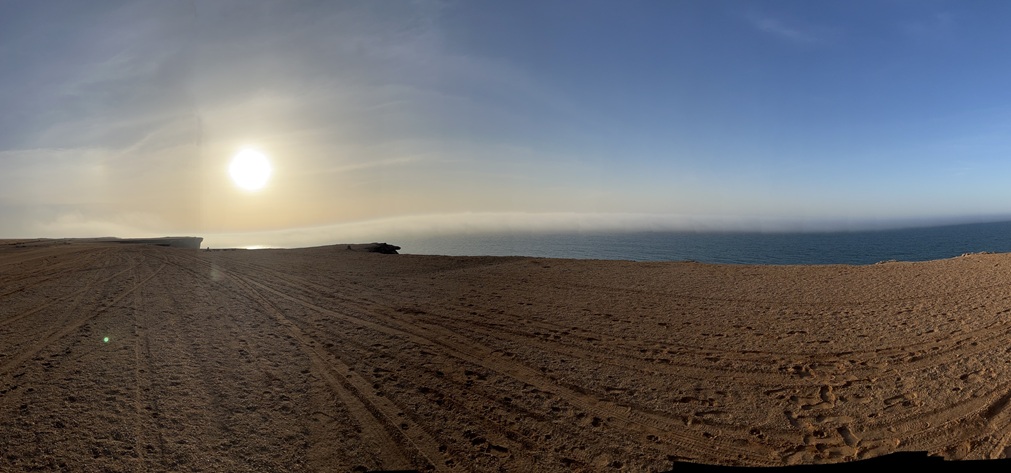
At the edge of this peninsula lies Dakhla, historically a fishing town set in an extraordinary geographical location. Here, the barren Saharan landscape meets bright blue Atlantic waters, creating a striking contrast and forming a vast natural lagoon.

After checking into our hotel, we headed into town in search of postcards. We did not expect political symbols, but at least something with the town’s name or a local view. Even that proved difficult to find. The most promising place was a small print shop, yet there too we found nothing. The explanation given by the employee was practical: any postcard image intended for sale must be approved by the tourism authorities, and with limited demand, producing them is simply not considered profitable.
My improvised idea—to cut makeshift cards from locally printed cardboard—also failed. Most printed packaging carried “Made in Morocco,” reflecting the official Moroccan designation of the region as its “Southern Provinces.”
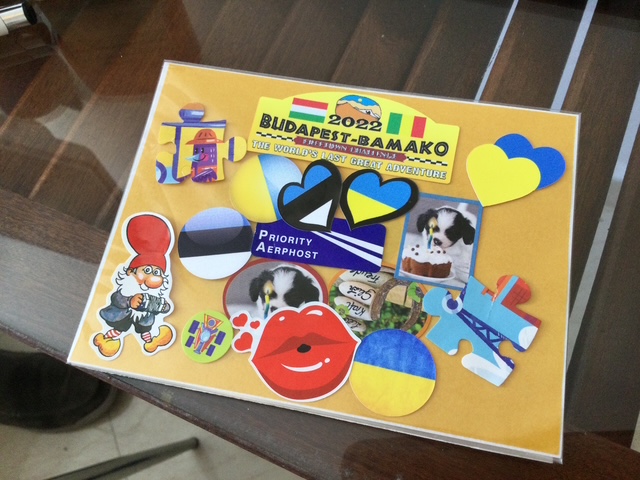
We had prepared for this possibility. Plan C: postcards brought from home, ordered online or printed in Estonia. Among them were Western Sahara–themed cards—often favorites among postcard collectors on Postcrossing—but sending them openly did not seem advisable. Andry found a solution. Each card was placed inside a transparent sleeve so the address remained visible, while the picture side was covered with paper and the sleeve itself decorated with colorful stickers to ensure the original design would not show through.
Then we went in search of the post office. We had already purchased the stamps earlier at a post office in Marrakesh, but we hoped to obtain a dated cancellation showing the local place name.
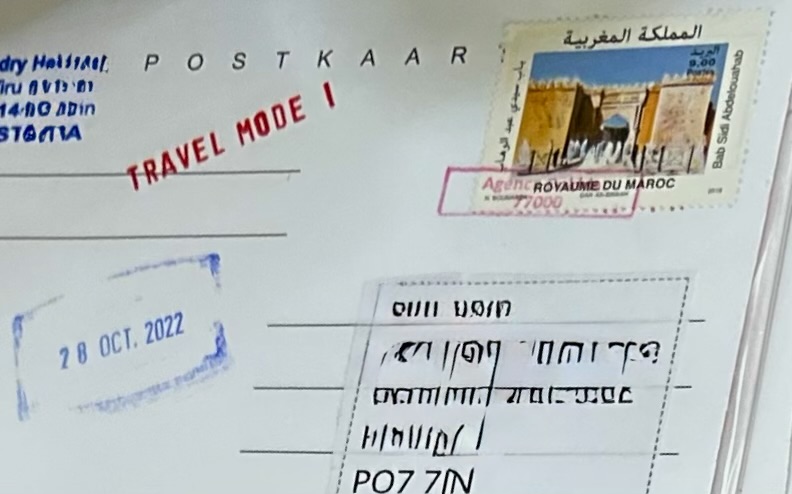
The red stamp on the postage stamp indicates the region.
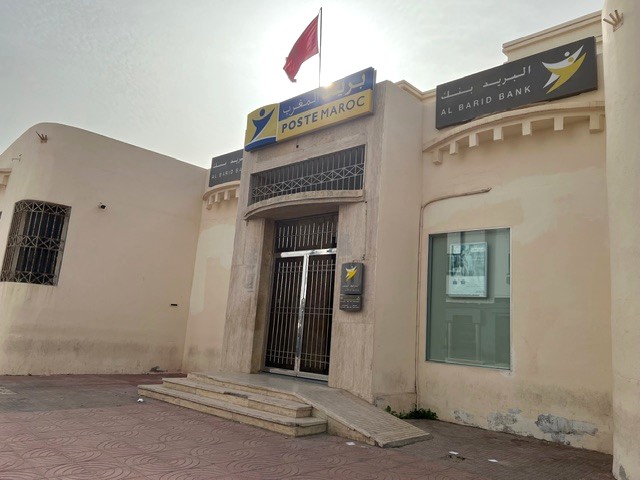
As in Morocco, buildings marked Poste Maroc provide a range of services beyond traditional mail, including financial transactions, bill payments and money transfers, as part of the state-owned group whose banking arm is Al Barid Bank. The building we entered, however, handled banking services only. “This is not for sending mail,” we were told. “Do you wish to transfer money?” For postcards, we were instructed simply to place them in a mailbox, to be processed later at a sorting center.
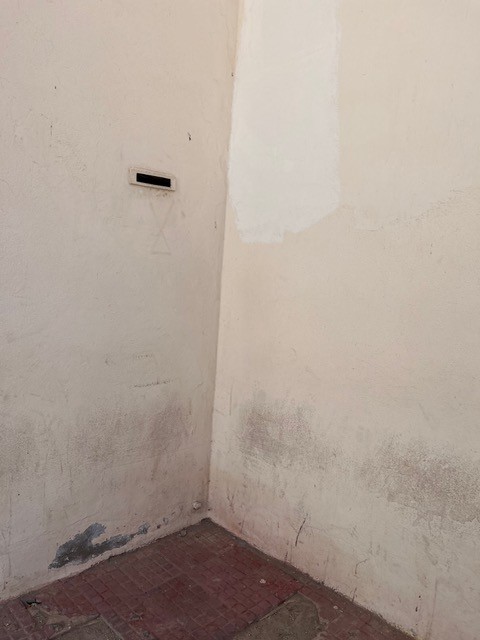
A helpful employee led us to the “mail slot.” It was nothing more than an unmarked opening in the wall. No signage. No separation. Just a hole. We were expected to drop our cards inside.
It felt uncertain.
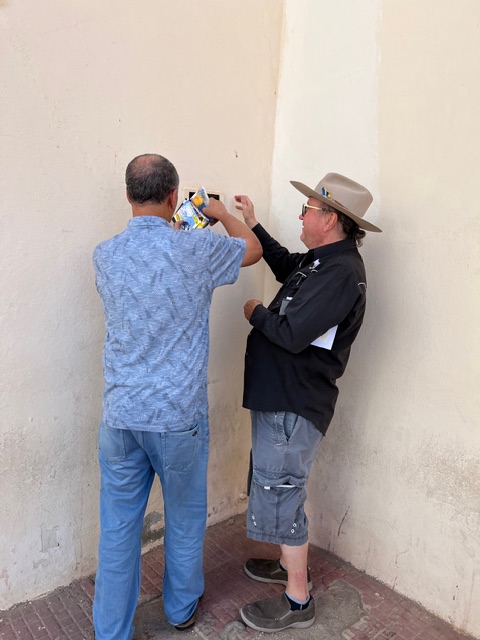
After we shared stories from other postal adventures around the world, the mood softened. Eventually—perhaps moved by our persistence—one of the employees retrieved a stamp normally used for money transfers and carefully marked each of our postcards. Throughout the process he repeated that this was not an official postal cancellation and not intended for that purpose. Nevertheless, he obliged.
When the lengthy stamping procedure was complete, we were guided back to the same wall. One by one, we inserted our unofficially stamped postcards into the opening.
We had brought Kalev chocolates from Estonia as small gifts, but the assistance we received was offered without expectation.
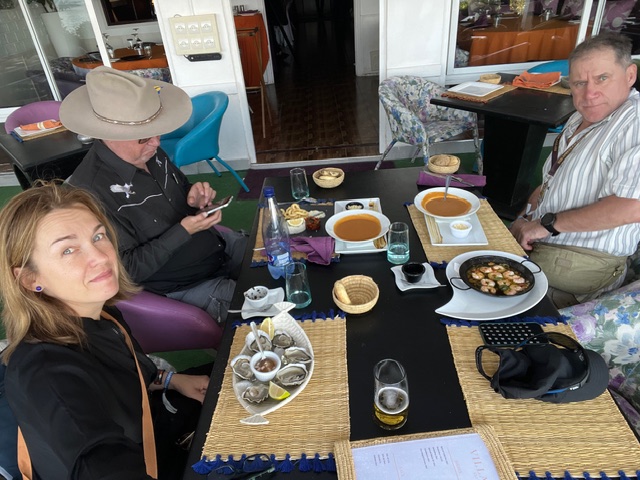
Although we had not expected Dakhla to offer much in terms of tourism, it turned out to be a destination well worth visiting. Its unique coastal setting makes it particularly attractive for windsurfing and other water sports, and we found several surprisingly good restaurants along the lagoon.
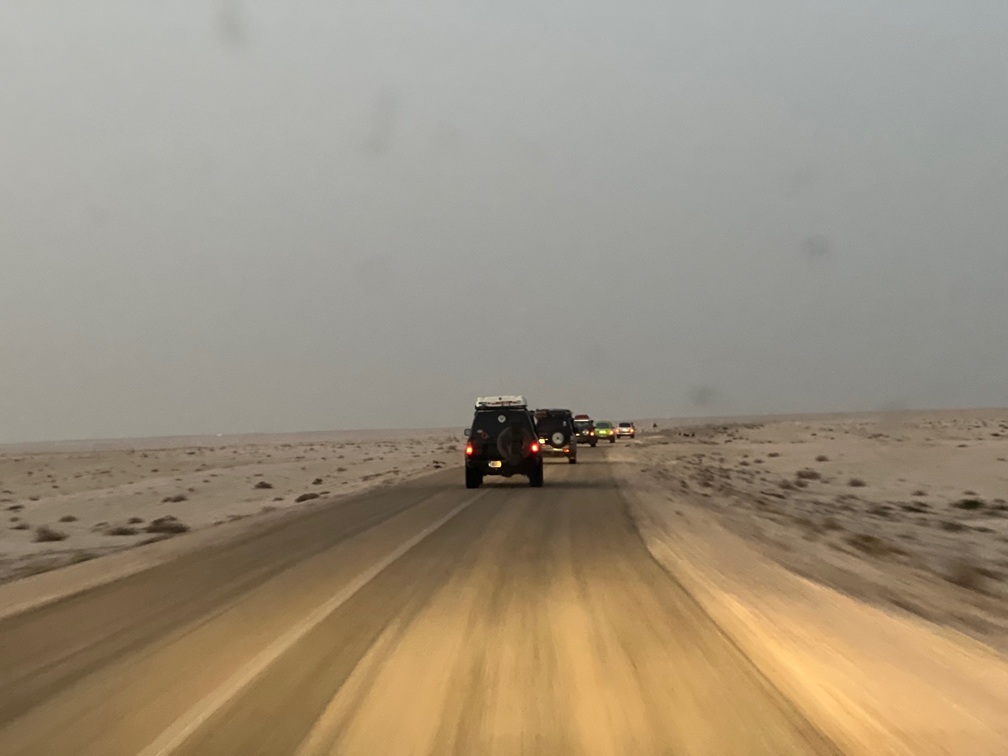
Still, our schedule pushed us onward. The following day meant a border crossing into Mauritania—one we had already heard would not be a quick or simple process—so we planned an early start.
Our visit to the Mauritanian post office, however, is a story of its own, which you can read here: Mauripost
If you are interested in other post office visits from the same journey, you can continue with: Senegal Post, Guinea Post and Sierra Leone Post.
For those waiting for the South Sudan postcard lottery results, the draw has now been published: Here.
If you’d like to read future entries from my Post Office Diaries, you can subscribe here.
 Exploring the Unexpected