
- Date of visit: 05.09.2023
- Post office visited: Several NZ Post service points
- Cost of sending postcard: 3,3 NZD
- Delivery time: Fastest to Estonia, 21 days
⚠️Update on delivery costs: As of 1 July 2025, postage rates for both domestic and international mail have been lowered to NZD 2.90 or a Kiwi stamp.
Brief postal history of New Zealand
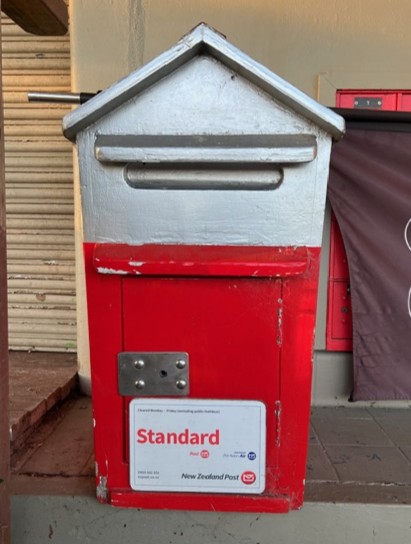
New Zealand’s postal service dates back to 1840, when the first official post office opened in Kororāreka (today’s Russell) in the Bay of Islands. In a young and sparsely populated country, mail quickly became an essential link between distant settlements, carried by ships, horseback, and later rail.
By the mid-20th century, post offices were part of everyday life across New Zealand. From the 1970s onward, however, declining letter volumes and rising costs began to put pressure on the traditional system.
In 1986, New Zealand Post was restructured into a state-owned enterprise. Today, NZ Post continues to manage the national postal network, even as the ways mail is sent have changed significantly.
Our visit to New Zealand
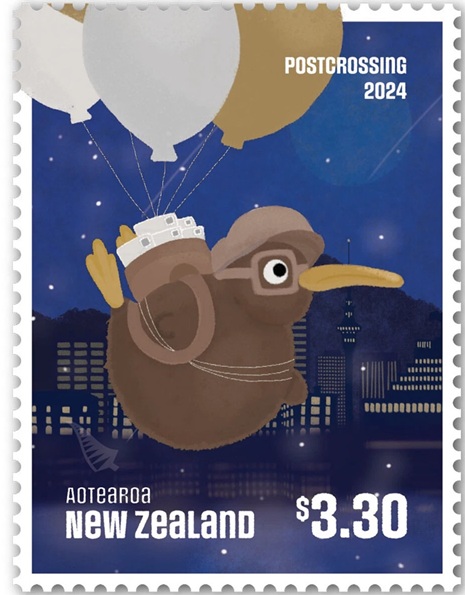
This time, my story is not about sending postcards from a particularly rare country. More than 200,000 postcards have already been sent from New Zealand through the Postcrossing system, and its postal service is well regulated, and fully functional. Still, for me, New Zealand turned out to be special for a different reason: I found postboxes that led straight back to a story from my childhood.
In Postcrossing’s annual statistics, New Zealand appears again and again as the place from which postcards travel the longest distances — this year’s record being 19,982 km, from Feilding (New Zealand) to Barranco (Spain). And on a more personal note, one of my all-time favourite Postcrossing stamp designs also comes from here (though it was released after our visit).

Our visit to New Zealand was part of a longer journey through the Pacific, including several islands and even Pitcairn. In New Zealand itself, we only visited the North Island — Auckland was a convenient transfer point — and in total we spent just under a week in the country.
Postcards were easy to find. Souvenir shops and museum stores offered a wide and varied selection, so much so that it’s hard to single out any particular place. The postal system, however, works a little differently from what we were used to. Not every town has a state-run post office anymore. Postal services are decentralized and operate mainly through partnerships with retail chains and local businesses.
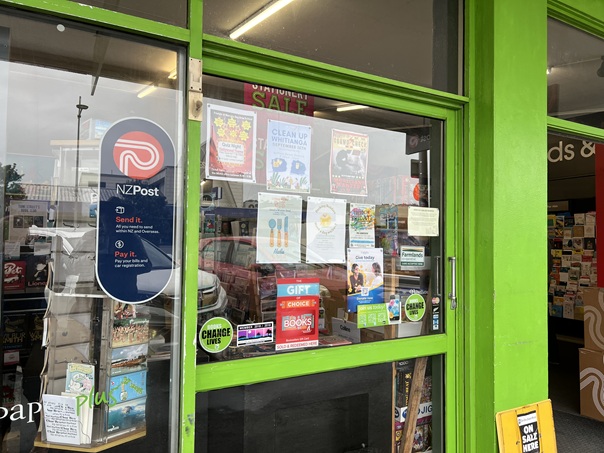
The national postal operator, NZ Post, sets the rules and prices, but it no longer runs traditional post office buildings. Instead, mail can be sent from privately operated locations — most commonly supermarkets, stationery shops, and bookshops acting as NZ Post service points.
This meant that our hope of visiting a “General Post Office in Auckland” failed completely — simply because such an institution no longer exists. Sending postcards, however, was not a problem at all.
The service experience varied widely. Our request for hand-cancelled stamps was received very differently depending on the place. In some usually bookshop-run outlets, we were told flatly that this was not allowed. In one case, the clerk even showed us the cancellation stamp, then carried it into the back room and returned to say firmly, that it could not be used. In other places, we were greeted warmly and even handed the stamp ourselves, encouraged to apply it with our own energy.
The most unusual mailbox experience, however, came from a place straight out of a fairy tale.
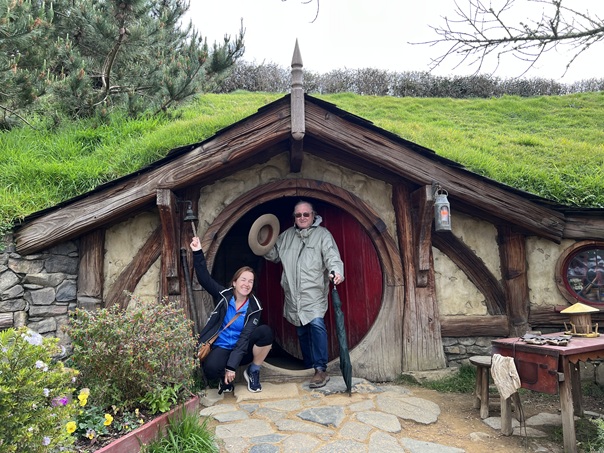
Yes — the Hobbiton.

On New Zealand’s North Island, about a two-hour drive from Auckland, the Hobbiton film set was originally built for The Lord of the Rings film trilogy and later expanded for The Hobbit films. It has been open to visitors since 2012.
Tolkien’s The Hobbit was one of the books I returned to again and again as a child — as many of you probably did too. Back then, I was so absorbed in the story itself that I never really noticed how important letters and messages actually were to the plot.

It’s worth pausing here to remember how important letters and messages actually were in that world.
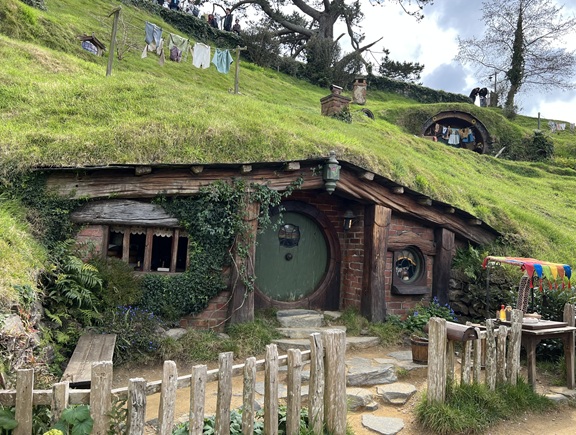
In the Shire, the rural region where the hobbits lived, a messenger-based postal system clearly functioned well. The book mentions Bilbo reading his morning mail. Yet the most important letter of all — the one that sets the story in motion — was not delivered through any formal system. After the dwarves leave Bag End, Gandalf leaves Bilbo a letter not sent through a post office, not stamped or dropped into a mailbox, but carefully placed on the mantelpiece so Bilbo would be sure to find it. The letter invites him to the Green Dragon Inn in Bywater at a precise time, giving him just enough chance to catch up and join the adventure.

Mailboxes do appear elsewhere in the story as well. Before Bilbo Baggins’ farewell party, he sends out hundreds of invitations and receives so many replies that volunteer postmen are needed to help with the deliveries.
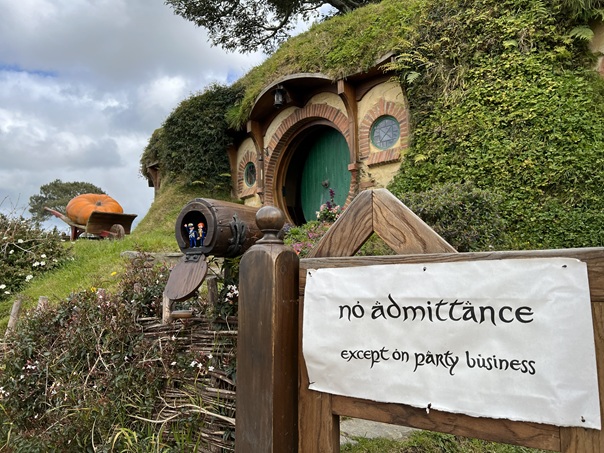
None of this was on my mind when we visited Hobbiton — and yet, mailboxes were everywhere. Nearly every house had one, carefully designed to match the style of the home. And at the end of the tour, at the visitor center, Hobbiton postcards were for sale — and there was even a mailbox looks to waiting for them.
That was pure joy.
The joy, however, was not quite complete. Although Gandalf himself stood beside the mailbox, it turned out that no branch of NZ Post reached that far. So while we happily wrote our postcards at a cafe table, we ended up carrying them ourselves to one of the many postal service points.
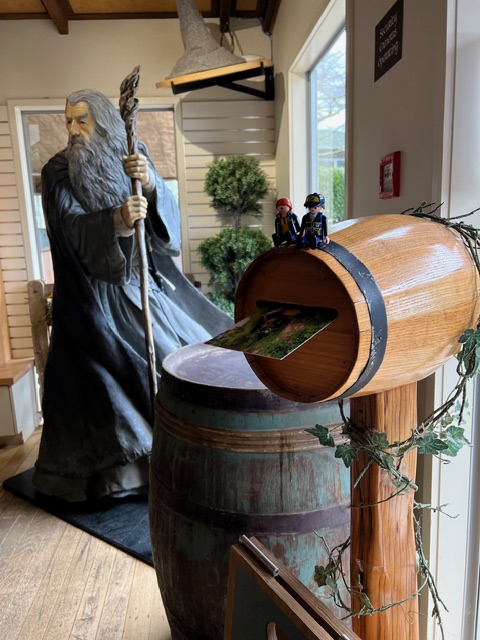
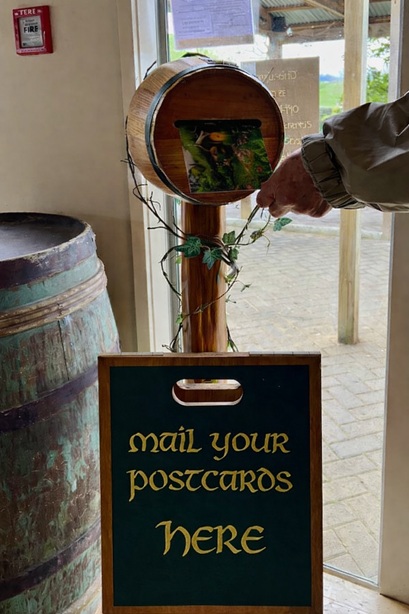
Because our journey from New Zealand continued on to much rarer Postcrossing destinations, we each sent only one postcard through the system while we were there. Postcrossing allows only a limited number of postcards to be sent at a time, and we chose to save those for places that don’t come up very often. Mine took 265 days to reach the Philippines; Andry’s arrived in Brazil after 43 days.
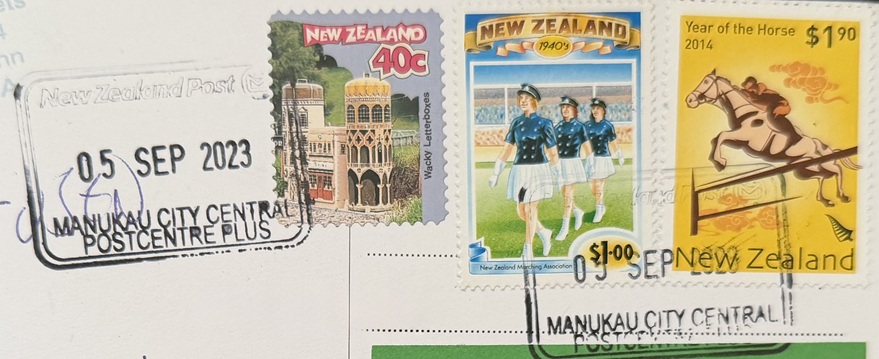
The postcard I sent to my mother, outside the system, arrived in rural Estonia in just 21 days. She waits for my cards (and so does the local postman) — and when one finally reaches her mailbox, she almost always calls me to let me know it has arrived.
The postcard I once sent her from Angola still holds my personal record for the slowest delivery: five years and twenty days. You can read that story here: My Angola Post.
If you’d like to read future entries from my Post Office Diaries, you can subscribe here.
 Exploring the Unexpected