
- Date of visit: November 20 2025
- Post office visited: Luang Prabang, Vientiane, Nam Thouam and Nong Khiaw
- Cost of sending postcard: to abroad 40 000 kip (aprx 1,60 eur)
- Postcards available at: in front of Luang Prabang post office and in Vientiene post office best prices and good choice.
- Delivery time: fastest 2 weeks to Germany.
Brief postal history of Laos
Laos’ modern postal history began during the French colonial era. From 1893 to 1953, Laos was part of French Indochina, and postal services were administered by the French. Mail used Indochina stamps, often later overprinted specifically for use in Laos.
After independence in 1953, Laos started issuing its own stamps and gradually developed a national postal network. Ongoing political instability and war during the 1960s–1970s meant that postal services were limited and largely confined to major towns.
Since 1975, when the country became the Lao People’s Democratic Republic, postal services have operated under a state-run system. Today, Lao postal services operate mainly in larger cities. International mail is possible, but delivery can be slow and reliability varies, especially outside the capital.
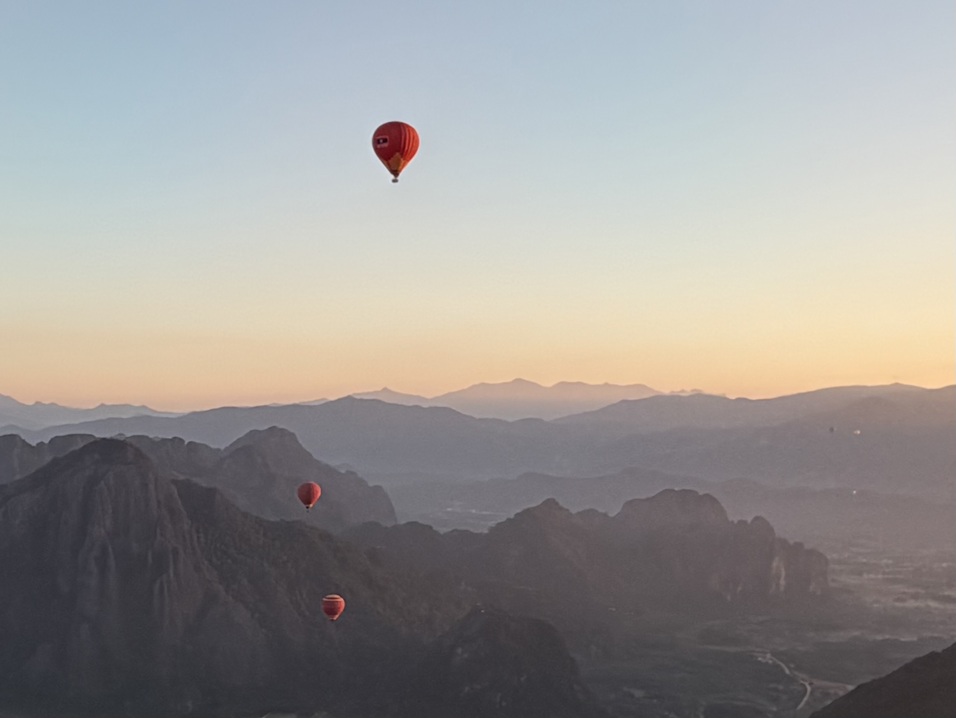
Our visit to Laos:
We spent a week in Laos, and the temptation to write this story in several parts was strong. The post offices we visited were very different from one another — and so were the impressions they left. The first, and by far the most beautiful, was the post office in Luang Prabang.
Luang Prabang Post Office: A Key to the System
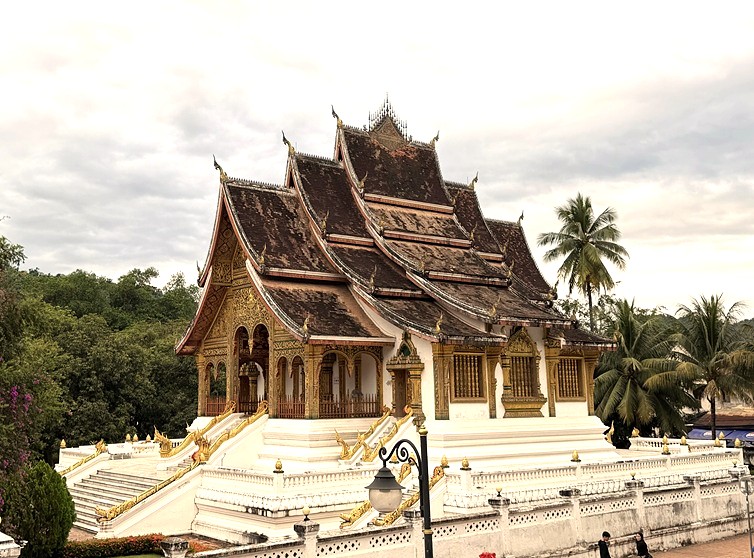
Luang Prabang itself is a true gem. The town is part of a UNESCO World Heritage area, valued for its well-preserved early 20th-century architecture, compact scale, and streets that invite walking past cafés and small local shops.
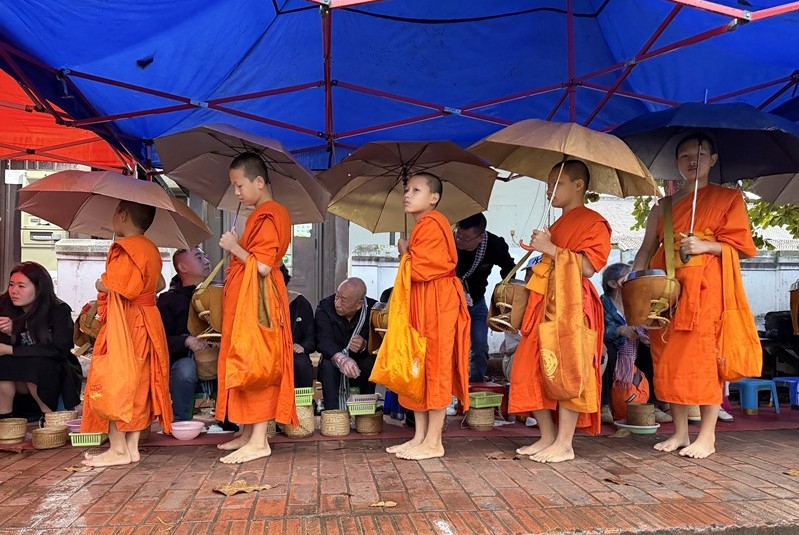
What stayed with me most was the early-morning alms round (Tak Bat), when monks walked through the streets at dawn. Watching it became part of my mornings: I returned every day, then had breakfast, and finally — once it opened — went on to the post office.
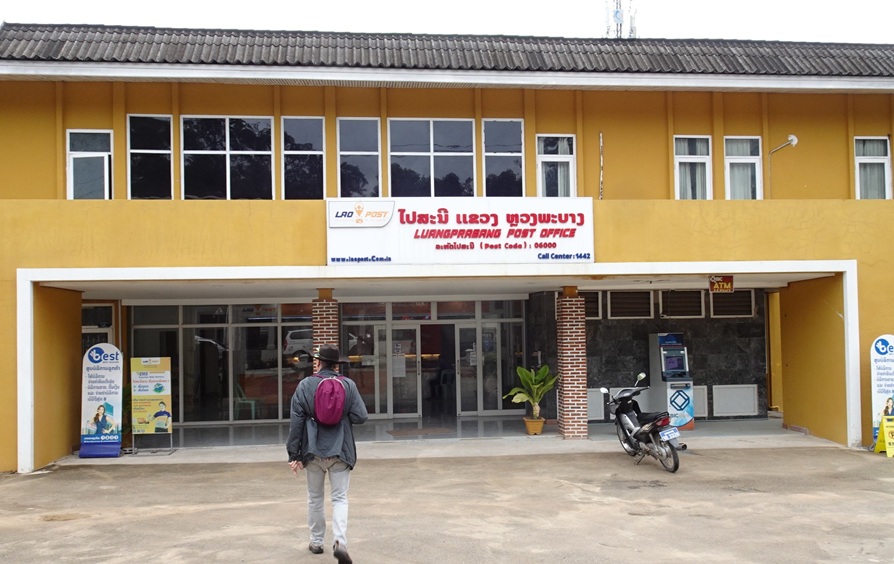
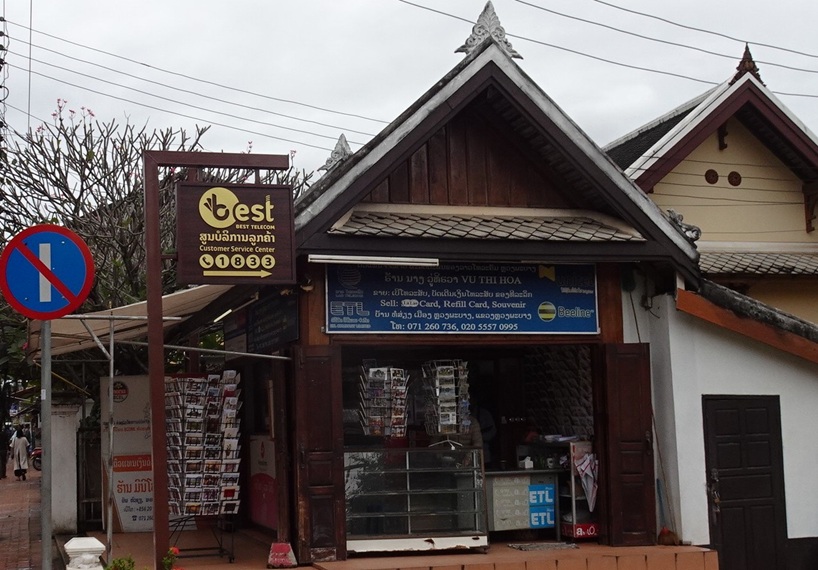
The post office is located near the Royal Palace, though architecturally it is much more modern. Inside, there was a long counter and, in the middle of the room, a large table where we could spread out our postcards to write and stamp them.
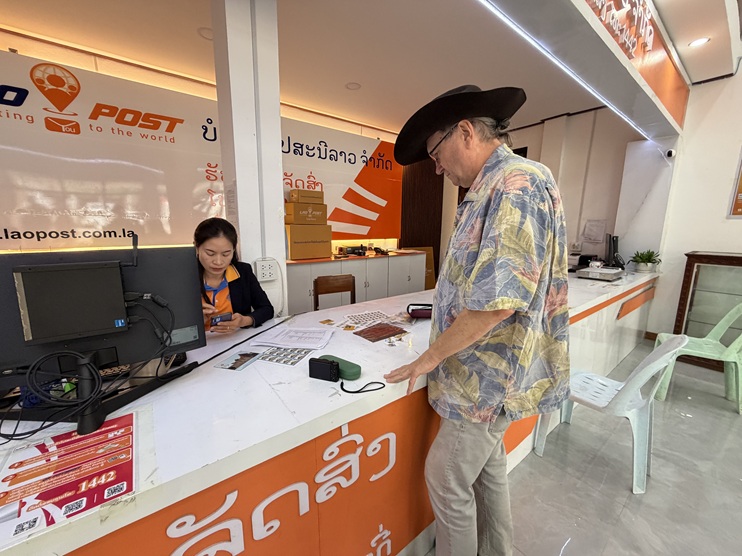
The stamps available for postage were of two types, both recently overprinted to reflect updated rates.
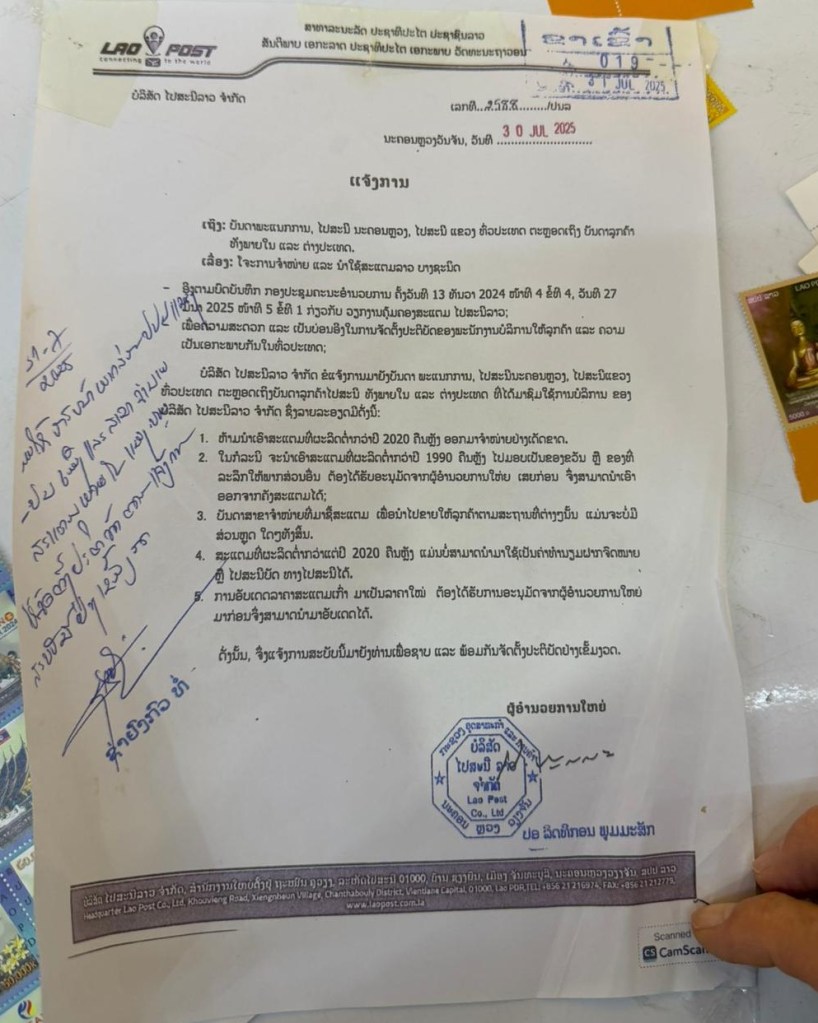
We had brought along beautiful older Lao stamps purchased from European philatelic dealers on the secondary market, but it turned out that a recent reform had changed the rules: as of July this year, stamps issued before 2020 were no longer valid for postage— something we had not expected at all. The stamps we had brought in Europe became decorative additions instead.
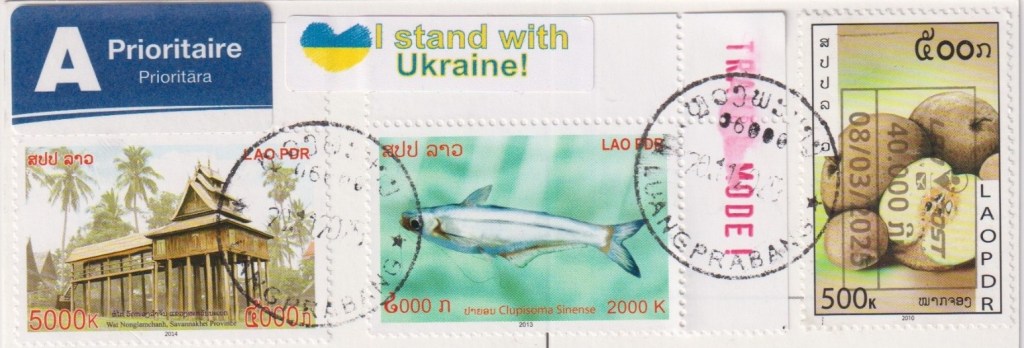
Nong Khiaw: A Post Office That No Longer Sends Mail
Our next stop was Nong Khiaw, a place I had long wanted to visit for its dramatic views and popular hiking and cycling routes. Although the distance is only about 140 kilometers, poor road conditions mean the drive takes at least four hours.
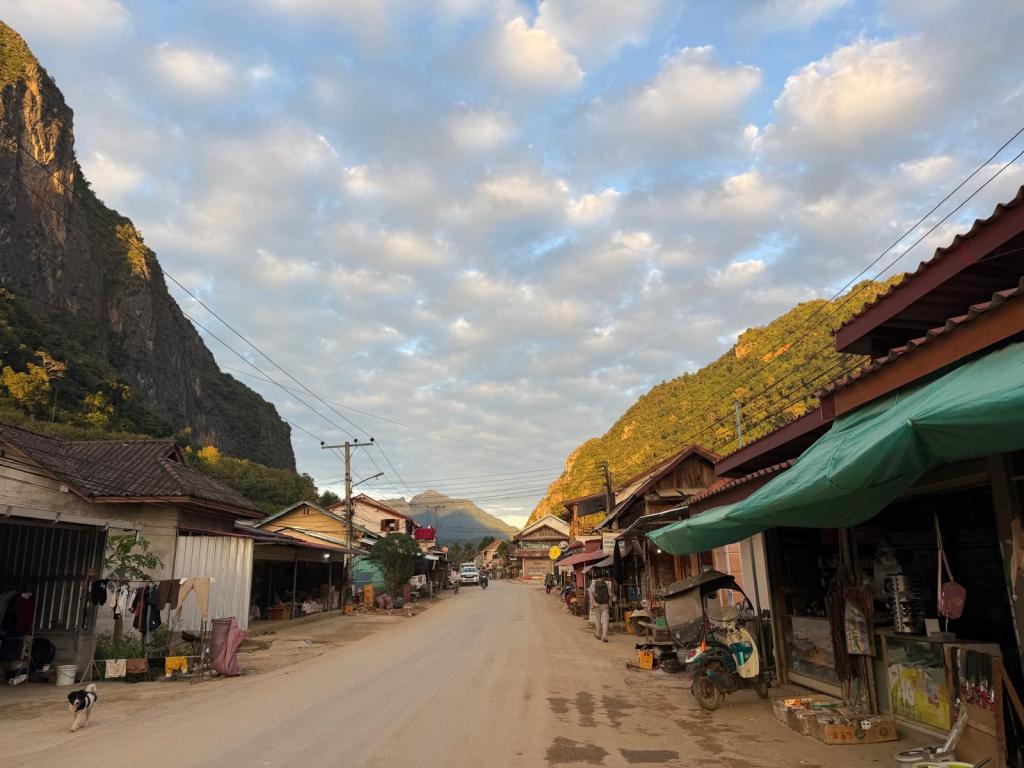
According to our information, there was no post office in Nong Khiaw. But already on our first evening, walking along the main street, we spotted an old post office sign — and next to it, a mailbox.
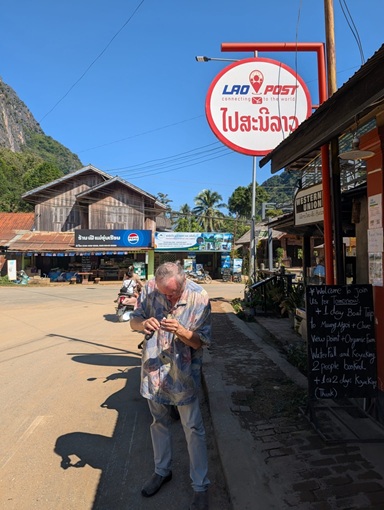
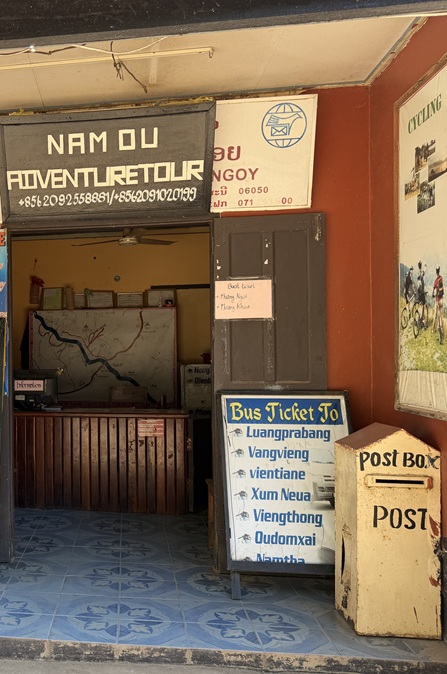
Inside, however, the space was now used for booking tours. Mail had not been sent from there since 2020. And the mailbox outside? The young man working there shrugged; he had never looked inside and doubted anyone else had either.
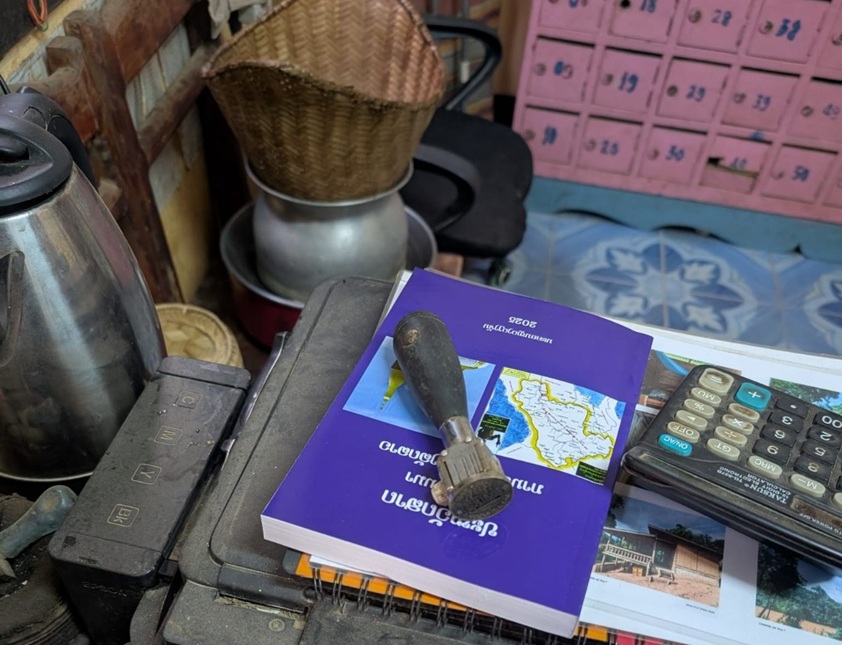
But a cancellation stamp from the old days still existed. The latest year still adjustable on the stamp was 2022. Dried out, but existed!. Andry soaked it, revived it, and made a plan: while I went hiking the next day, he would return and temporarily “reopen” the post office.
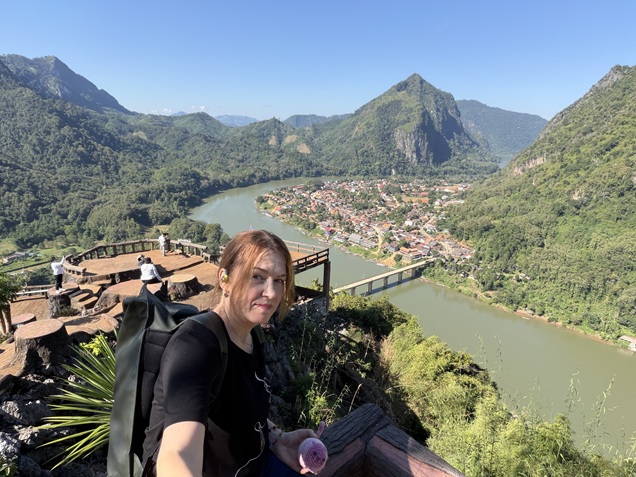
And so it happened. I spent the day on the trails, and Andry spent it stamping postcards, promising to complete his duties as a postman by delivering the cards to the Luang Prabang post office, where we later sent them on their way.
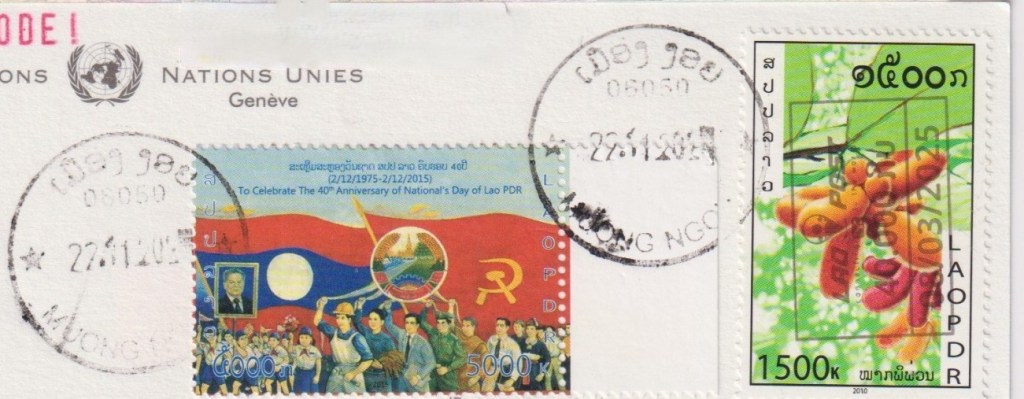
Nam Thouam: A Post Office on the Map, but Not in Practice
Our next stop was marked on Google Maps as a functioning post office. Nam Thouam lay along a rough road connecting Thailand and China — a place we passed through more by necessity than intention. The map marker, however, was misleading. After some searching, we found the building: doors open, a few printed materials piled on and behind the counter, but no one there.
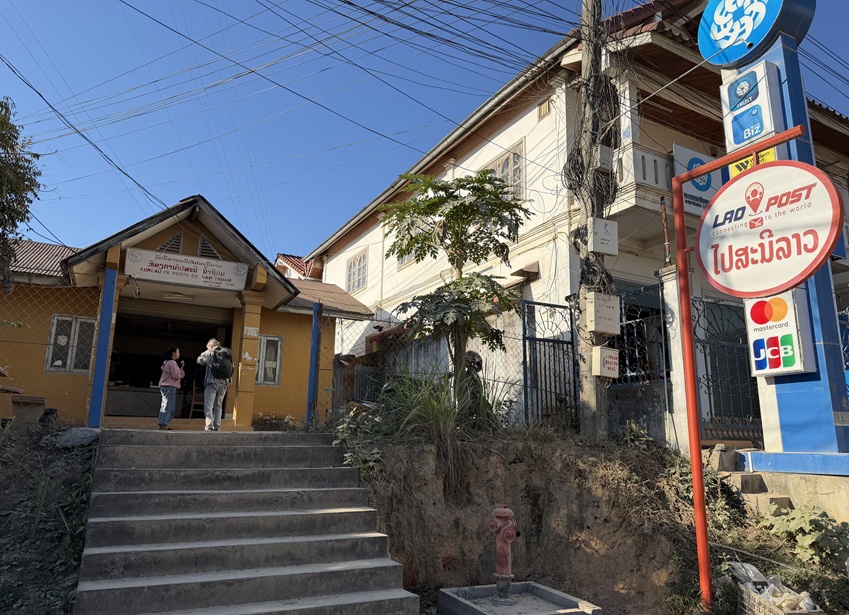
We stepped inside. Then back out. Still no one.
Eventually, a young woman approached us from a small kiosk outside, where she was selling water, matches, pasta, and other basic goods. Calm and certain, she explained that the post office had not been operating for a long time. No stamps. No registered mail. No postcards. Nothing.
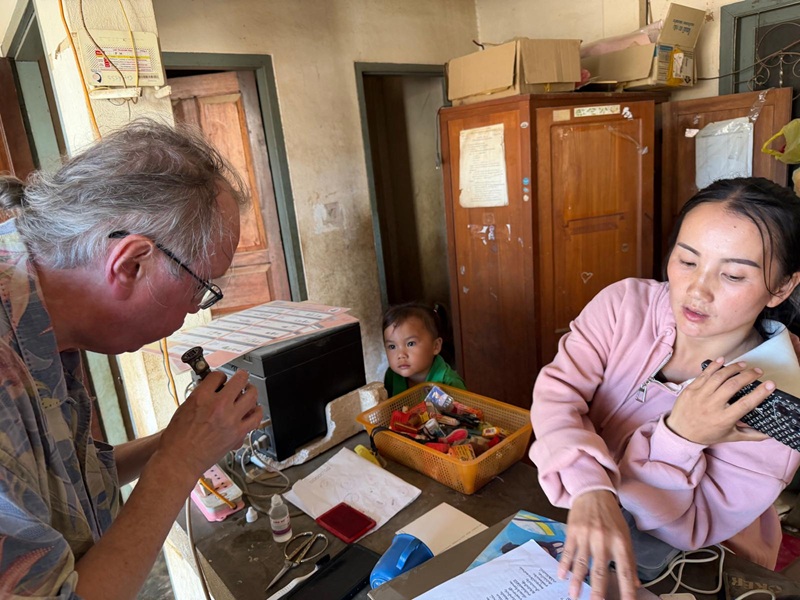
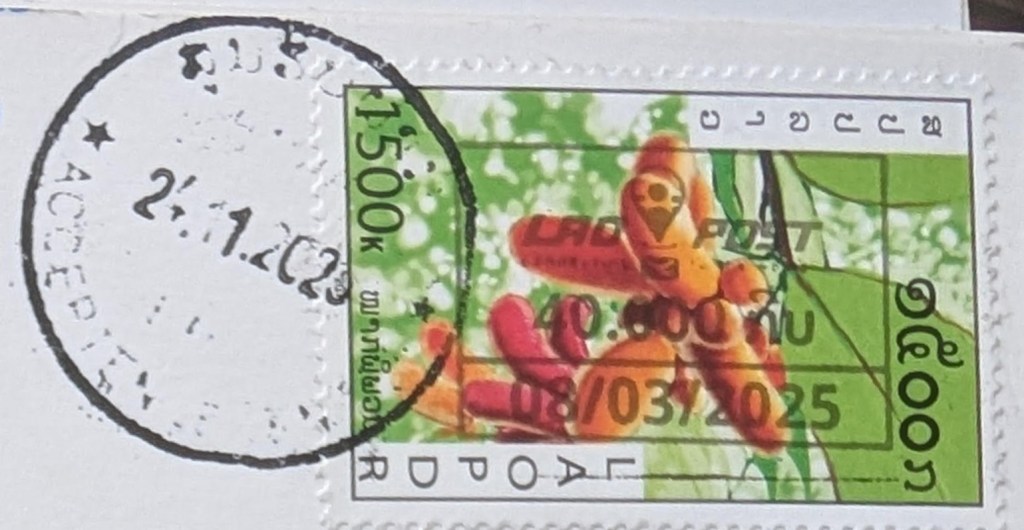
Seeing our disappointment, she tried to help. Together, we searched for the last cancellation stamp once used there. We found it — old and dried out — but there was no stamp ink left. The imprint you see in the photo is the best we could manage, using children’s coloring supplies.
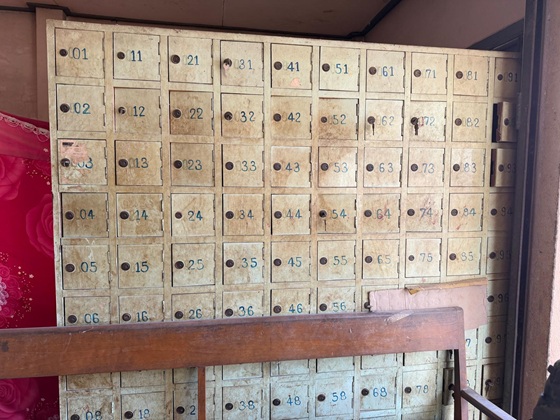
While we were searching, her two children returned from school. The helpful young woman I had taken for a teenager turned out to be 28 — and a mother of four. When it was time to leave, with another three hours of driving ahead of us, she gave us two bottles of water. We gave her a packet of Kalev candies.
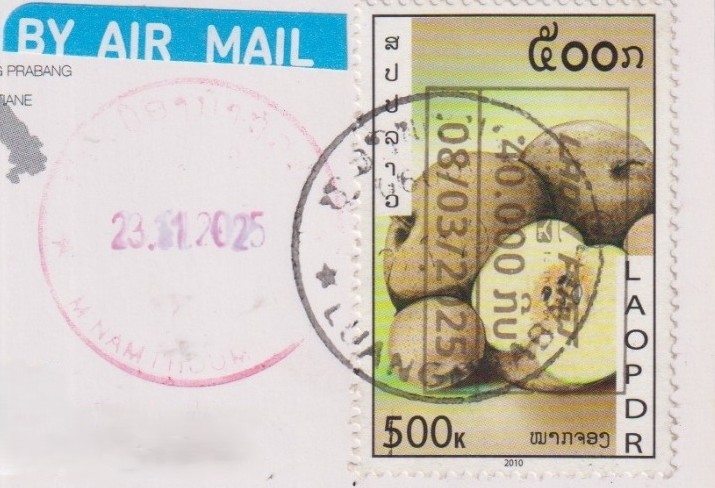
That night, we stayed again in Luang Prabang. In the morning, Andry realized that he had accidentally left an envelope containing stamps — enough for fifty postcards — at this last post office. Not the invalid ones, but the stamps we had bought in Luang Prabang. At that moment, they felt far more valuable than their monetary worth.At first, he was disappointed with himself and briefly wondered whether we should drive back for them. Then the feeling shifted. Perhaps it was a fair, unintended donation. Perhaps one day it might even help bring the post office back to life.
Vientiane: A Fully Functioning General Post Office
Our final post office visit came a few days later in Vientiane, the capital of Laos.
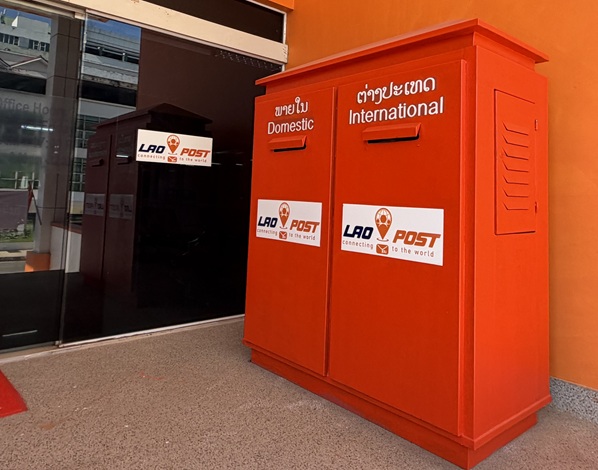
The post office is housed in a large orange building right opposite the headquarters of Lao Telecom. The building also hosts courier services such as DHL, FedEx, and EMS.
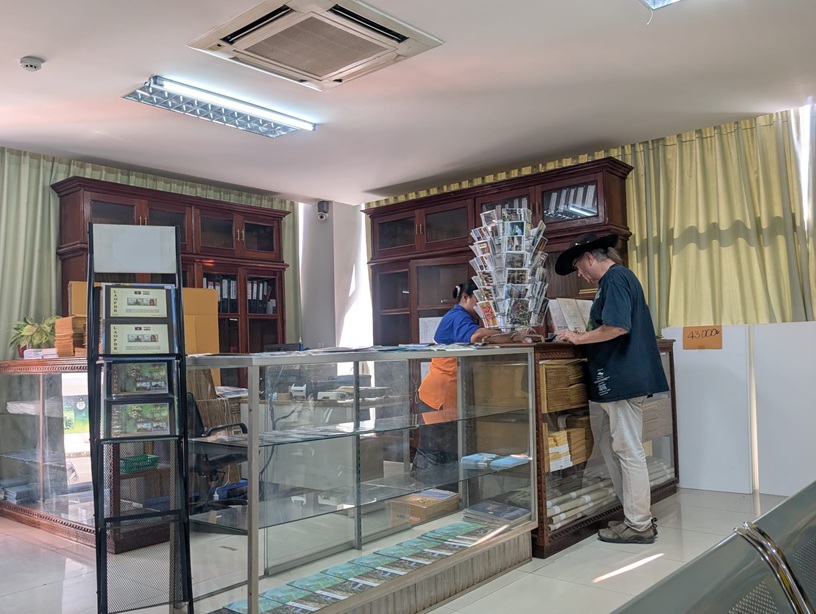
Inside, the space felt open and spacious, with posters and a postal clerk clearly accustomed to postcard enthusiasts like us.
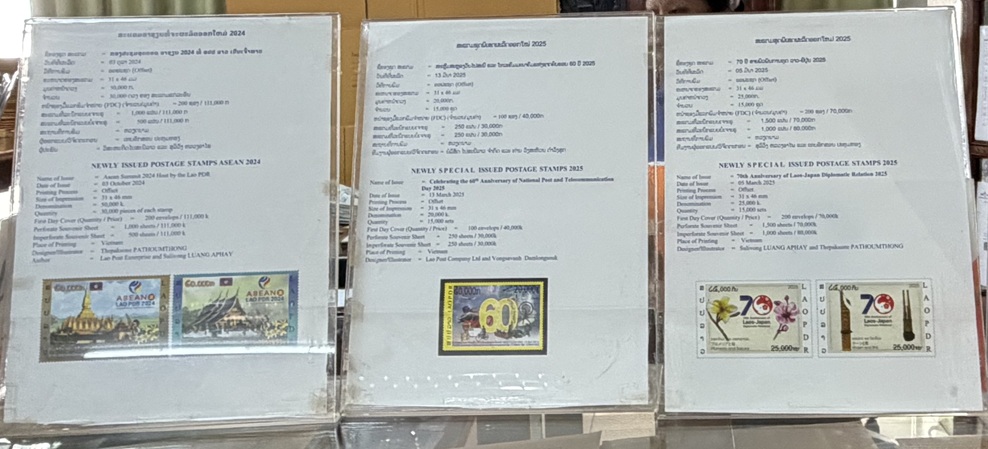
There were tables where it was comfortable to sit, write, and stamp. The selection of postage stamps was proper and up to date — this time newly printed, not overprinted.
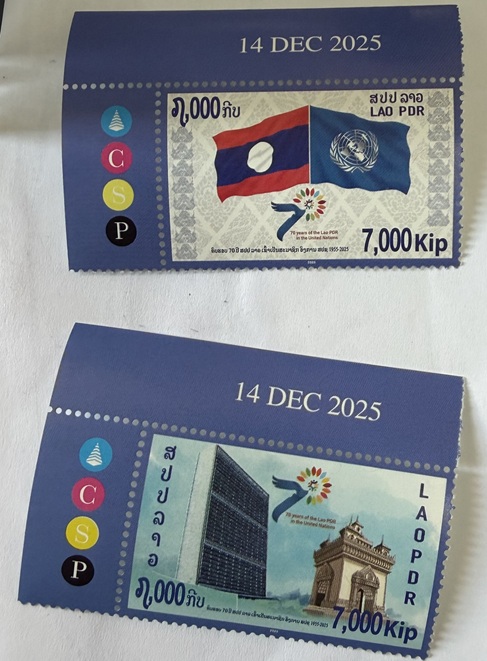
Two of the stamps we bought and used had an official issue date that was still ahead.
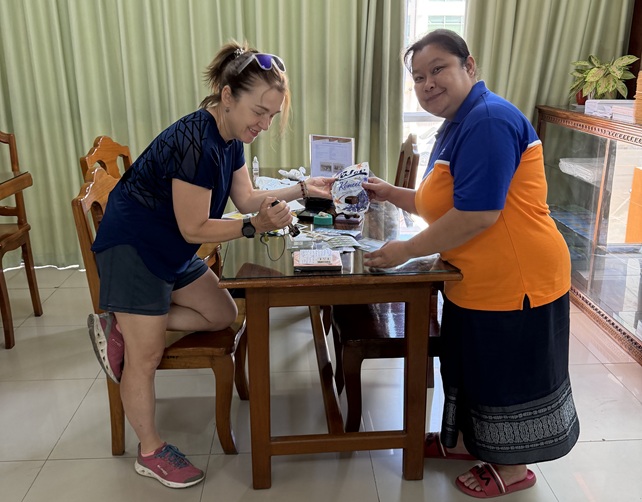
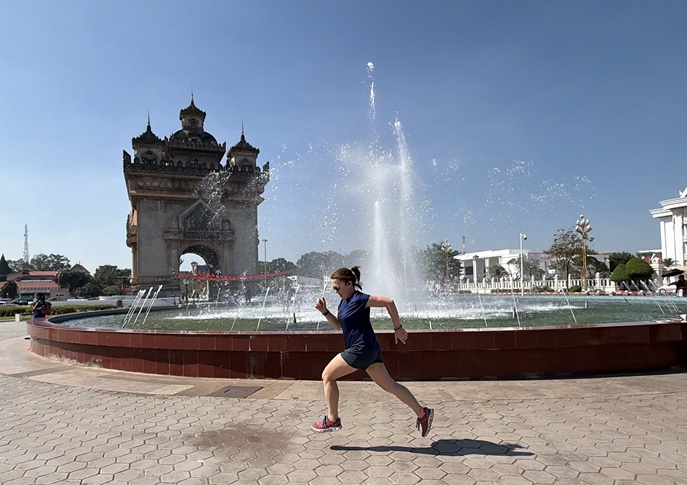
Once all the greetings were written, emotions exchanged, and candies handed out to the warmly smiling woman behind the counter, I left Andry at the post office — he always sends more postcards than I do — and went out to pursue my running hobby in the 28-degree heat.
I have never encountered such different post offices within a single country. Yet one thing remained constant: whether people were currently working in a post office or connected to one only by memory, they were remarkably patient and welcoming toward our unusual requests.
This wasn’t the only journey where sending postcards wasn’t possible — here, some post offices had stopped operating. My Denmark post describes a different situation, where the entire traditional postal system was shut down at the start of 2026.
If you’d like to read future entries from this post office diary, you can subscribe here.
 Exploring the Unexpected