
- Date of visit: 16.11.2025
- Post office visited: General post office in Phnom Penh
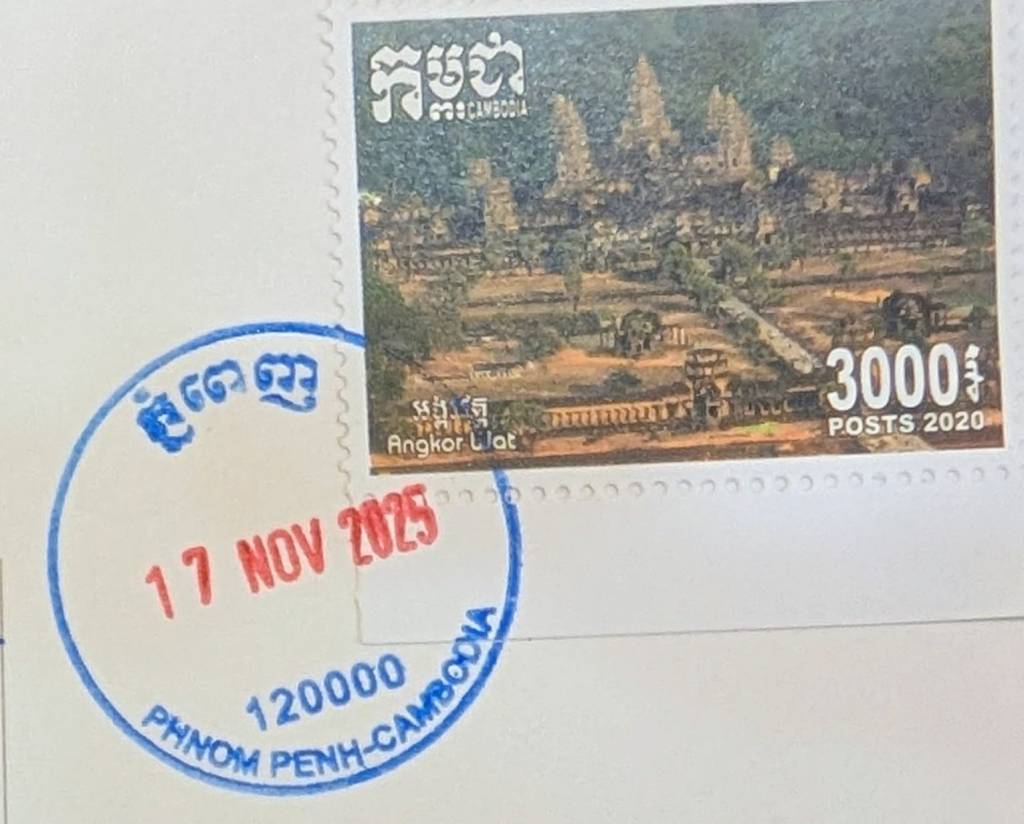
- Cost of sending postcard: 3000 Cambodia real ( 0,75 usd)
- Postcards available at: Post office, museum shops, gift shops
- Delivery time: quickest was Germany — 11 days
A Brief Look at Cambodia’s Postal History
Cambodia’s first organized postal services began in the late 19th century, when the country became part of French Indochina. Mail was handled through the colonial system and used Indochinese stamps, usually cancelled in Phnom Penh and a few provincial towns. After gaining independence in 1953, Cambodia issued its first postage stamps under its own name, marking the start of a national postal system.
In the decades that followed, postal services were often disrupted, and during the Khmer Rouge period the system largely stopped working altogether. When services slowly restarted in the 1980s, Cambodia had to rebuild its postal network almost from the ground up. The country rejoined the Universal Postal Union in 1994, restoring international mail services and reconnecting Cambodia Post with the rest of the world.
Our trip to Cambodia
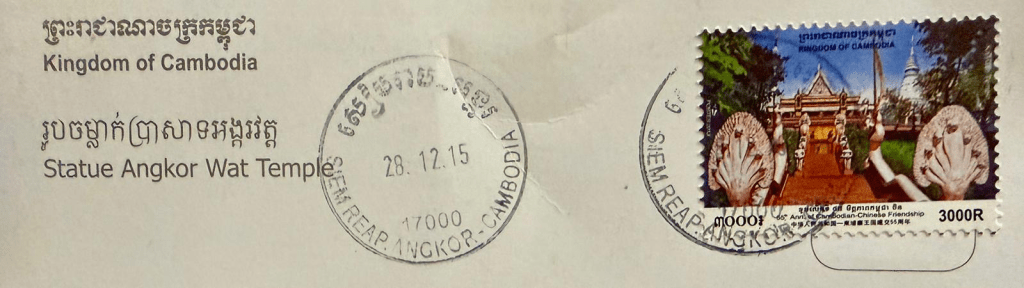
We first visited Cambodia in December 2015 with friends and family, seeing most of the country’s major sights and, among other things, also visiting the post office at Siem Reap (close to Ankor Wat).
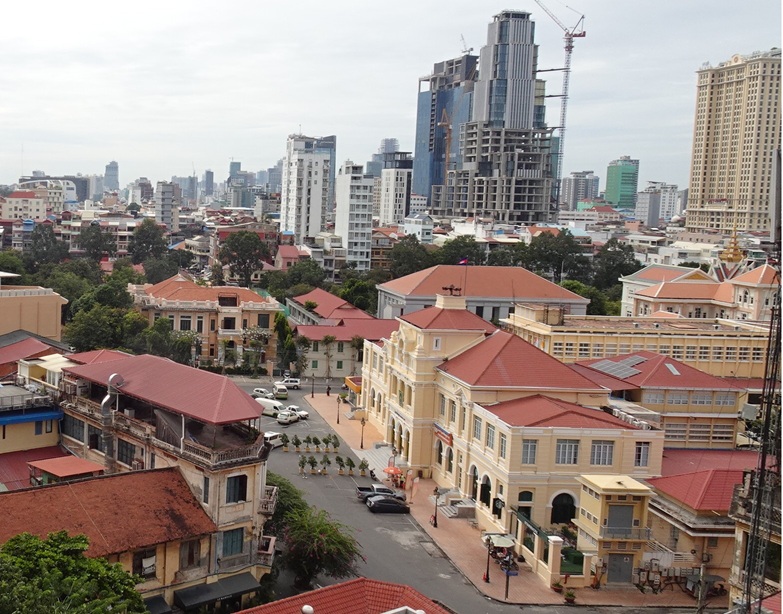
Nearly a decade later, in November of this year, we returned with a much narrower focus: Phnom Penh. This time, the post office we wanted to visit was the city’s historic General Post Office, so we chose our accommodation accordingly — TRIBE Phnom Penh Post Office Square. Only the next morning, after arriving late the night before, did we realize that the post office itself was visible straight from our hotel room window.
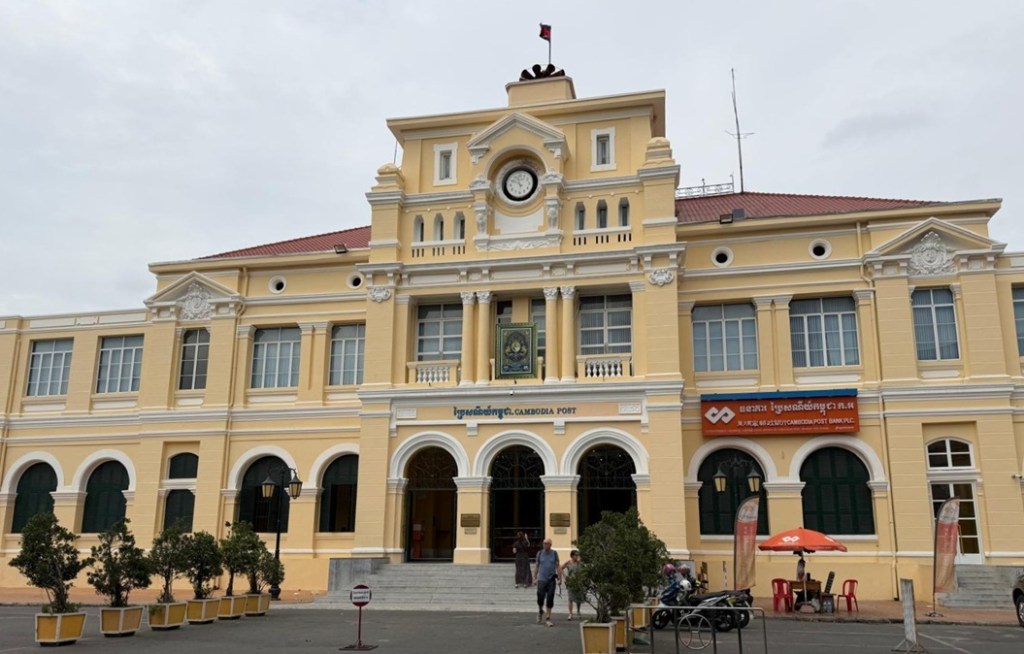
The post office was designed by Daniel Fabré (1850–1904), an architect and urban planner in Southeast Asia. With its symmetrical façade, Roman arches, Corinthian columns, balconies, pediments, and rich sculptural details, it looks unmistakably European. The building has been in continuous use since 1895, except during the Khmer Rouge period, when the city was emptied, money was abolished, and institutions like this stopped operating. Of course, none of that history was visible from the window — I read about it online.
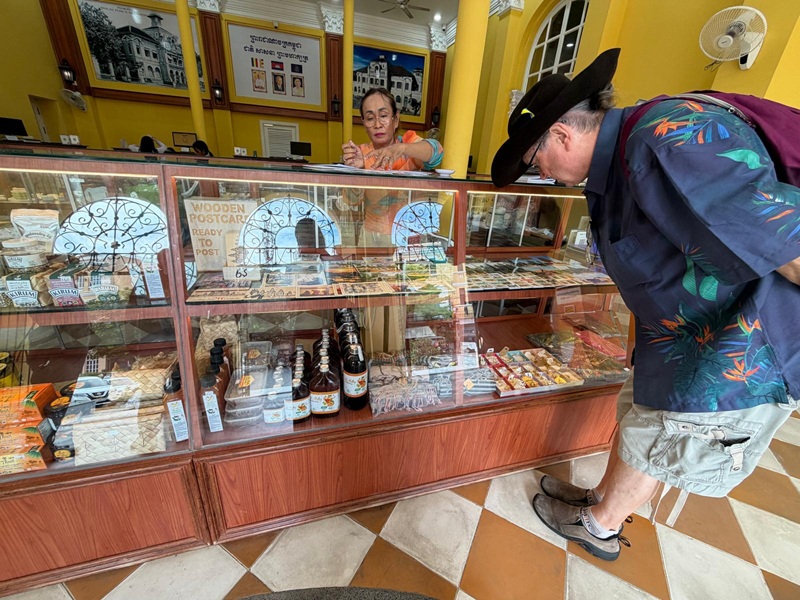
So the next morning, noticing that the post office doors were already open, we went in after breakfast. Right opposite the entrance stood a large counter selling stamps and souvenirs, promising all the philatelic joy one could hope for. Our plan was simple: buy some nice Cambodian stamps to complement the small selection we had already sourced earlier from the European philatelic secondary market.
There were plenty of beautiful stamp sets on display, but only one was sold at face value; the rest were priced as collectibles, even though they are available at nominal prices on Cambodia Post’s website.
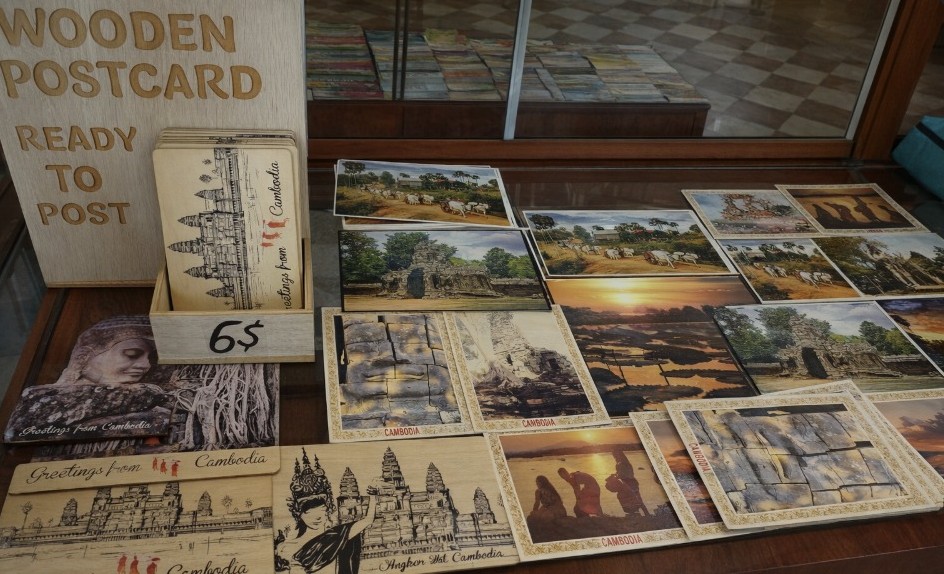
Cambodia’s official currency is the riel, but US dollars are widely accepted at a commonly used fixed rate. A stamp officially costs 3,000 riel (USD 0.75), but when paying in dollars, the price charged was one dollar per stamp. That makes little difference if you’re sending one or two postcards, but adds up quickly when buying several dozen.
After a bit of explaining, the situation cleared up and we paid the official rate rather than the dollar price.
As you might expect by now, the General Post Office wasn’t a one-time visit — we crossed its courtyard more than once on our way to and from exploring the city.
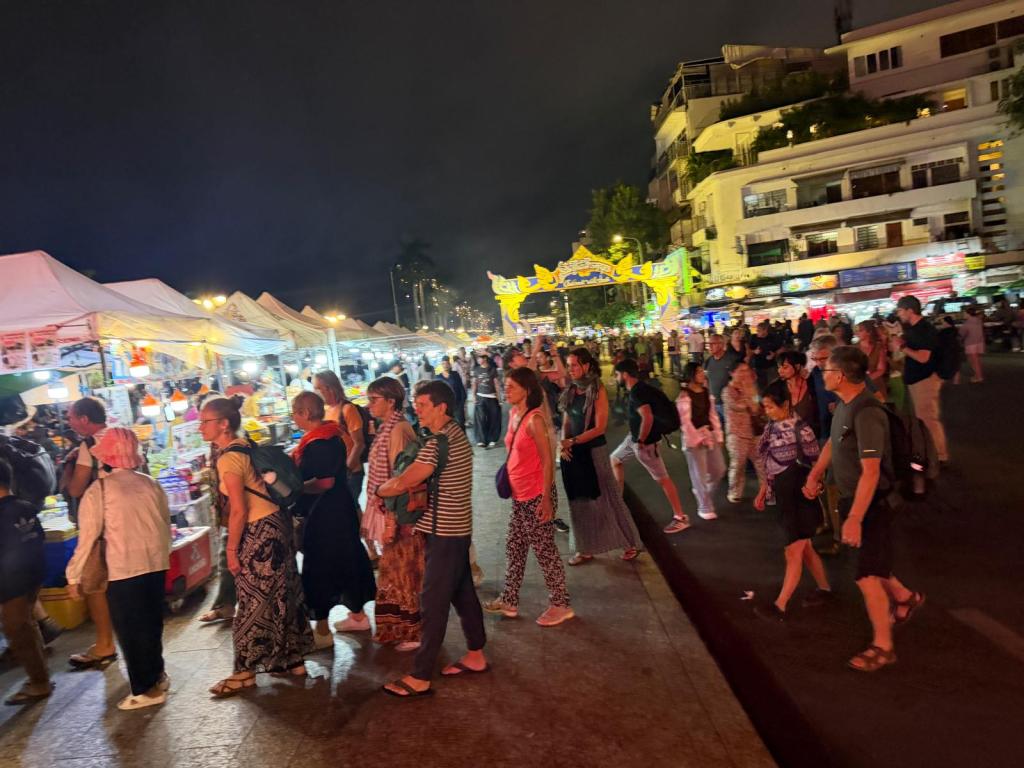
Impressive as the General Post Office was, the evening’s biggest surprise came from right across the street. By nightfall, the riverside promenade opposite the post office had turned into a long line of tables set up side by side, each offering something more exotic than the last. Stretching for more than two kilometers, it was packed with people, food, and curiosity.
This turned out to be the Indonesia Night Market — a cultural showcase organized by the Indonesian Embassy right on the riverside promenade. It was part of a weekend celebration of Indonesian food, music, and culture, meant to bring people together and highlight the ties between Cambodia and Indonesia.
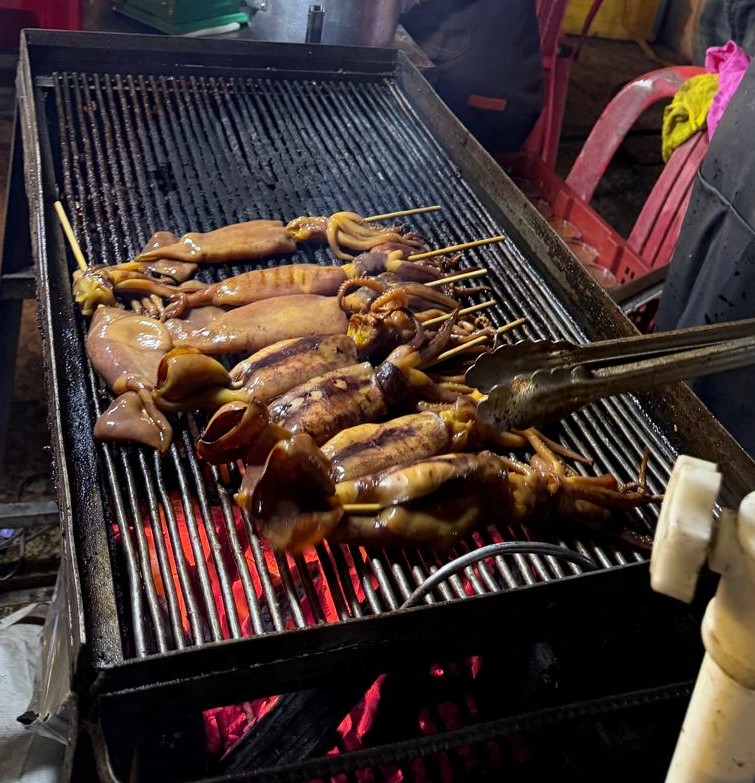
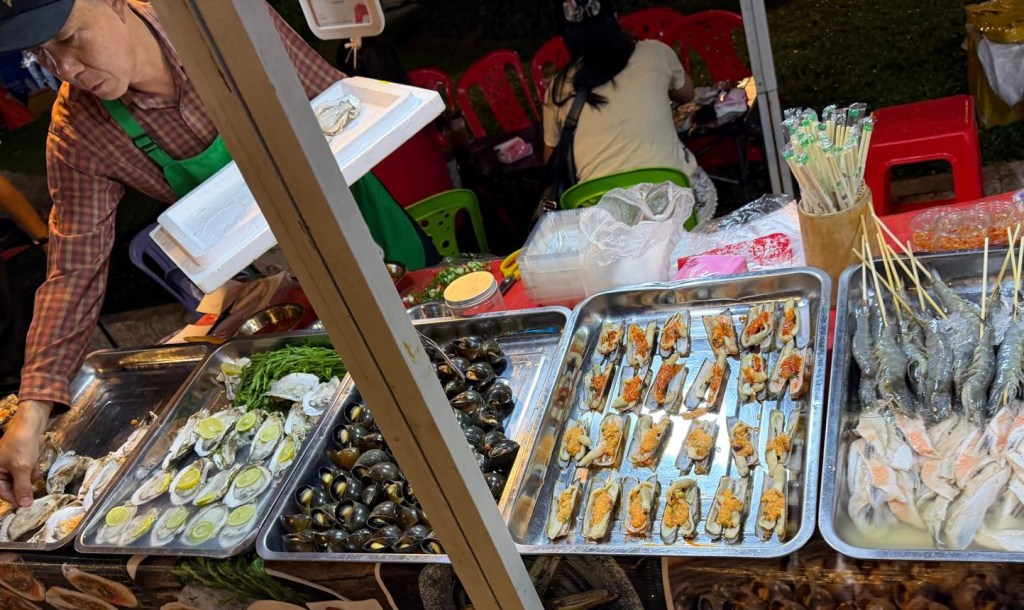
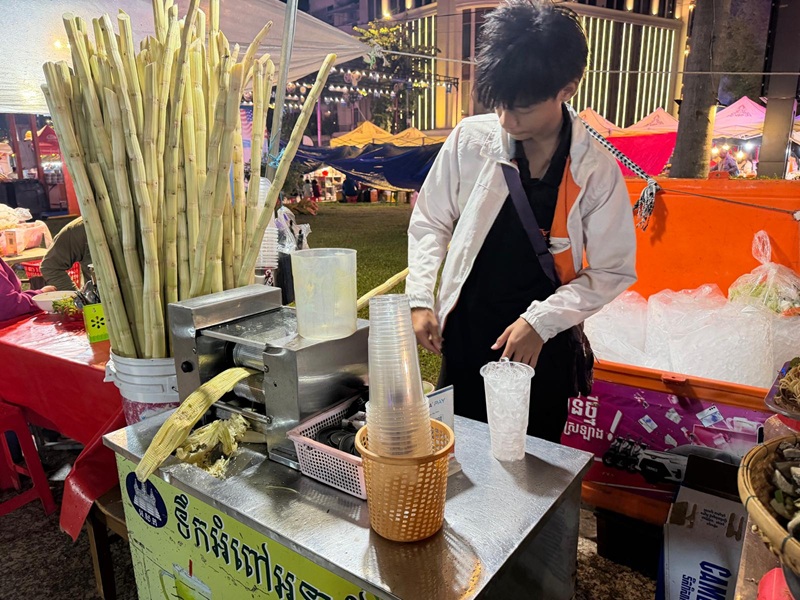
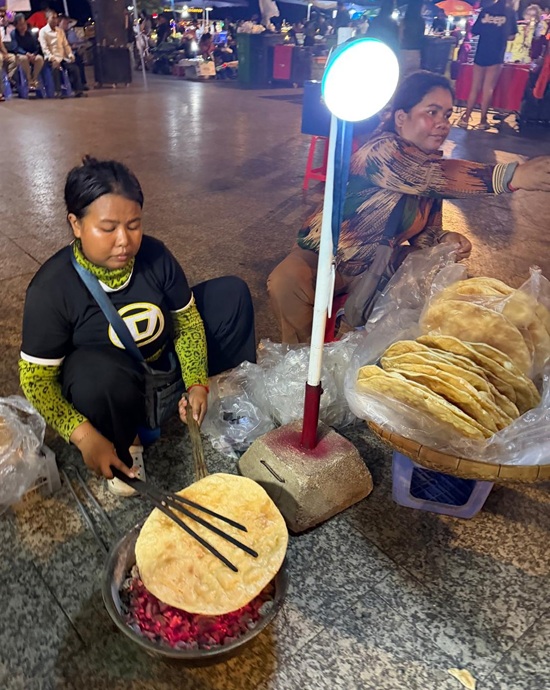
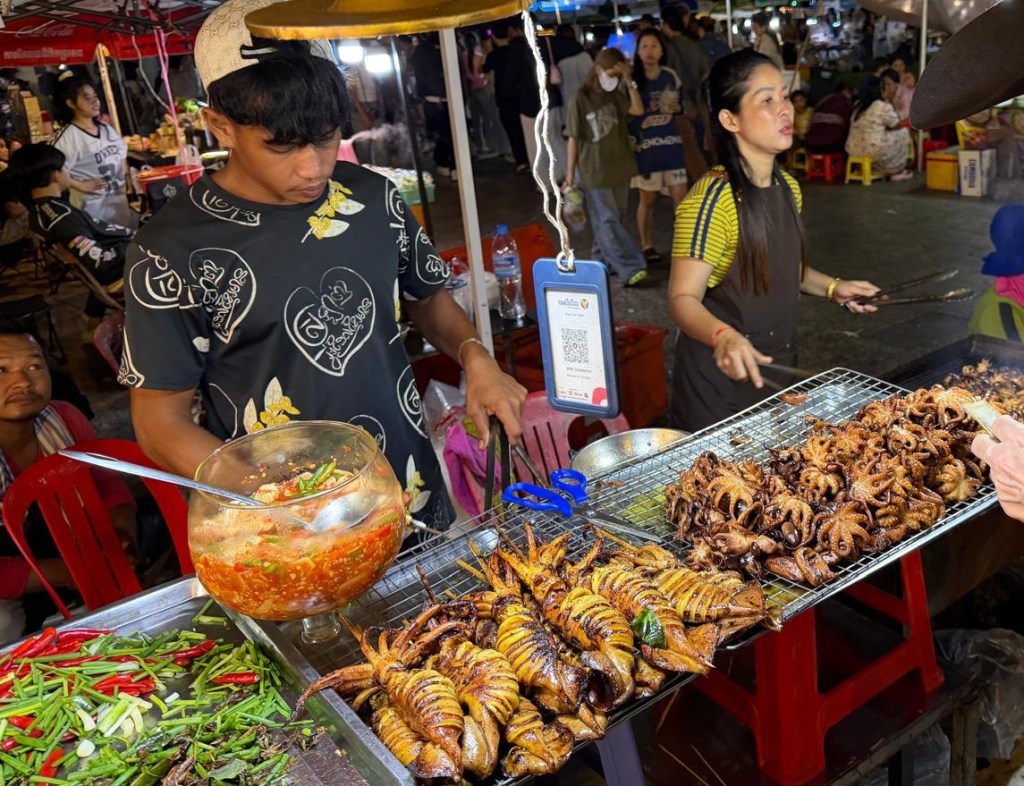
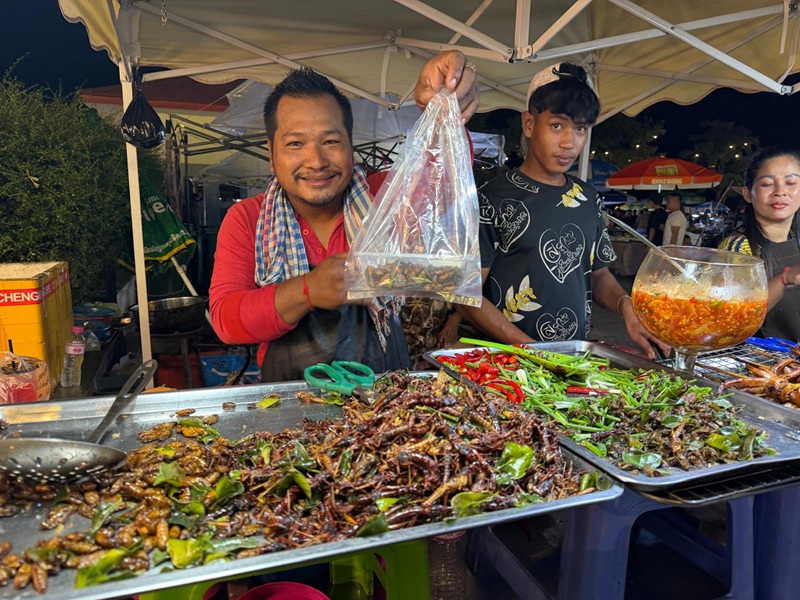
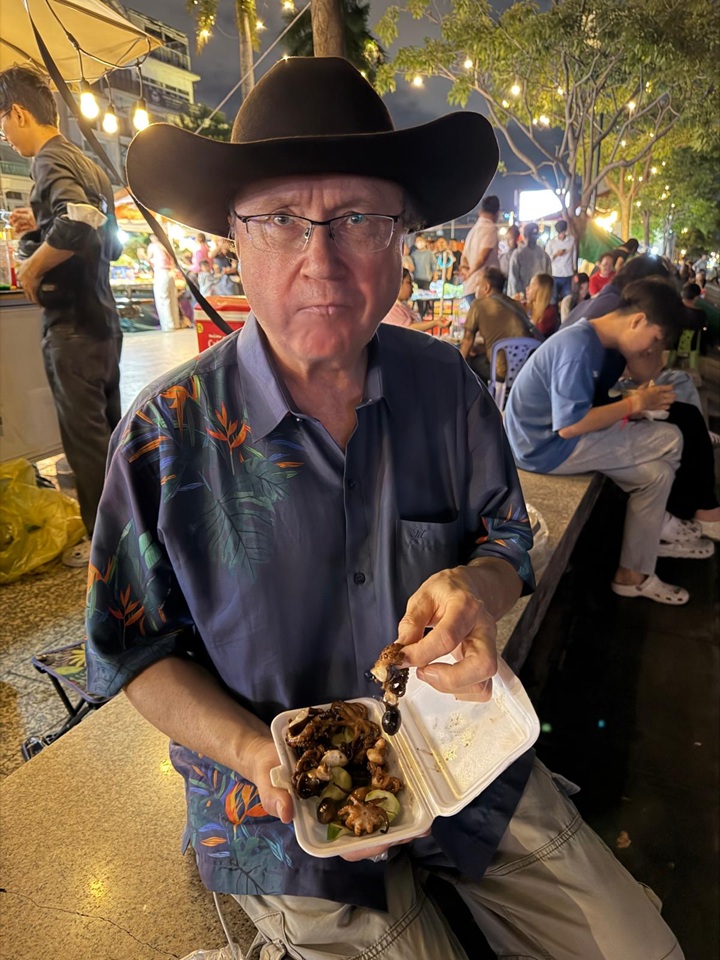
The offerings leaned heavily toward the adventurous: grilled insects, tiny octopuses, squid on skewers, sugarcane juice on the side — all set against a backdrop of music, art, handicrafts, and relentless enthusiasm.These are not foods I normally seek out; insects, in particular, tend to activate a very clear internal warning system. But in the middle of that noisy, cheerful chaos, surrounded by people happily chewing things I had previously classified as “definitely not food,” they suddenly felt… negotiable. Not everything won me over, but as a food experience it certainly did its job.
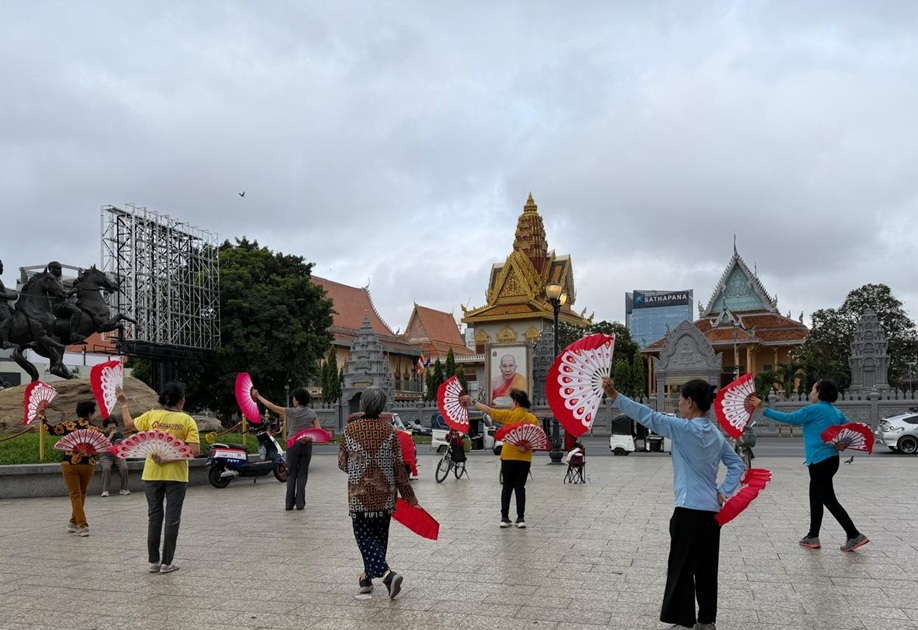
The next morning, on my run along the promenade, the chaos was gone — replaced by cleanup crews and the familiar sight of locals doing morning exercises in small groups.
We dropped off our final postcards at the post office around lunchtime and sent them on their way. And just like that, this chapter of our Cambodia stop came to an end.
The stamps may have lacked variety, but the evenings outside the post office more than made up for it.
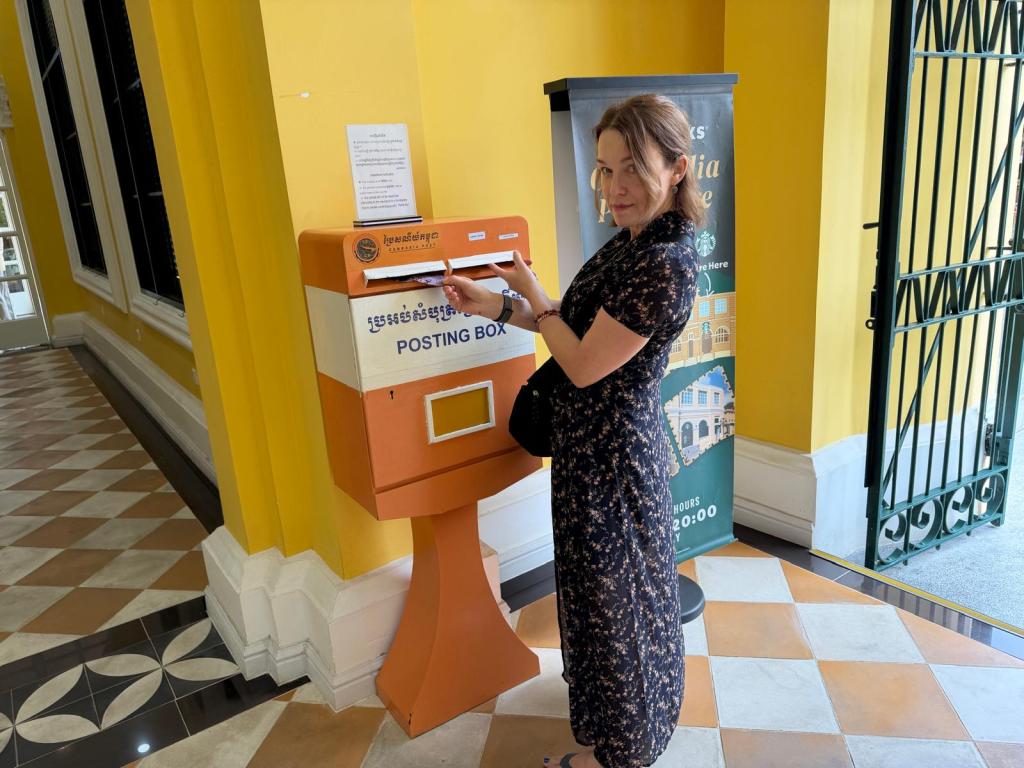
Until the next post office.
If you’d like to read future entries from this post office diary, you can subscribe here.
 Exploring the Unexpected