
- Date of visit: 07.11.2025
- Post office visited: Oman Post Office – Madha. 814
- Cost of sending postcard: 500 baisa (aprox.1,15 eur)
- Delivery time: Fastest Germany, Netherlands, Japan- 7 days
Oman’s postal story begins in a way that feels almost upside-down: long before the country had a unified national network or steady overland connections across its interior, Muscat was already tied into international mail routes through British India. For decades, letters posted on the Omani coast travelled out under Indian stamps, meaning that mail posted from Muscat looked almost the same as mail sent from Bombay — apart from the local Muscat postmark.
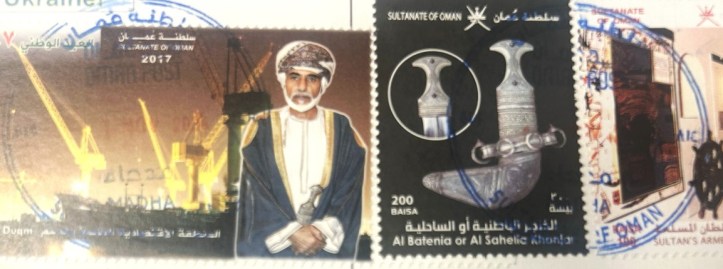
Oman’s own postage was introduced only in 1966, and even then it bore the hybrid name Muscat & Oman, a label that reflected the territory’s transitional state more than a fully formed national identity. When Sultan Qaboos came to power in 1970, he inherited just a handful of functioning post offices, meaning that much of what is today considered the national postal system had to be built almost entirely from scratch in the following years. In a neat historical irony, Oman managed to join the Universal Postal Union in 1972 — effectively becoming integrated into the international postal community before its domestic network had fully taken shape.
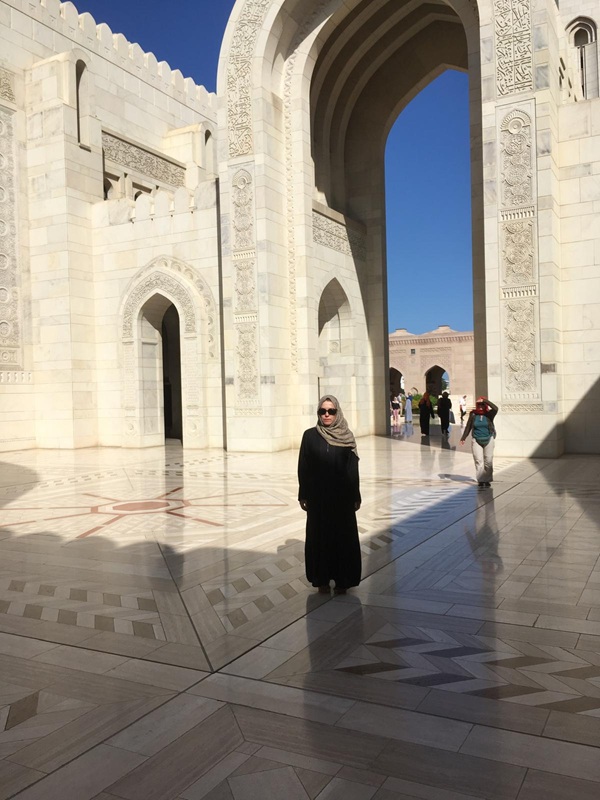
Our visit to Oman:
In November 2019 we visited mainland Oman on a guided tour that took us through Muscat’s corniche and souqs, the Sultan Qaboos Grand Mosque, the forts of Nizwa, the date plantations of Al Dakhiliyah, the Hajar Mountains, several wadis and desert areas, and even a nighttime visit to the nesting beaches near Ras al Jinz, where sea turtles come ashore to lay their eggs.
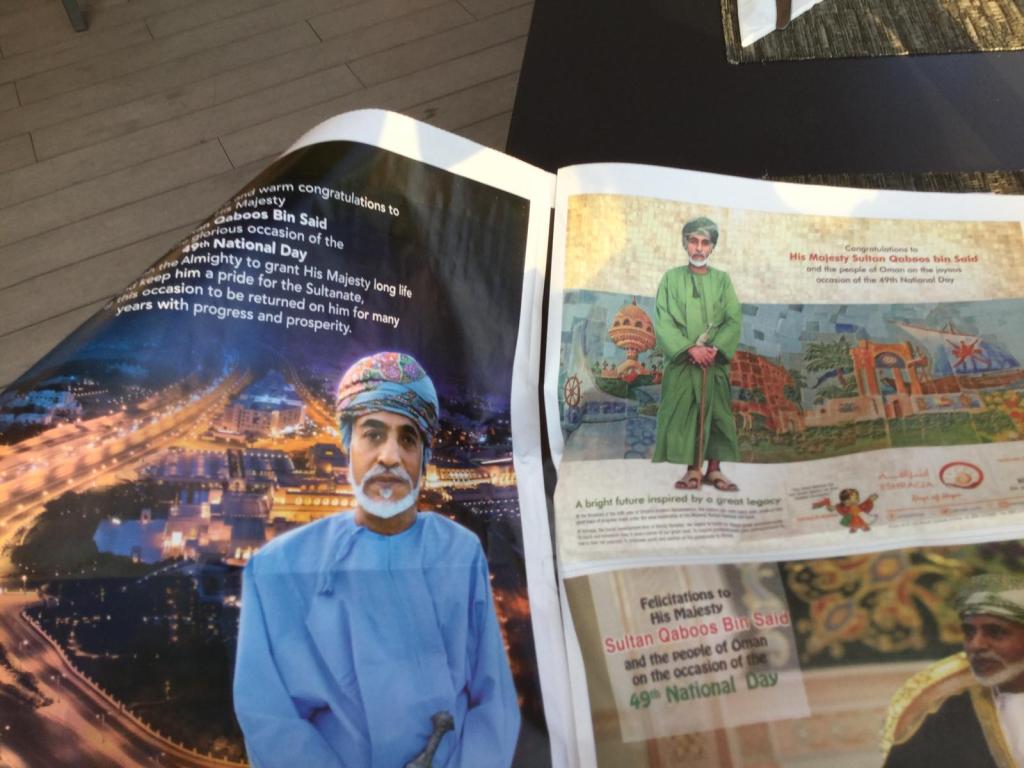
And although the sights themselves were remarkable, what struck me most on that trip wasn’t the landscape or the heat, but how much people talked about their leader. I had never heard a head of state spoken of with such consistency and warmth. Sultan Qaboos bin Said was, at the time of his death, the longest-serving leader in the Middle East and the Arab world, having ruled for nearly half a century. His reign brought Oman out of international isolation, modernized infrastructure, expanded education and healthcare, abolished slavery, ended the Dhofar rebellion, and established the country’s first constitution. He had no children, and people often said — with genuine admiration — that he poured all his energy and resources into the country itself.
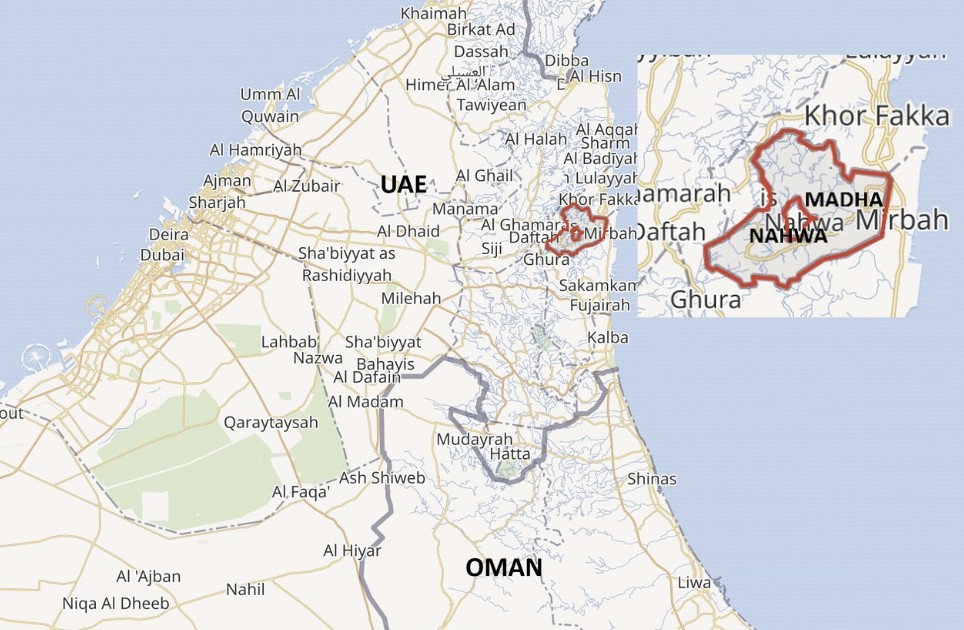
“Wait… what?” was my reaction when Andry told me there was an Omani enclave hidden inside the UAE — and that it even had its own post office. So in early November of this year we decided to go and see it. We rented a car in Dubai and drove out to explore this strange little enclave for ourselves.
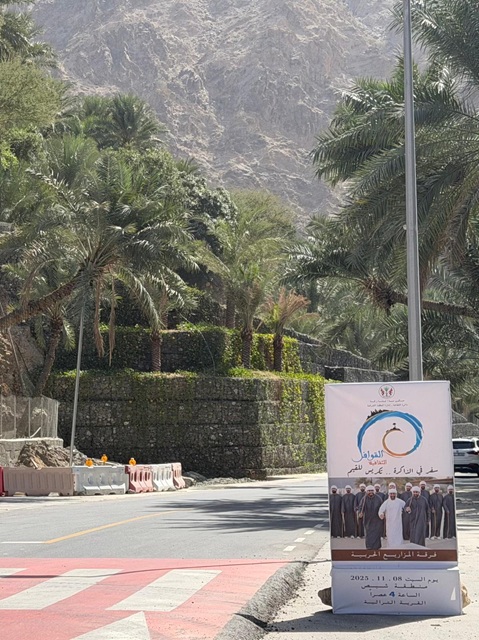
We were heading instead to one of the strangest geographical quirks in the region: the Omani enclave of Madha (93.34 km²), surrounded entirely by the UAE, inside which lies Nahwa (4.40 km²), a counter-enclave belonging to Sharjah. The UAE inside Oman inside the UAE — a geopolitical nesting doll.
Leaving Dubai, the road heading east was everything you’d expect from that part of the UAE — wide, smooth, and impeccably maintained, at least for the stretch all the way to Wadi Shees Nature Park. Even well beyond the last suburbs, the highway stayed surprisingly polished, cutting confidently through the mountains with the kind of engineering that makes long distances feel short. The drive to the Madha area took a little over an hour.
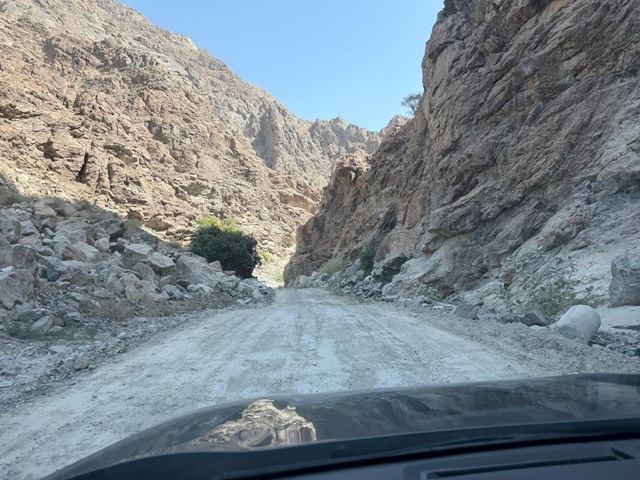
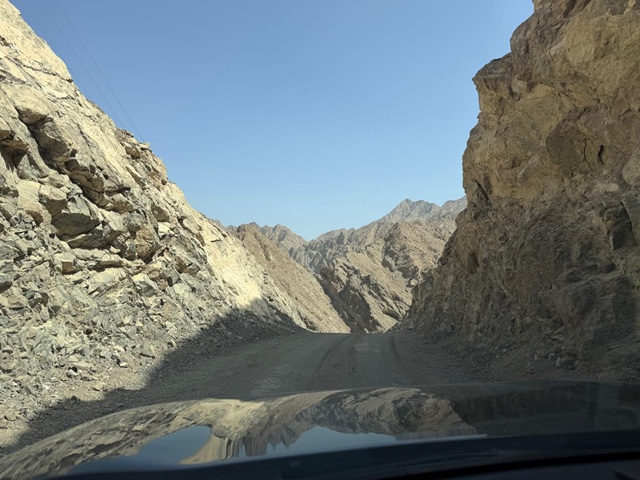
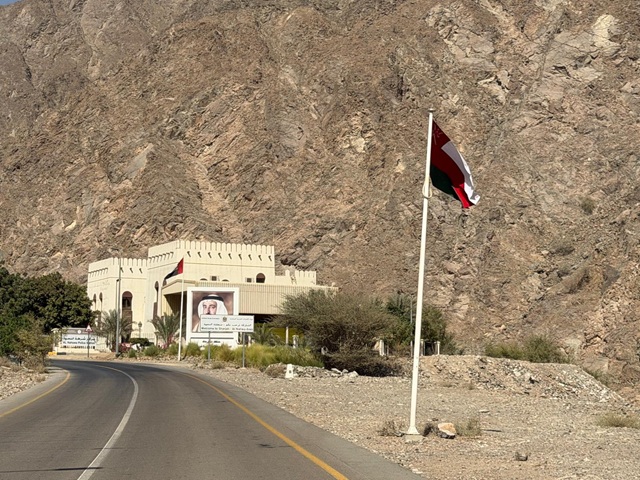
Right photo: now in Oman — we realised it only thanks to Google Maps.
Only when we turned off toward the enclave did it begin to change: the pavement narrowed, then roughened, and eventually gave way to a rocky track climbing up and down the mountains. In rainy weather you’d definitely want a four-wheel-drive; the gravel was loose and steep enough to make an ordinary car feel out of place.
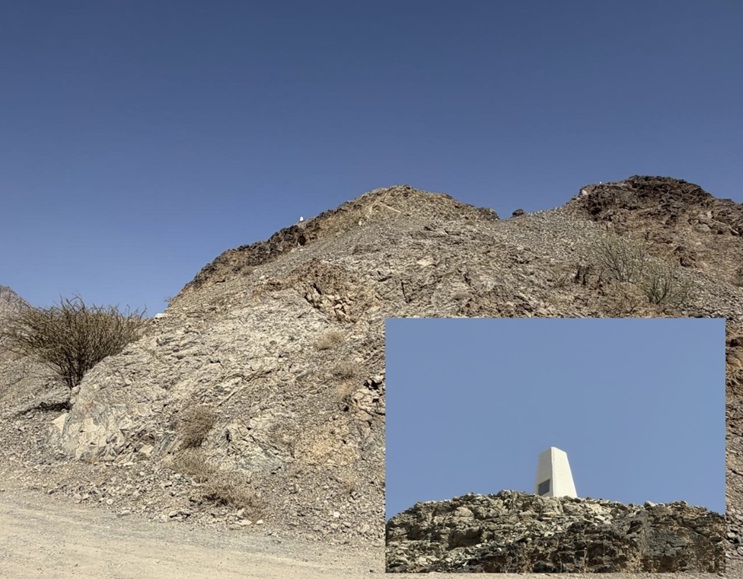
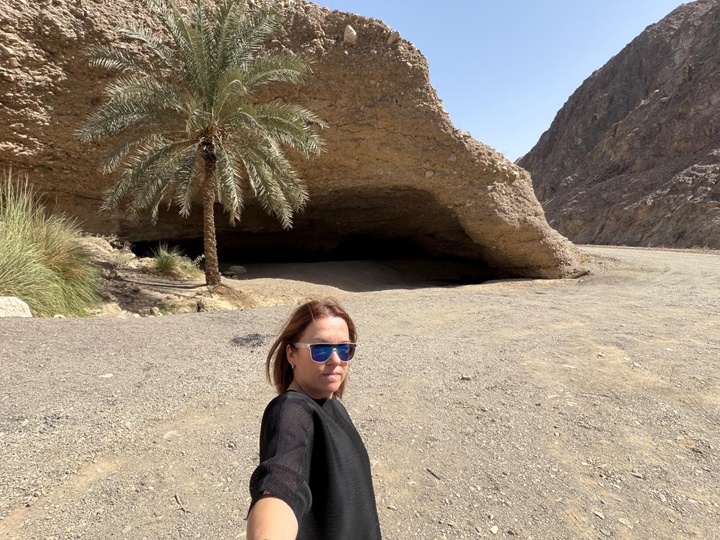
After this short, bumpy stretch, we reached the first part of Nahwa (population 302, 2015), the small Sharjah-controlled village inside Madha. A border post could be seen perched on a hill above us, but on the road itself there was no sign of an actual crossing — no gate, no officers, nothing to suggest you had entered a different country.
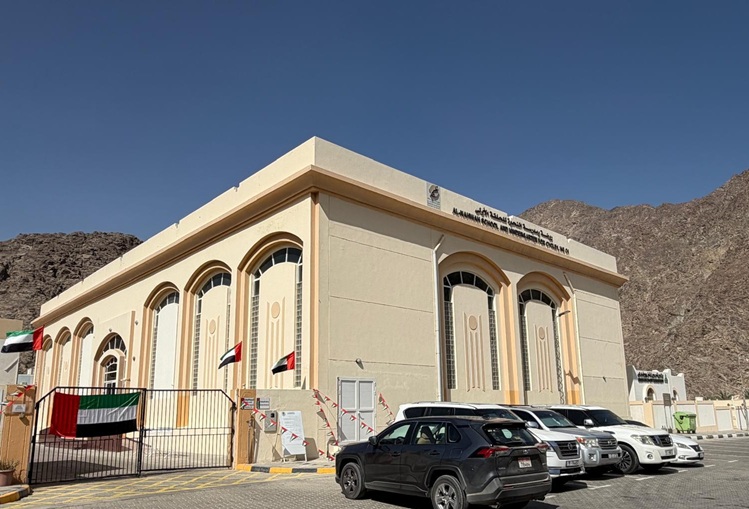
The impressive infrastructure appears later, on the Oman-Gulf-facing side of Nahwa: a modern fire station, a police post, a school (but no post office), and several large administrative buildings rising out of an otherwise empty landscape.
A few minutes farther on, the signs changed again and we entered Madha (population 3,217, 2020), this time its small town area. There was no border post or checkpoint — only two flags at the roadside, the UAE flag and the Omani flag, clearly marking the frontier.
In Madha there were several mosques, shops, a couple of eateries, at least one hotel, even a tiny airport — and, most importantly for us, one post office. But it was closed.
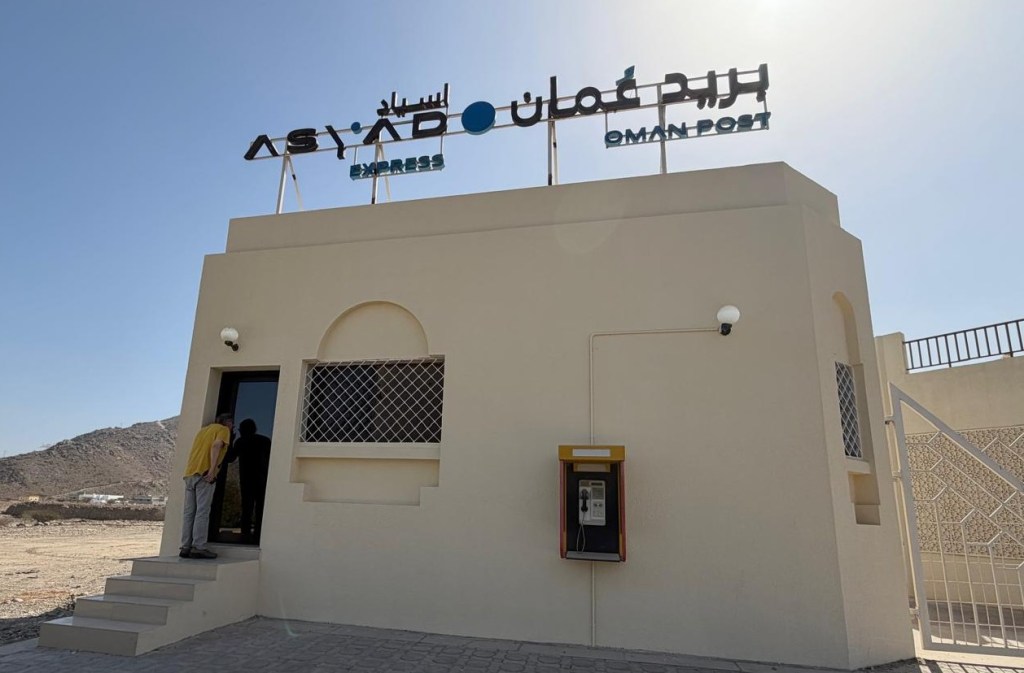
We knew the post office would be closed on Friday, but our travel plans left no alternative, so we went anyway. To be prepared, we had bought Omani stamps in advance from European philatelic resellers. Still, we wanted to write the postcards on Omani soil and send them from the correct place — and we needed local internet to obtain the Omani ID for Postcrossing’s travel mode.
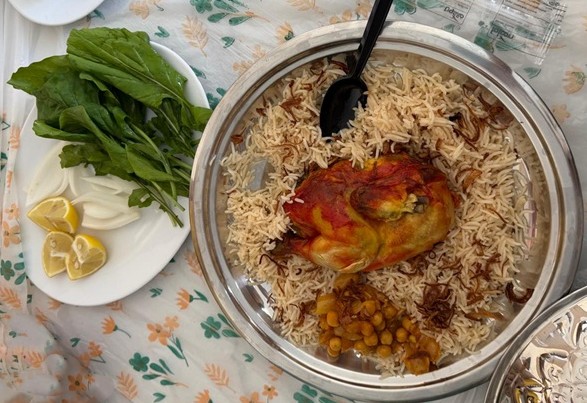
We looked around for a spot where we could write our postcards and get something to eat. When we asked for a menu in a small local place. Al Sadd kitchen and restaurant, the reply was simple: “What menu? We have grilled chicken and rice.” So that’s what we ordered, and honestly, there was no need for anything else — the rice alone was worth the stop. One of the workers, Nahidul, originally from Bangladesh, chatted with us and kindly offered to post our cards on a workday.
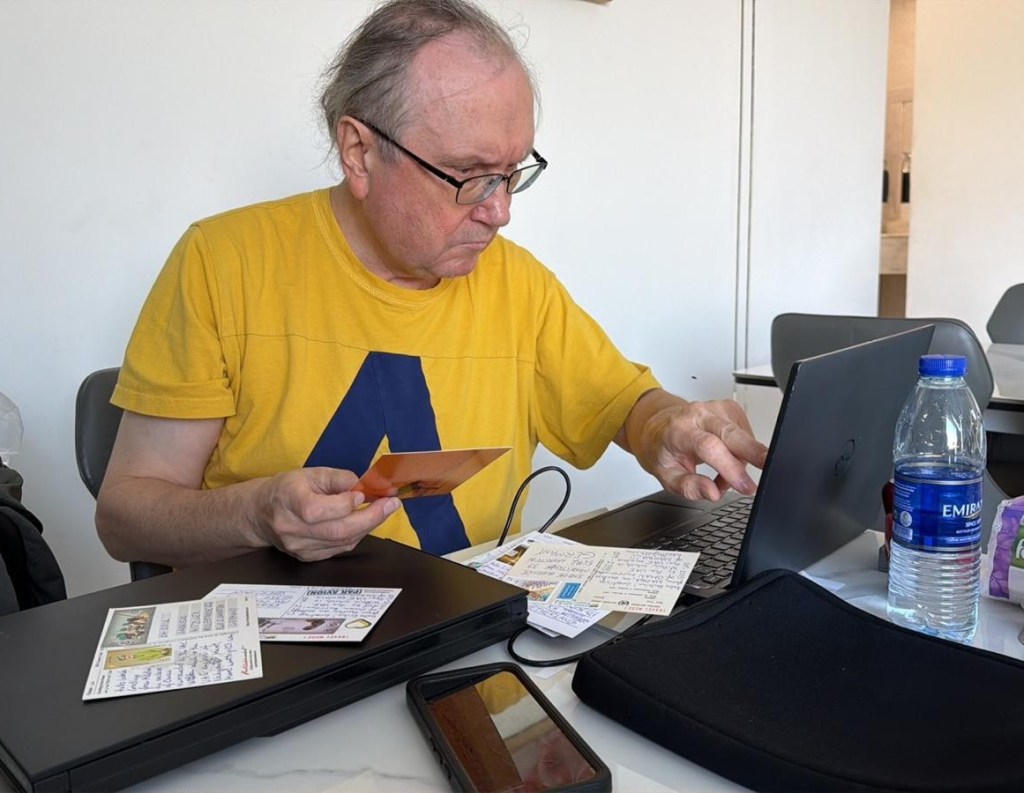
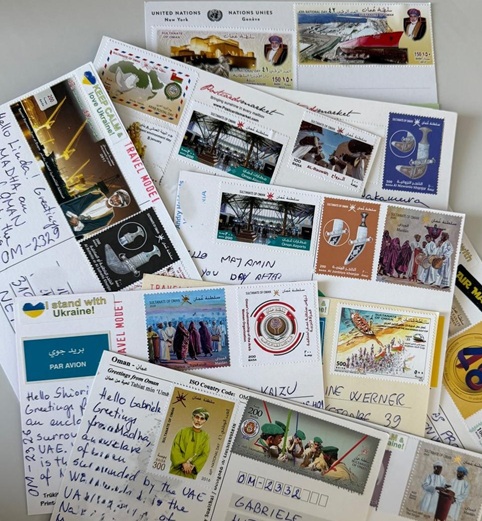
We left this restaurant and Oman once again and re-entered the UAE; the border was clearly marked, though still without any actual control.
Back in the UAE, we made a stop in Khor Fakkan, a charming coastal town, before driving back to Dubai that same evening. This time we stayed on the main highways, bypassing Madha and Nahwa entirely, gliding along the UAE’s trademark wide, fast, perfectly paved roads.
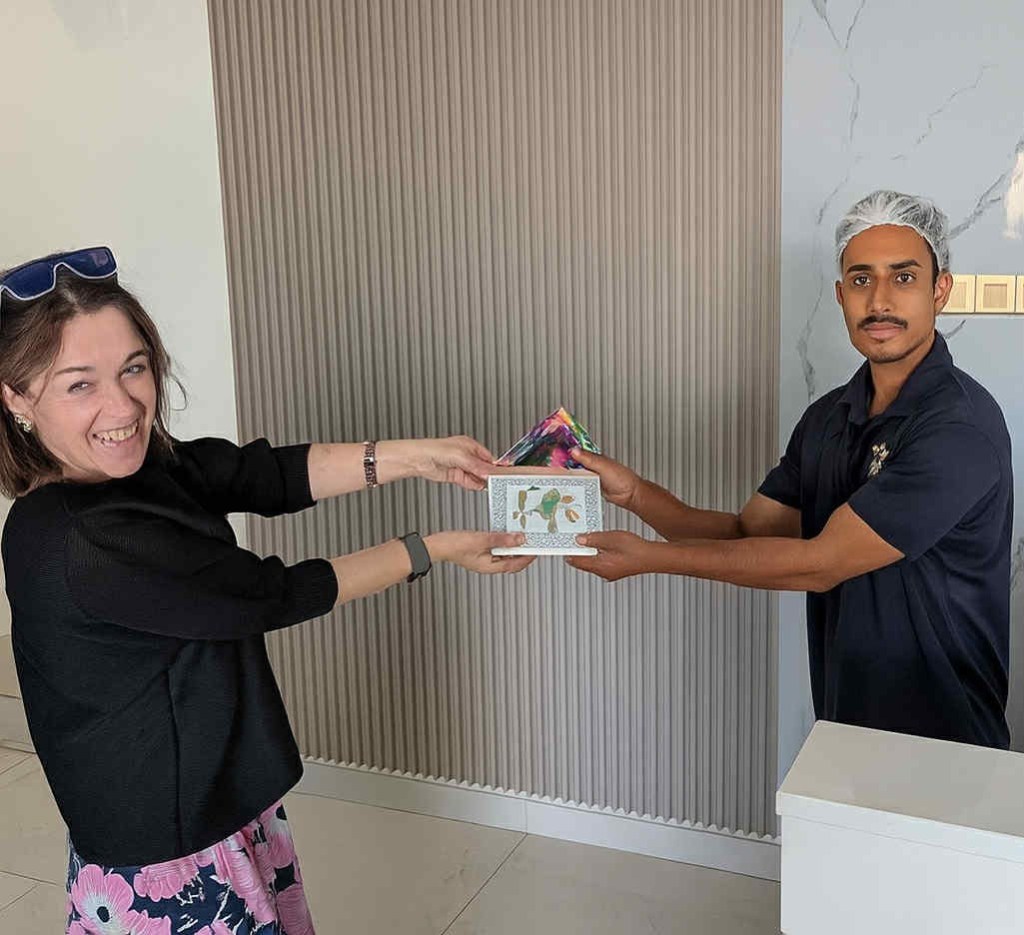
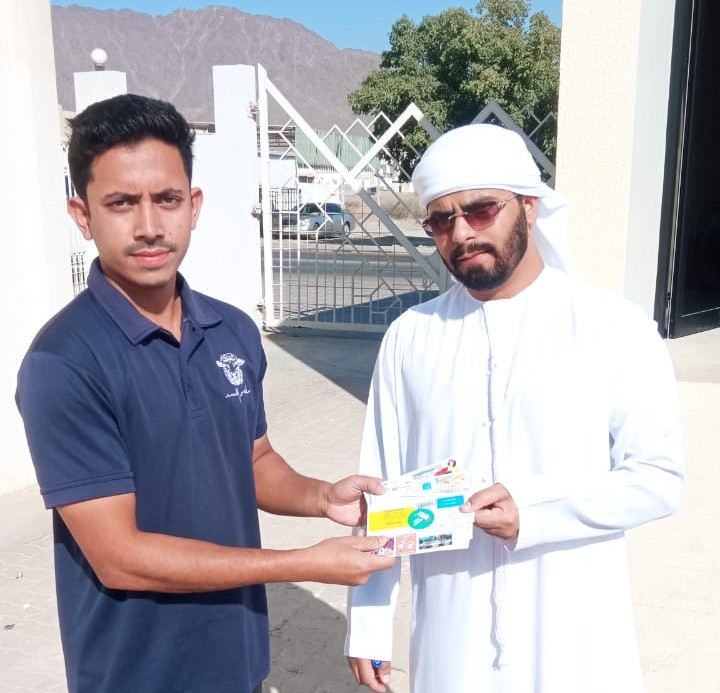
On Sunday a photo popped up on my WhatsApp: Nahidul handing the postcards over at the post office. It didn’t take long for the first ones to reach their destinations. The earliest arrivals landed in Japan, Germany, and the Netherlands in less than a week and a half.
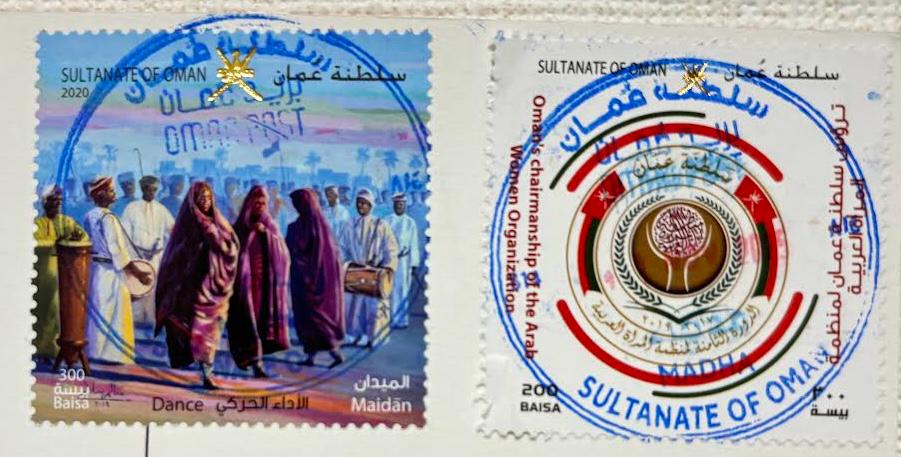
Photo thanks to Shiori (Japan)
And just like that, this visit was over again.
Until the next post office — and to the lottery winners: your postcards are already on their way.
And no — this story wasn’t about the post office they were actually sent from. That one is coming soon…
That one is now up — you can read the Myanmar post office story here.
If you’d like to read future entries from this post office diary, you can subscribe here.
How These Enclaves Came to Exist
Madha and Nahwa trace their origins to local tribal loyalties in the early 20th century. When surrounding territories were defining borders, the people of Madha pledged allegiance to the Sultan of Oman, while the nearby village of Nahwa chose to align with Sharjah.
These decisions were respected when modern borders were drawn, resulting in an Omani enclave inside the UAE — and a small Sharjah counter-enclave inside that enclave.
 Exploring the Unexpected