
- Date of visit: 01.10.2025
- Post office visited: Central Post Office in Baku
- Cost of sending postcard: 0.90 AZN to MDB countries and others, incl. the Baltics; 1.00 AZN elsewhere (0,45-0,50 euro)
- Postcards available at: museum shops, Libraff, and in some gift shops
- Delivery time to Europe: seven days to Italy, Germany and Belarus
Brief Postal History of Azerbaijan post
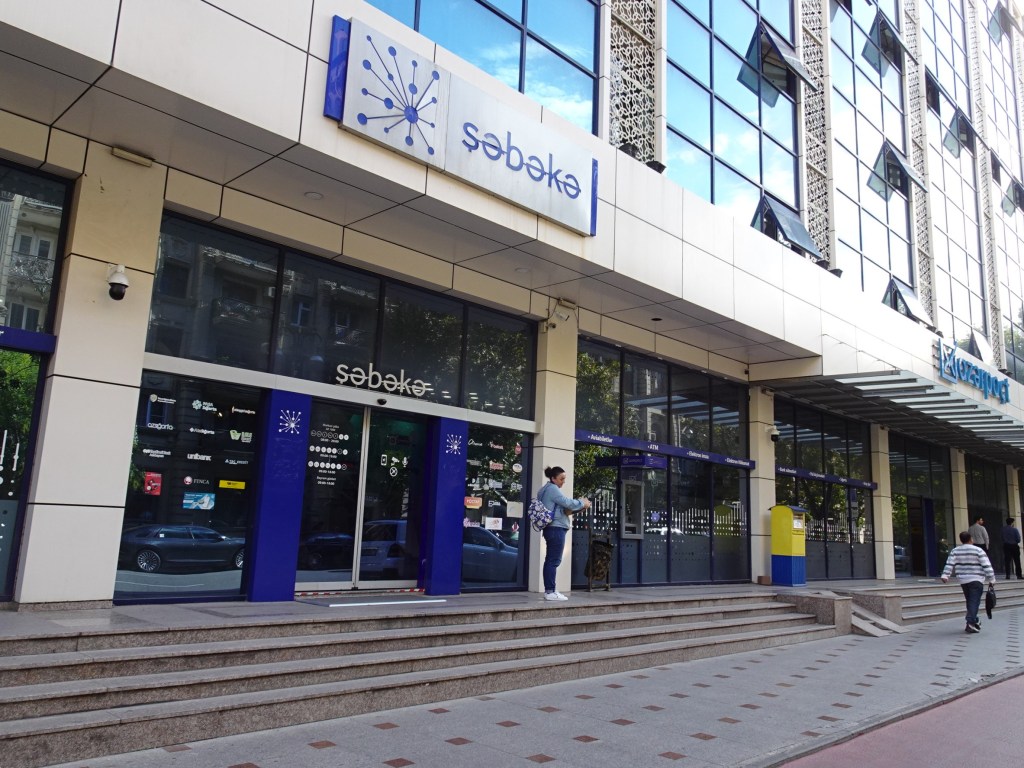
Located at the crossroads of East and West, Azerbaijan has long stood on the ancient Silk Road — a route that carried not only goods and ideas but also early forms of communication. While postal activity dates back to the Safavid era in the 16th century, the first official post office opened in Ganja on June 1, 1818. The network expanded steadily, with railway mail introduced in 1883, sea routes on the Caspian, broader rural coverage, and growing international links. Since 1997, the national postal service has operated as Azerpost, which today continues this centuries-old tradition through its “Shebeke” centres (since 2017) — a nationwide network of modern service offices that integrate postal, financial and public services under the same roof.
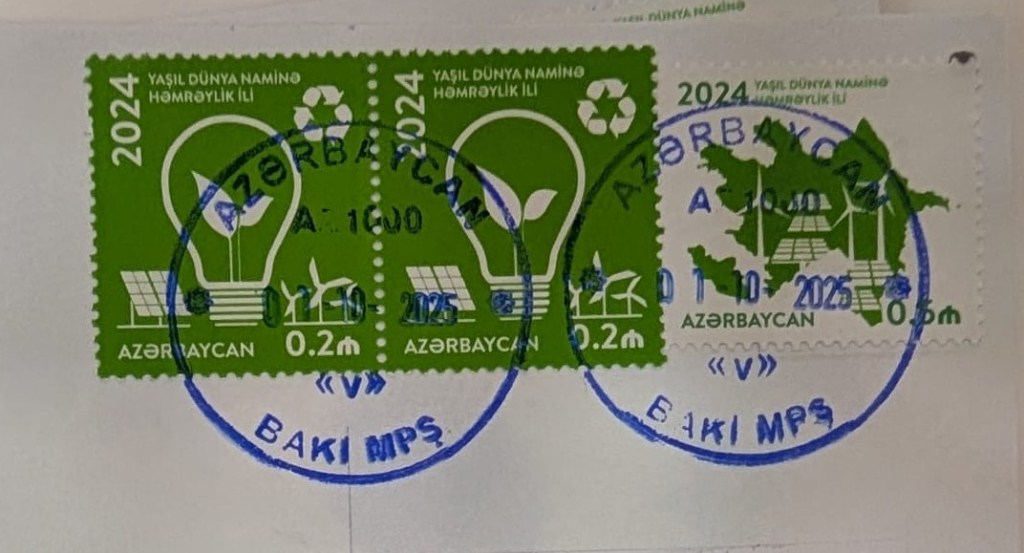
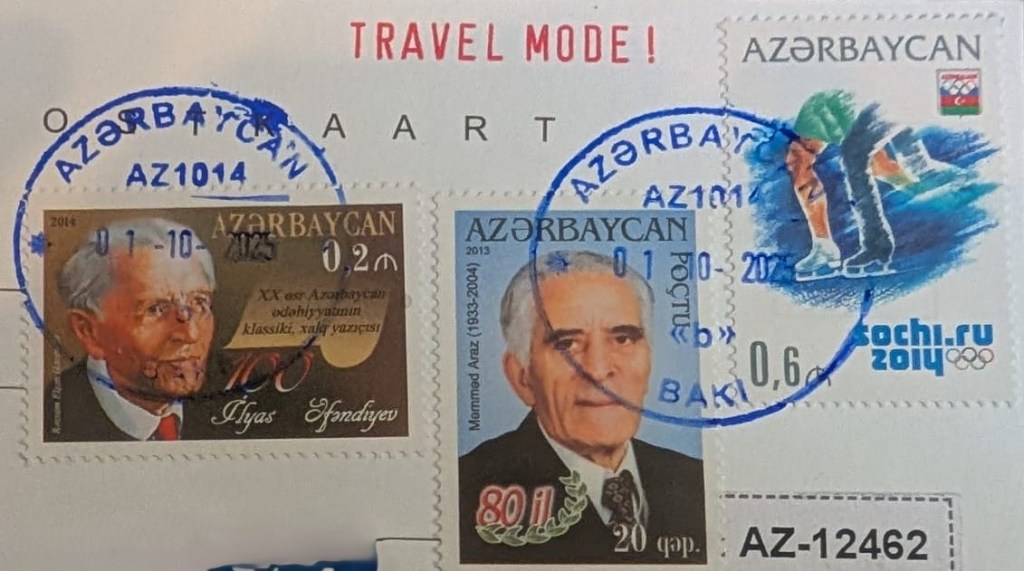
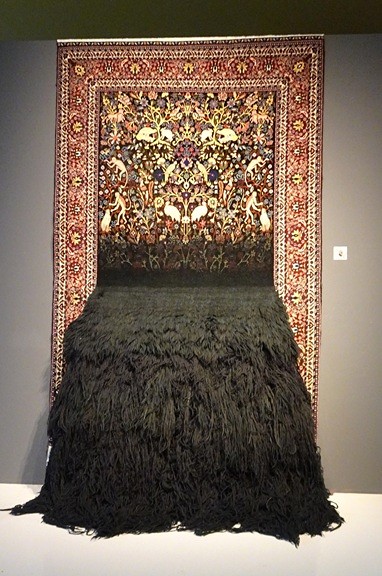
Our visit to Azerbaijan
We decided to travel to Azerbaijan with the Germalo tour group — a quick gap in our calendar, a reasonable price, and a good guide made the choice easy. With a history spanning millennia, Azerbaijan is an ancient land at the crossroads of civilizations — and, like Estonia, it emerged from decades of Soviet occupation in 1991 to restore its independence. Unlike Estonia, however, this region is rich in natural resources, and its style of governance has taken a different course. None of this, however, seemed to make the post offices all that different from the ones back home.
During the first couple of days, we let our guide take us on the obligatory sightseeing tour of Baku.
On the third day — October 1st, World Postcard Day — we were finally ready for one of the important moments we had been looking forward to: visiting a post office. After all, this is a day celebrated enthusiastically by postcrossers all around the world. There was a small one just across the street from our hotel, but of course, our goal was the main post office. Armed with postcards, stamps, and a bag of Estonian Kalev chocolates, we soon found ourselves standing at its grand entrance. At the reception desk, we were helped to get the right number, and before long we were at the correct counter, confidently requesting our postcards to be stamped.
This time we weren’t allowed to do the stamping ourselves, and it took a bit of explaining before the clerk agreed to hand the postcards back after cancelling the stamps so we could take a few photos with the postmark — something we always try to do on our postal trips. She repeated several times, with some suspicion, that once stamped, the postcards must not leave the post office. Of course, that was exactly our plan — to send them from there.
We handed over a small stack of postcards, including one rather special, self-made rubber postcard, already stamped and addressed to my wonderful friend Teele — the one who crocheted Bareru for me. The regular postcards were duly stamped without any fuss. But the rubber one? That was a different story.
The regular postcards were duly stamped. The rubber one? “No, that can’t be sent. It must go as a parcel — the material isn’t allowed.” “But according to UPU rules, it is allowed.” “No,” came the answer.
So… What to keep in mind sending a postcard (according to UPU guidelines):
- Size: In line with Universal Postal Union (UPU) recommendations, postcards should measure at least 90 × 140 mm and not exceed 120 × 235 mm. Items outside this range may be treated as letters or parcels.
- Thickness and weight: A postcard must remain within standard thickness and weight limits. If it is too thick or heavy, postal operators may reclassify it under a different category with different postage rates.
- Surface: The address and postage area must be writable and clearly legible. A smooth surface suitable for writing or printing is essential to ensure proper handling and delivery.
- Material: Postcards made of rubber, plastic, wood, or textile are generally acceptable under UPU rules, provided they are not hazardous, do not damage other mail, and can pass safely through sorting equipment. Items that are too soft or have irregular shapes are best placed in an envelope.
- Practical note: Such unconventional postcards are often categorised as “non-standard postcards” or “special format items”, which may involve slightly higher postage fees and manual processing.
- Final tip: Always check the local postal regulations, as national operators may apply additional restrictions — and yes, we did check!
Trying not to make things more complicated, Andry simply asked if he could scan three of the postcards — yes, we travel with a scanner. Reluctantly, the clerk handed them back, repeating that we must not leave the building with them. Apparently unconvinced by our promises, two security guards appeared to supervise Andry’s scanning session. Without protest and even with a touch of gratitude, we handed the postcards back and prepared to leave, offering a bag of chocolates as a small thank-you.
But that turned out to be a problem too. “We can not take it,” said the young clerk. Right — Azerbaijan takes its anti-corruption efforts seriously. We left the chocolates on the counter and stepped outside, hoping they’d open the box and share it among themselves anyway — and perhaps also hurrying a little, just in case someone decided to call the police for attempted bribery.
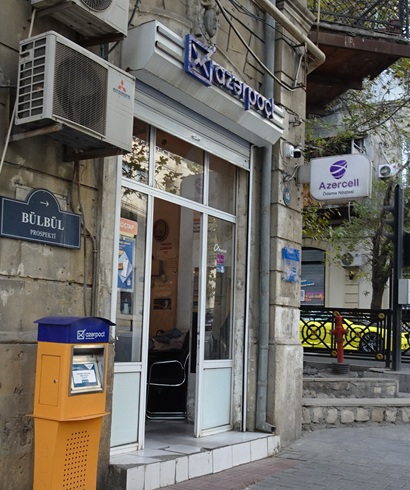
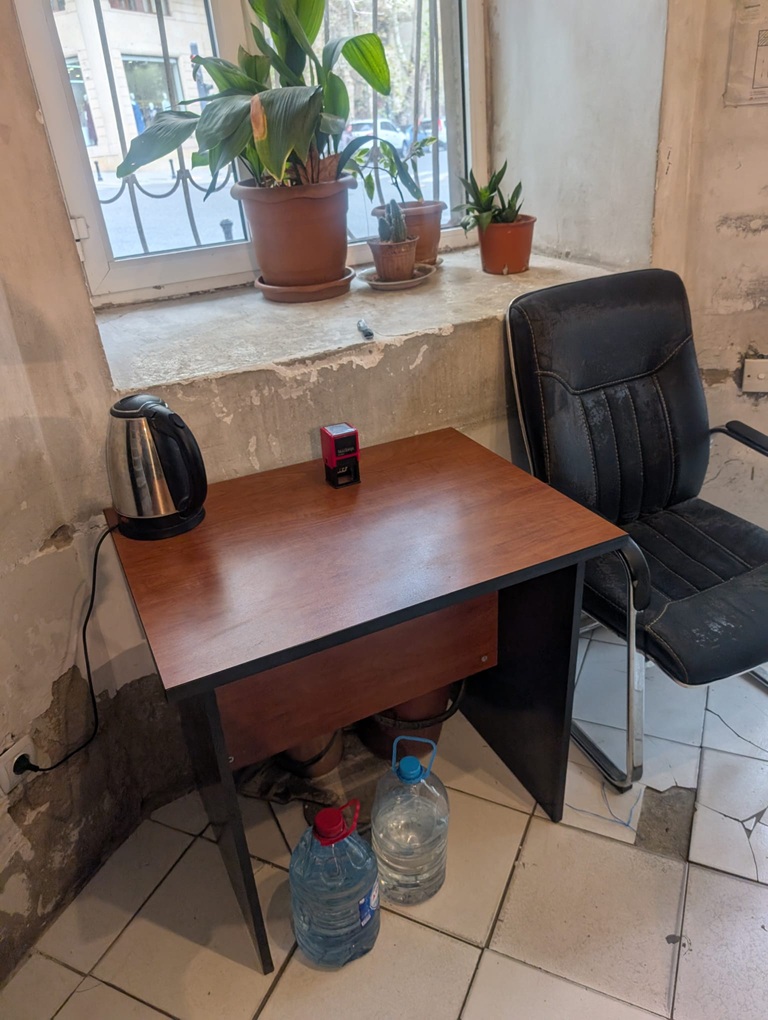
With the rest of our unsent postcards in the bag, we headed straight to the small post office near our hotel — the one we had briefly visited that morning — and what we saw there, compared to the experience at the main post office, was almost surreal. In the tiny room, a date stamp sat in the small room right in the middle of the table, and people arriving to send letters would stamp their envelopes themselves and place them on the windowsill. The local postal workers greeted us warmly on our return. We stamped the rest of our postcards ourselves, and even our previously “unsendable” postcard — the rubber one — was happily accepted there. The staff also wrote a greeting in Azerbaijani in our travel book.
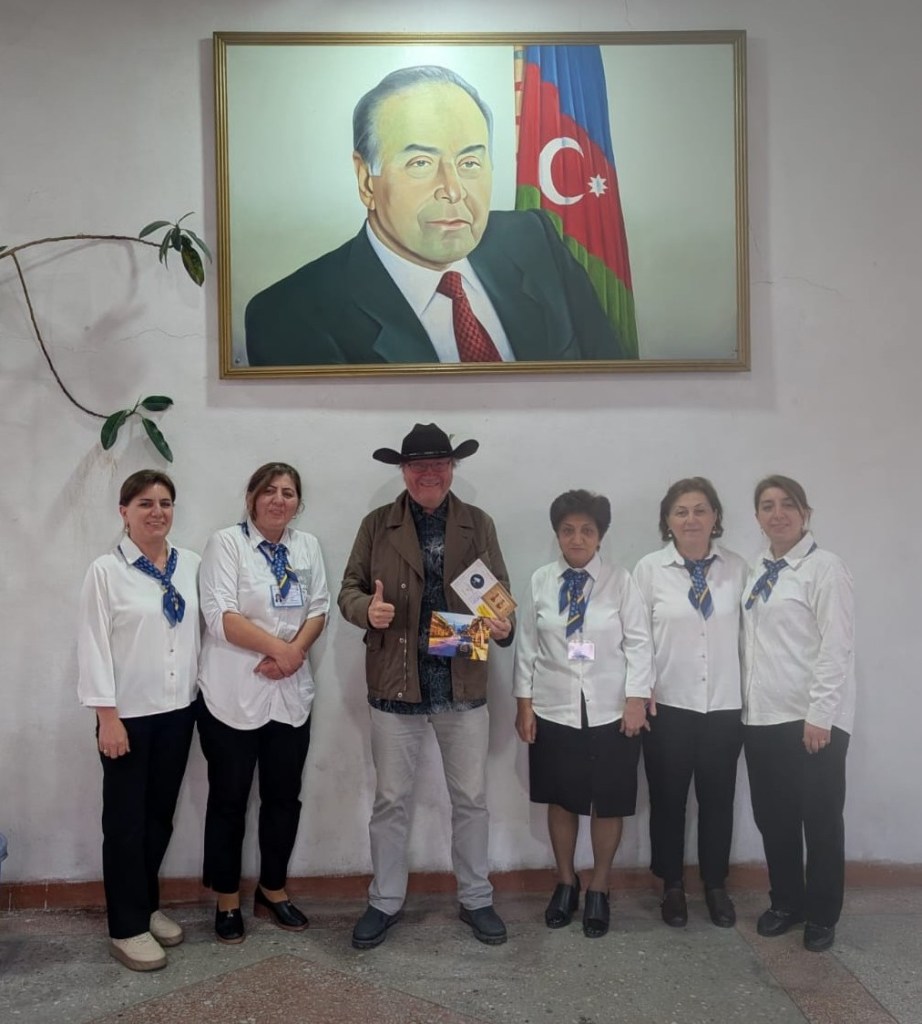
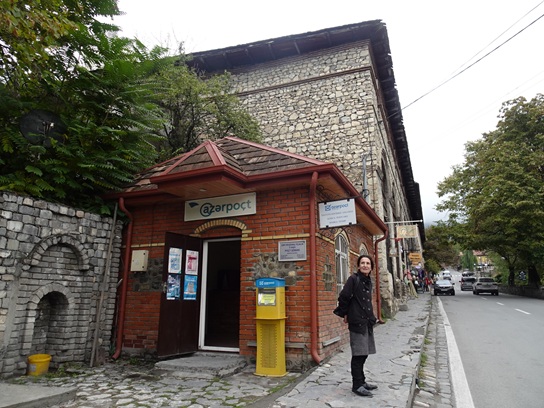
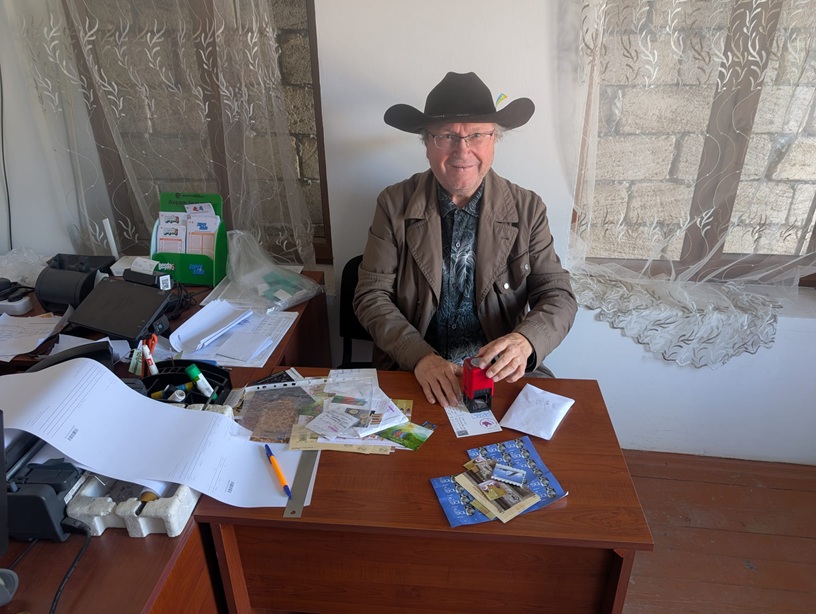
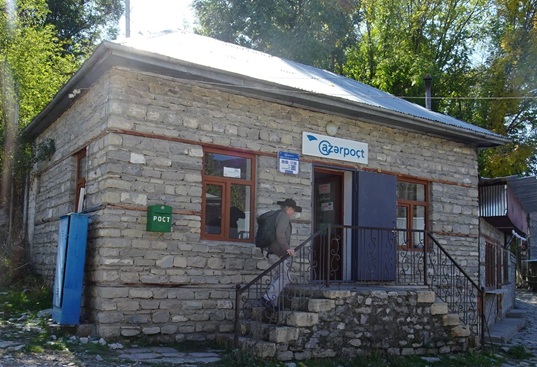
Although these were the largest and smallest post offices we visited — and also the closest to each other — we didn’t pass up the chance to stop by others in the following days as our journey took us beyond Baku. Whenever we found one open, we stepped inside. And without fail, we encountered the famous Azerbaijani hospitality — from being offered our own table complete with a date stamp to being asked to pose for photos together.
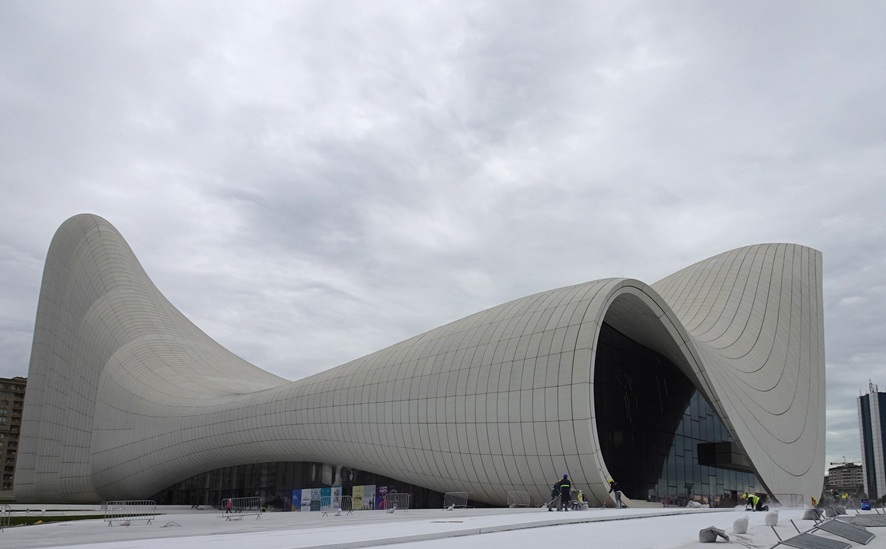
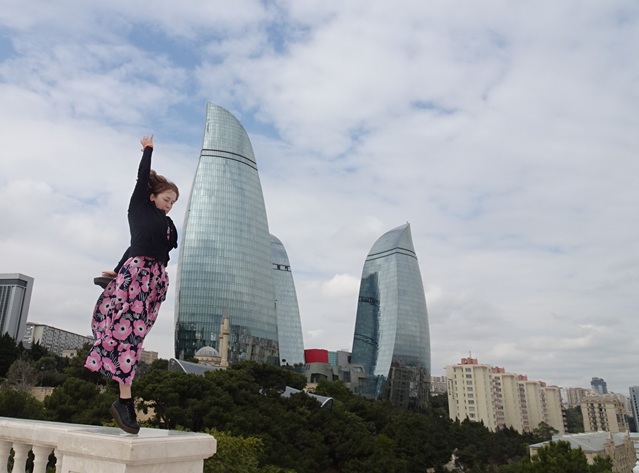
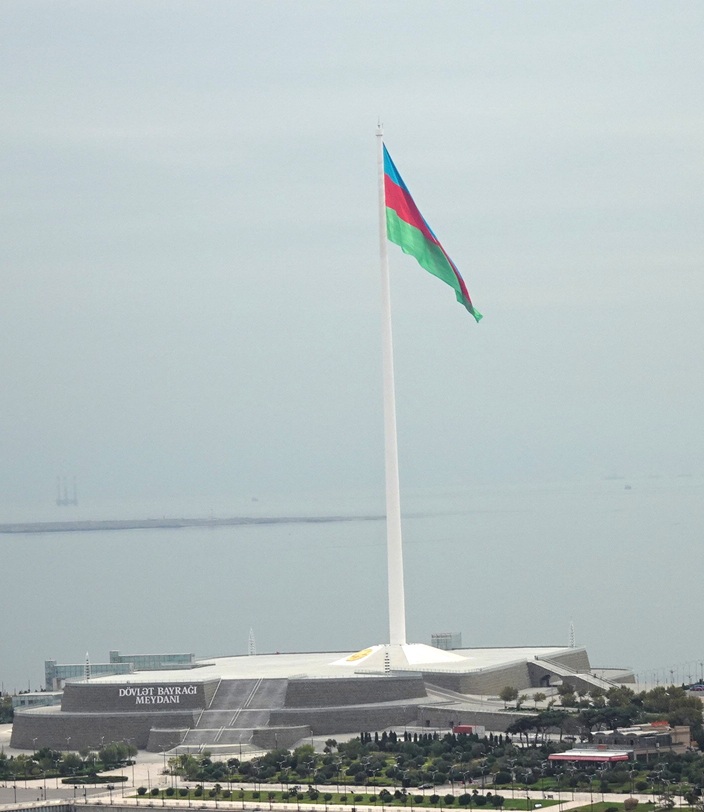
Azerbaijan, a country nestled between two great mountain ranges of the Caucasus, is a land of striking contrasts — from mountains, lakes, mud volcanoes, and the ancient rock carvings of Gobustan to architecture that spans centuries, from the 12th-century Maiden Tower and the 15th-century Palace of the Shirvanshahs to the modern elegance of the Heydar Aliyev Center and the Flame Towers. It’s also home to one of the world’s tallest flagpoles (162 m) and the lowest capital city on Earth — Baku, lying 28 m below sea level on the Caspian shore. And just as these contrasts define the country itself, we found them echoed in its postal system too — from the imposing formality of the grand main post office to the warm, communal charm of the smaller local branches.
But was time to leave again. Bye for now — thanks for coming along.
If you’d like to read future entries from this post office diary, you can subscribe here.

 Exploring the Unexpected