
- Date of visit: 10.09.2025
- Post office visited: Koror Post office
- Cost of sending postcard: $0.61 USA and $1.70 international
- Postcards available at: Gift shops in Koror, big selection in Belau National museum
- Delivery time: fastest to USA only with 8 days, to Europe (UK) 13 days
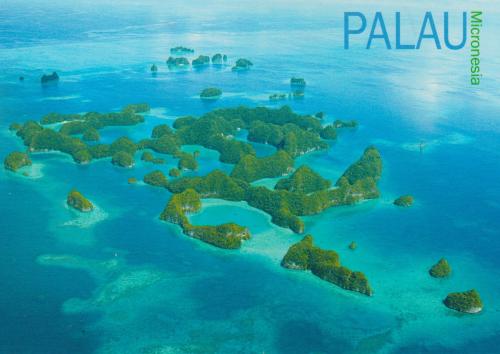
Palau is an island country in the western Pacific Ocean, consisting of more than 300 islands of the Caroline group. The population is less than 18,000, with most people living on the island of Koror. Palau is renowned for its pristine marine environment, with the Rock Islands Southern Lagoon recognized as a UNESCO World Heritage Site, and is considered one of the top diving and snorkeling destinations in the world.
Brief Postal History of Palau
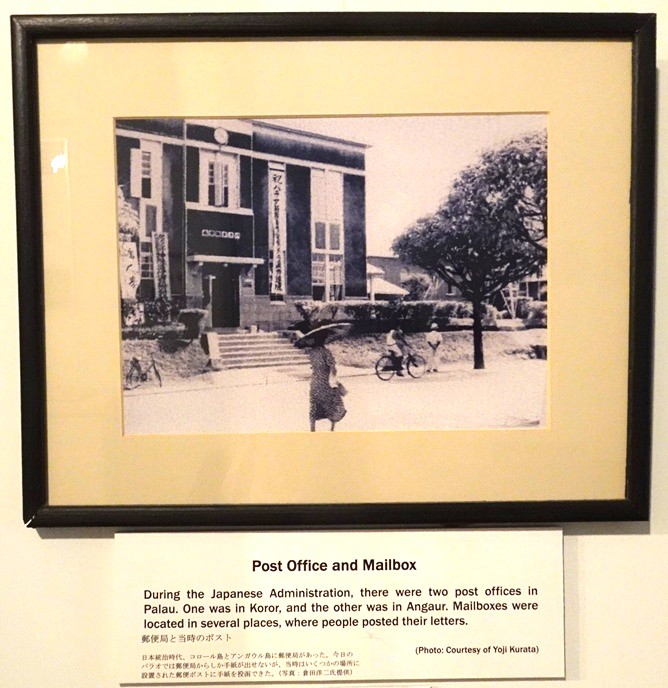
The islands first used German colonial stamps for the Caroline Islands from 1899 to 1914, followed by Japanese issues from 1914 to 1944. In 1947 Palau became part of the U.S. Trust Territory of the Pacific and used U.S. stamps until 1983, when it gained postal independence and began issuing stamps in its own name. These early issues were produced under contract mainly for collectors, as Palau was still under U.S. administration. With political independence on October 1, 1994, the Palau Postal Service was officially established, the country joined the Universal Postal Union, and its stamps became those of a fully sovereign nation. The main post office is in Koror.
Our visit to Palau
We landed in Palau on September 10th at two in the morning. To my surprise and relief, even though I had only exchanged a single message with the hotel nearly a month earlier, their driver was waiting for us. The road from the airport to Koror was short, just about ten kilometers.
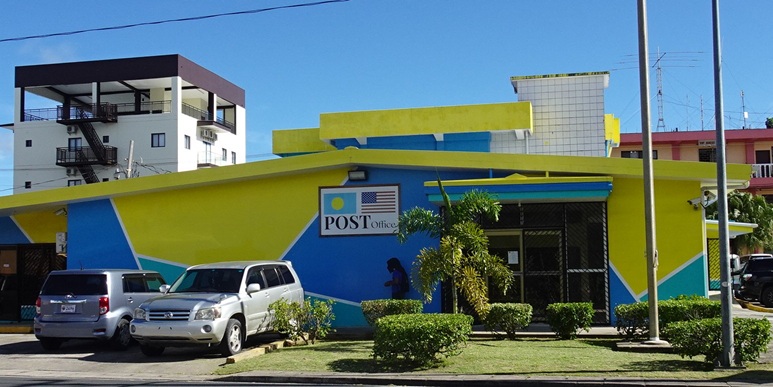
After a quick nap and breakfast, our first stop was the post office. The blue-and-yellow building stood right along the main road, impossible to miss.
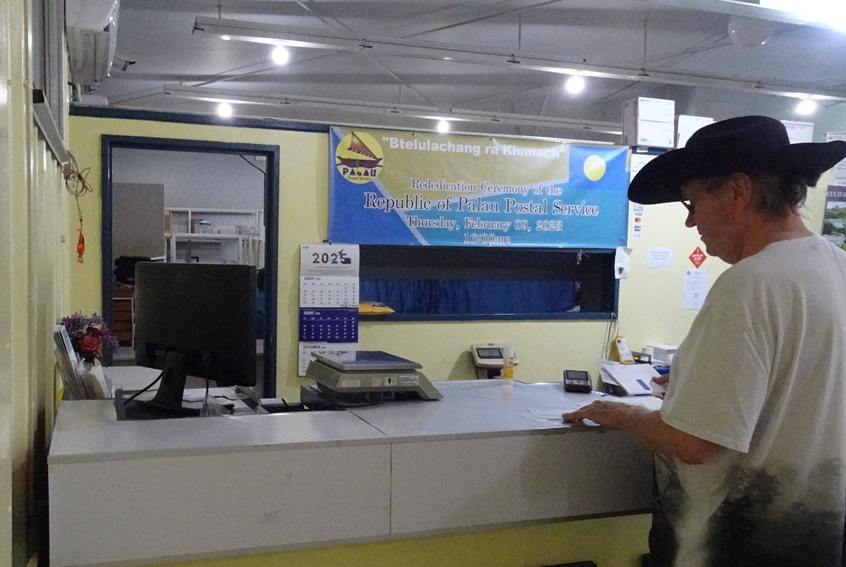
Because Palau is still closely tied to the United States, the U.S. dollar is the local currency and postage costs are the same: $0.61 USA and $1.70 international. After greeting us and hearing that we wanted to send postcards, the clerk told us that none were sold there. But we had already noticed souvenir shops on the way, so that was not a problem. Andry stayed to browse the stamps, while I slipped through the side door into another room — a spacious hall where large stamp posters decorated the walls.
And the timing could not have been better! Almost on cue, in walked Santy, the Postmaster General of Palau. It felt as if we had arranged the meeting in advance. After a brief greeting, he stepped over to the stamp posters — and that was the start of a truly fascinating journey for me. He pointed to the displays and began explaining the stories behind them — natural wonders, historical milestones, cultural heritage. Here, the stamps truly tell the nation’s story.
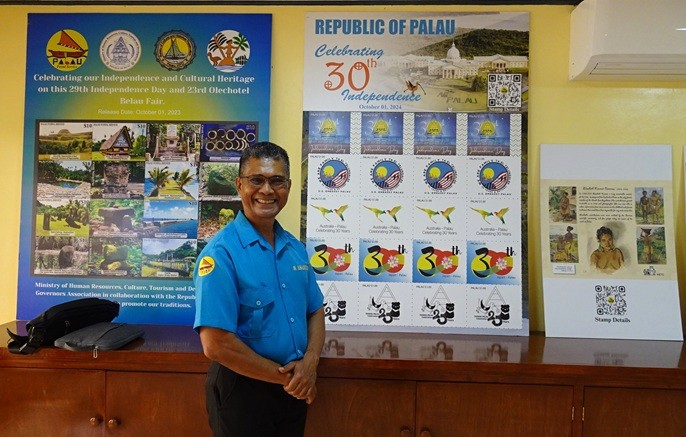
The conversation flowed easily, as if one story led naturally to the next. Santy began tracing Palau’s path through history: first settled about 3,000 years ago, claimed by Spain in the 16th century, sold to Germany in 1899, controlled by Japan after World War I, and then a UN trust territory under U.S. administration. In 1994, Palau became fully independent after the last UN trusteeship referendum in the world, making it one of the youngest nations globally. I felt instantly captivated, and I couldn’t help but compare Palau to Estonia — both small countries in strategic locations, historically under the rule of different powers.
What touched me most was when he mentioned last year’s 30th anniversary of independence. It reminded me of Estonia’s road to freedom in 1991 — how people were willing to endure hardships for the dream of sovereignty, and the moment the blue, black, and white Estonian flag was raised. Santy said that when the U.S. flag was lowered and Palau’s own raised, it was a deeply emotional moment. Yet, he added, their transition had been gentler than ours — more of a cooperative process than a struggle.
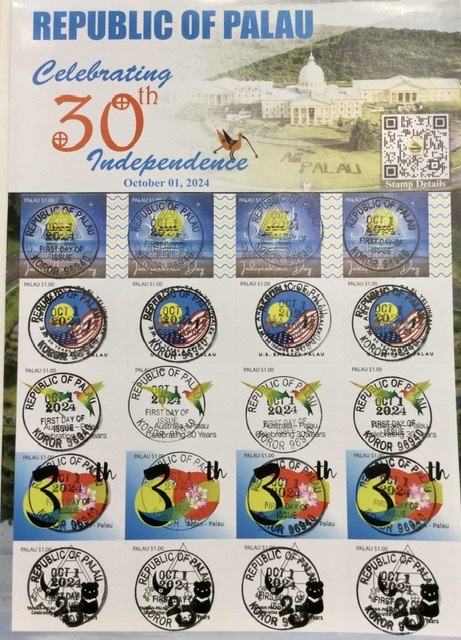
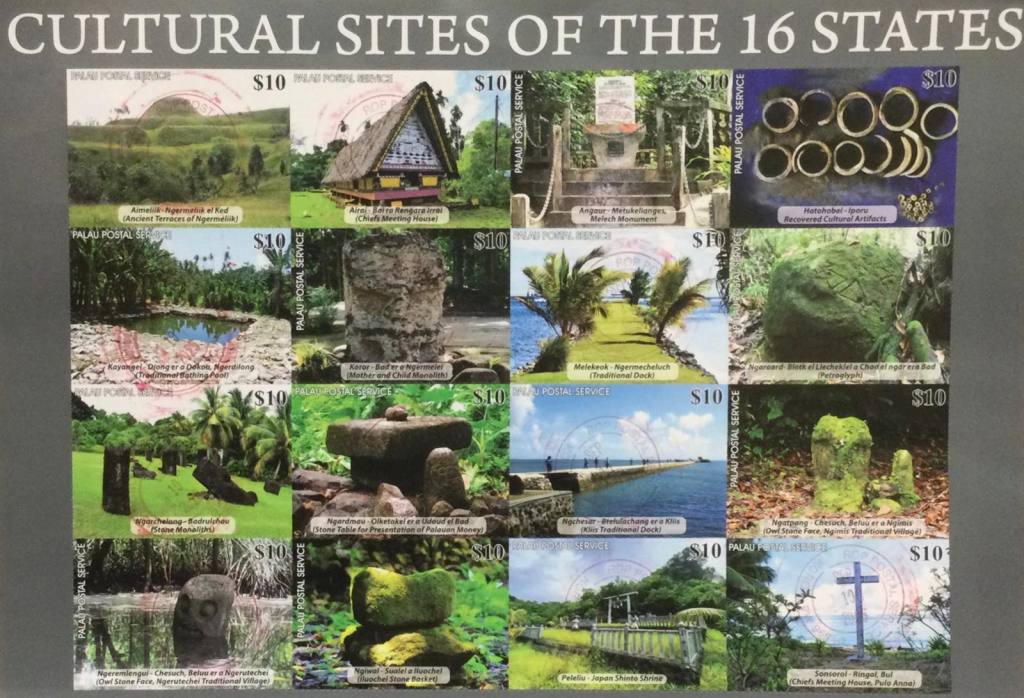
He then showed me a stamp series celebrating Palau’s independence and talked about the close ties with the U.S., Japan, Taiwan, and Australia. For such a small nation, foreign support is vital, and Palau sits at a strategic crossroads between Asia, Oceania, and the Pacific. Another series, Cultural Sites of the 16 States, featured the famous terraced earthworks — massive ancient structures that testify to the ingenuity of Palau’s ancestors.
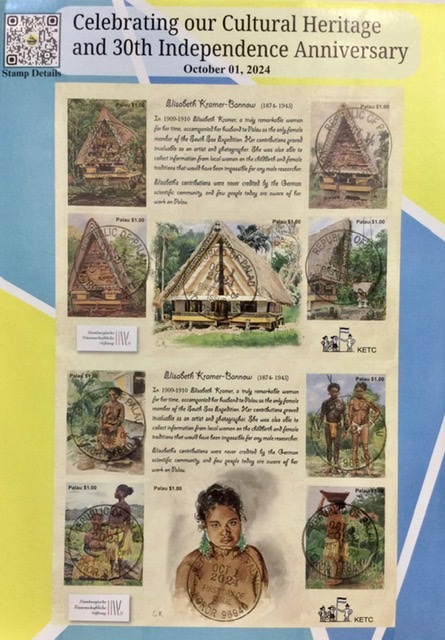
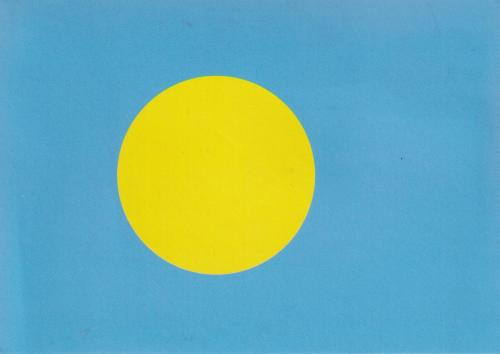
Moving on to the next poster, he explained that Palau’s flag is not the sun but the moon over the vast blue ocean and sky. In Palau, moonlight mattered even more than sunlight — people once moved house and held important events under its calm glow. The moon, after all, is gentler and more peace-loving than the sun.
To my surprise, Shanty was equally curious about Estonia. He was thrilled to meet an Estonian visitor, saying he had followed our experiment with e-residency closely. For small nations like ours, he felt, such projects offered inspiration. I left feeling the same — that I had not just visited a post office, but attended a full lecture on Palau, delivered through its stamps.
We exchanged small gifts — Estonian Kalev candies for him, which he shared with his entire team, and commemorative stamp sets for us. I was thrilled! These stamps tell the story of Palau in a way words never could. Truly, they are the most memorable and meaningful souvenir I could have brought home.

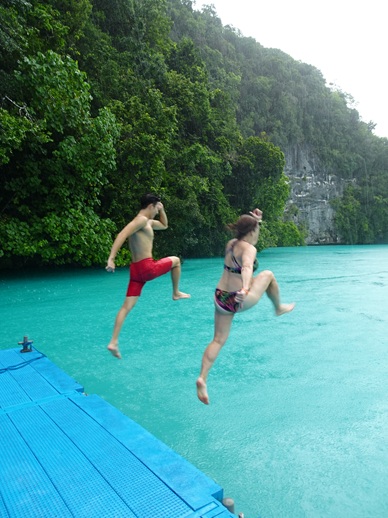
Of course, my trip wasn’t only about the post office. Palau’s nature is breathtaking, and the next day I joined a snorkeling tour in the Rock Islands Southern Lagoon. It rained that day, but it turned out to be a blessing: fewer boats, no risk of sunburn, and a peaceful ride. Our first stop was the famous Milky Way Lagoon, a dreamy stretch of turquoise water framed by lush green islands, where we covered ourselves with the local white clay, which is said to be good for the skin.

We were also lucky to see Long Beach—the tide was low enough that the long white sandbar was still partly under water, but shallow enough for us to walk along it. At high tide it disappears completely, so it was a special opportunity to experience it.
Snorkeling in different places during the trip revealed stunning corals and colorful fish, and it felt almost private. I was with just two Japanese travelers, a mother and her son, and we instantly clicked. They jokingly promised to save me if I started drowning, and I promised not to. Together, we explored Palau’s underwater world, a UNESCO site and one of the most beautiful places I have ever seen. Meanwhile, Andry stayed in Koror near the post office, enjoying a quiet morning and sending a few more postcards
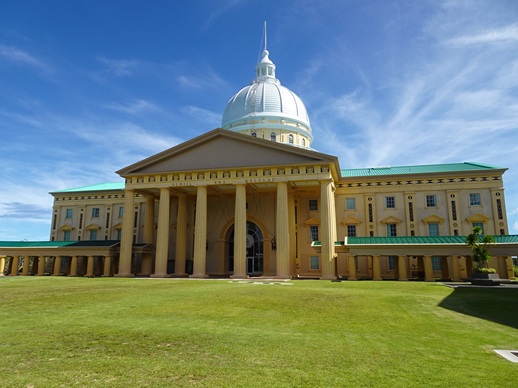
On our last day in Palau, we drove around the island. We visited the capital, Ngerulmud, with its elegant government complex built in 1986. While people live nearby, the capital of the country itself has no official residents, making it a unique sight.
Palau was more I hoped for in terms of powerful nature. But the post office, full of stories, was the experience I didn’t see coming at all — truly unforgettable.
If you’d like to read future entries from this post office diary, you can subscribe here.
 Exploring the Unexpected