
- Visit date: February 07 2025
- The visited post office: Granada Postal Corporation (Saint George)
- Cost of sending mail: internationally 1 XCD (about 0,32 Eur)
- Postcard availability: at the cruise terminal (Saint George)
- Postcard delivery time: 13 days to Canada; 5 and half months to Estonia
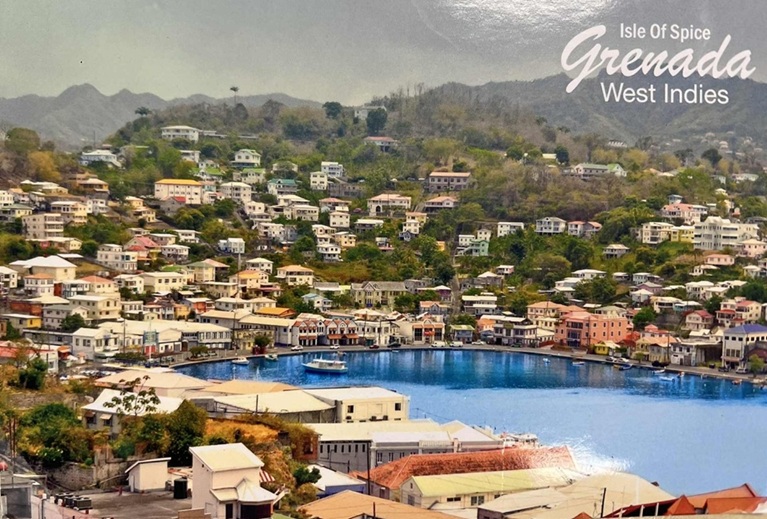
Grenada is a small island country located at the southern end of the Caribbean, just north of Trinidad and Tobago and northeast of Venezuela. Covering an area of around 344 square kilometers, the country consists of the main island of Grenada and smaller islands like Carriacou and Petite Martinique. Despite its modest size, Grenada is home to just over 114,600 people (as of 2024), most of whom live in or around the capital city, St. George’s. The official language is English, and the country is a member of the Commonwealth, with a parliamentary democracy.
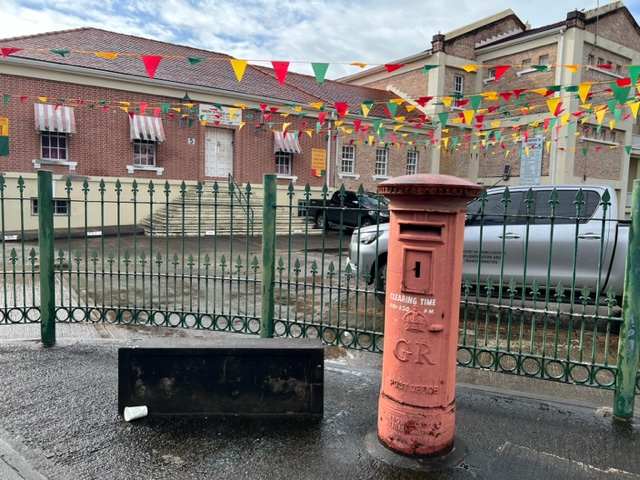
Postal services in Grenada date back to the 18th century during British colonial rule. The island began issuing its own stamps in 1861, bearing the profile of Queen Victoria, a common feature of British colonies at the time. Over the years, Grenada’s postage has reflected shifts in administration, from British colony to associated statehood in 1967, and finally to full independence in 1974. Over the years, Grenada has issued a variety of themed stamps, sometimes in partnership with international organizations, showing subjects such as Olympic events or Disney figures.
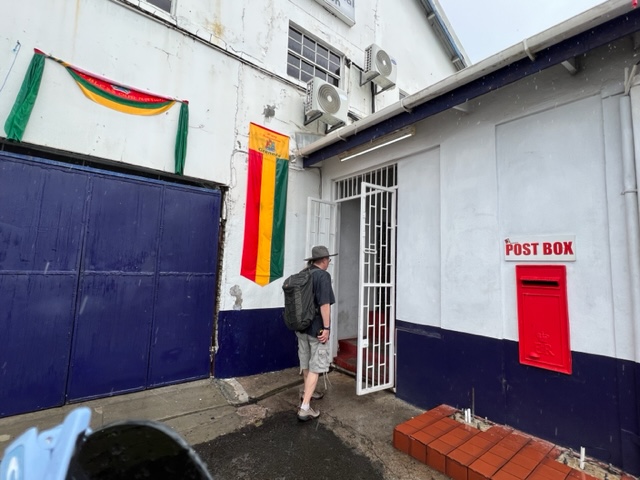
Our experience with Grenada began when our cruise ship docked at the port of St. George’s on a misty, drizzling morning—February 7th. Although we knew it was both a Saturday and Independence Day, we decided to walk to the post office (Grenada Postal Corporation), located about a kilometer and half from the cruise terminal. As expected, it was closed—only access to the postboxes was open.
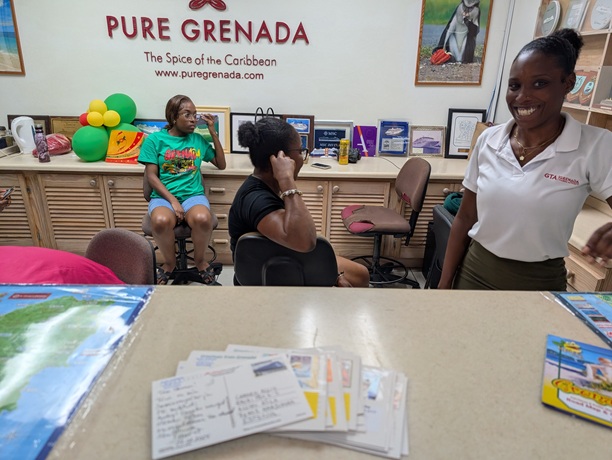
So we headed back toward the terminal. Most of the shops in town were also closed. Exactly 51 years earlier, in 1974, Grenada had gained independence from the United Kingdom while remaining a member of the British Commonwealth, with Queen Elizabeth II as head of state at the time. At the cruise terminal, however, the tourist information center and several souvenir shops were open, and we were able to buy postcards. We had brought the stamps with us, purchased earlier from a European philatelic marketplace. We picked out our cards and started writing.
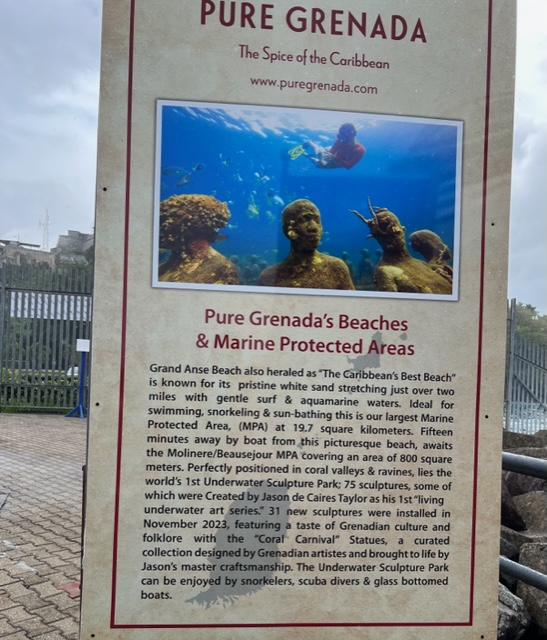
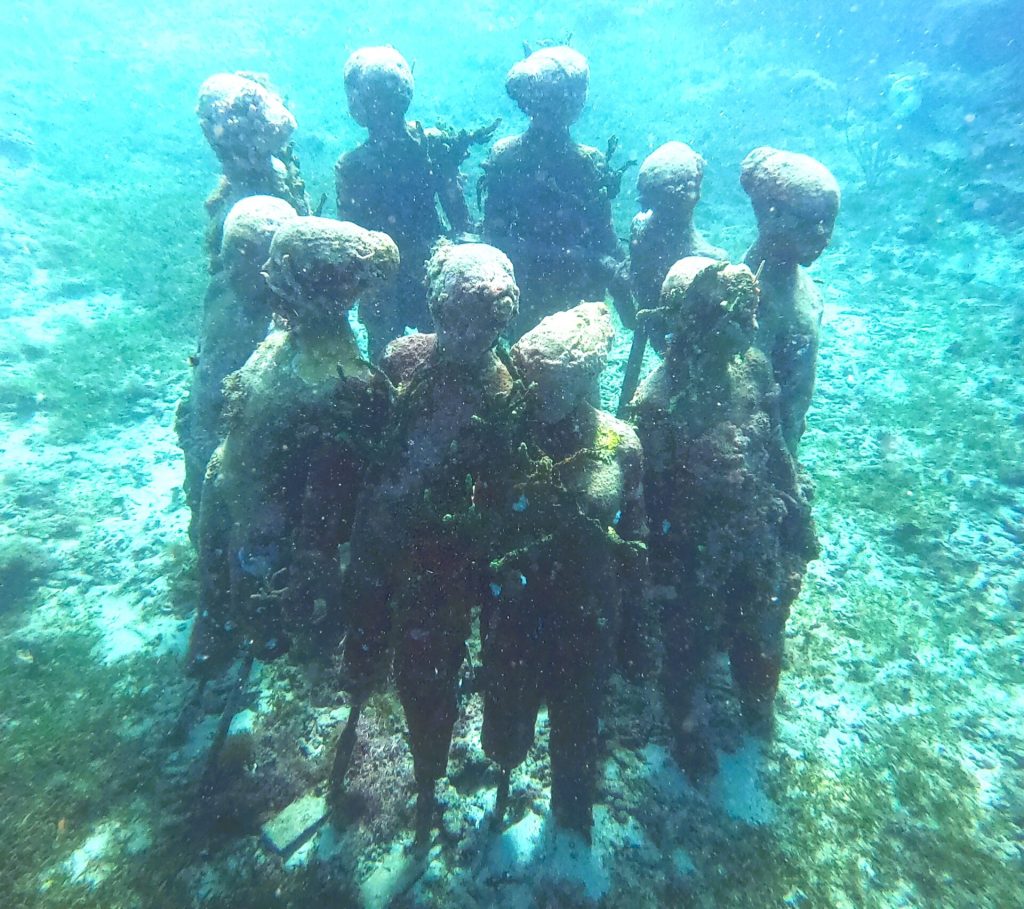
Since we also wanted to explore more of the island, Andry and I split up. He would take care of mailing both his cards and mine, and I would go on a little adventure. What I really wanted to see was the Underwater Sculpture Park, created by renowned sculptor Jason de Caires Taylor and installed in 2006. According to descriptions in internet, it was possible to view the artworks while snorkeling. And the place was just five kilometers away from the port! That’s a maximum of an hour on foot for me—or so I thought.
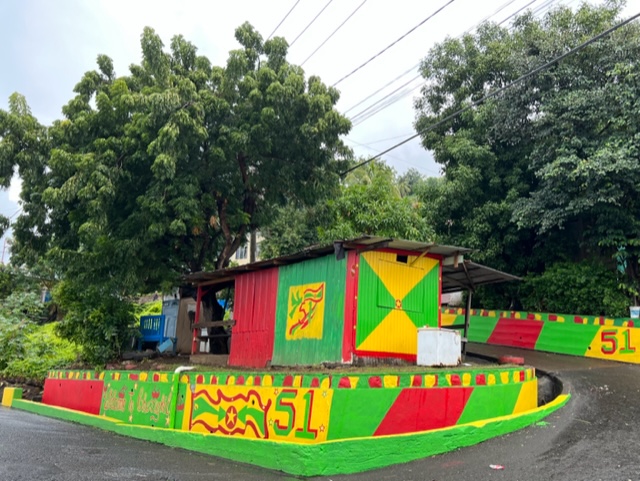
Well, I should have figured out that an island formed by volcanic activity 1–2 million years ago wouldn’t exactly offer flat seaside paths. Halfway through the hilly walk, I realized I probably wouldn’t make it back in time if I actually went snorkeling. And just as I was considering my options, while buying a bottle of water, I struck up a conversation with two locals. They said they knew where I could dive and offered to take me there.
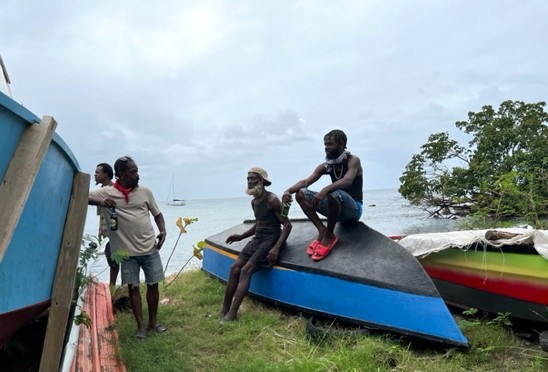
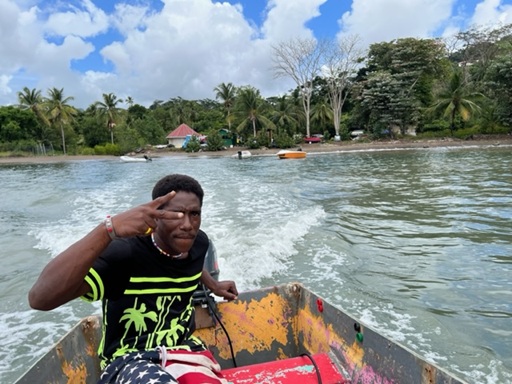
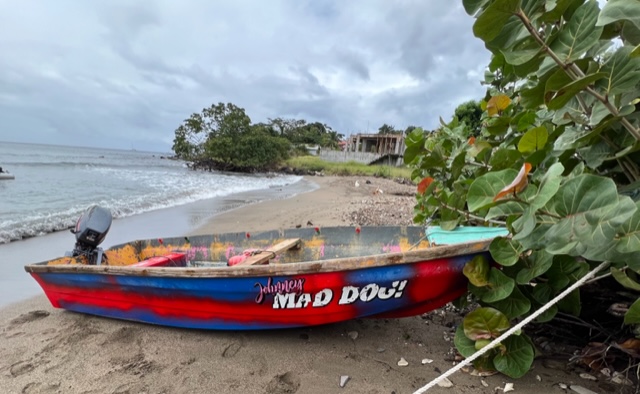
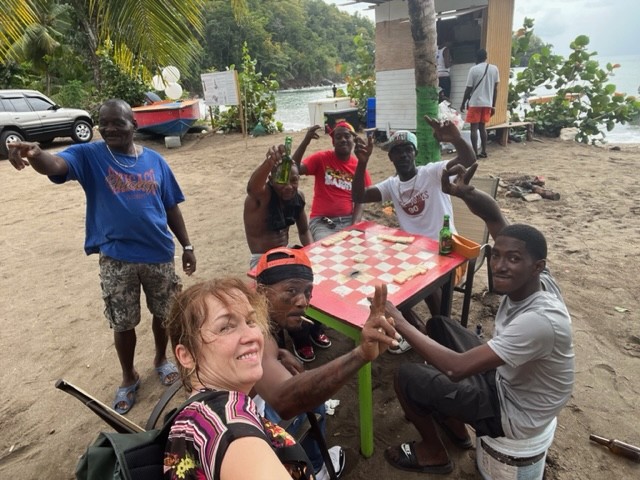
The road had such steep climbs and drops that I doubt I would have even found the right entrance from big road on my own. My first thought was: this cannot be the right place. Loud music, locals playing dominoes, beers in hand… yep, that was the scene… and it was midday… Before my driver leave, he called out asking who could take me to the sculpture park. And just like that, someone stepped up—claiming he was a boat captain and could take me. He asked for 35 US dollars—which seemed fair enough—but… well, he was clearly a bit high and sipping a beer at the same time.
Still, I come here all this way… So I said yes.
We headed out to sea, and the captain pointed down: “The mermaid is right here.” I put on my snorkel and jumped in—but didn’t see much at first. Then the captain sighed briefly, put on his own mask, jumped into the water, and showed me the underwater wonders: Vicissitudes, Sentries, Belair Dancer, Christ of the Deep, The Lost Correspondent….
He seemed completely sober now (maybe I was wrong in my assessment), and I was completely mesmerized.
Time passed quickly, and we returned to shore. People were loitering near the beach—playing dominoes, laughing, sharing drinks and music. The easygoing atmosphere felt genuine. I wasn’t in any hurry anymore. I sat down with one of the groups for a few rounds of dominoes, enjoying the moment, before finally wishing them once again a happy Independence Day. It was time to head back.
Meanwhile, Andry had managed the postcard mission and discovered that the tourism center wasn’t just selling stamps and cards—it also offered excellent service. Since it wasn’t a post office, the postcards didn’t get a date cancellation, but one of the staff members, Kizzel, kindly added a handwritten greeting to our travel notebook, along with the official tourism office stamp. The postcards themselves were dropped into a nearby mailbox just outside post box of Burns Point post office.
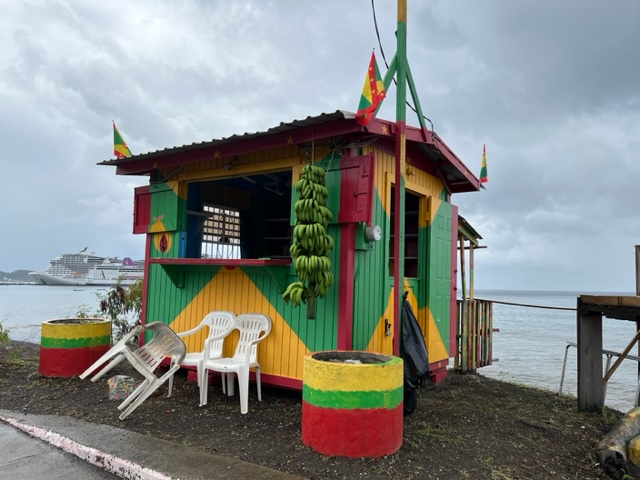
Later, we met up again and I was just in time for a glimpse of the Independence Day parade. Although Grenada has no military—only police and coast guard—the celebration still had a full ceremonial feel. What struck us most wasn’t the uniforms, but how many people were proudly dressed in the vibrant red, yellow, and green of the national flag.
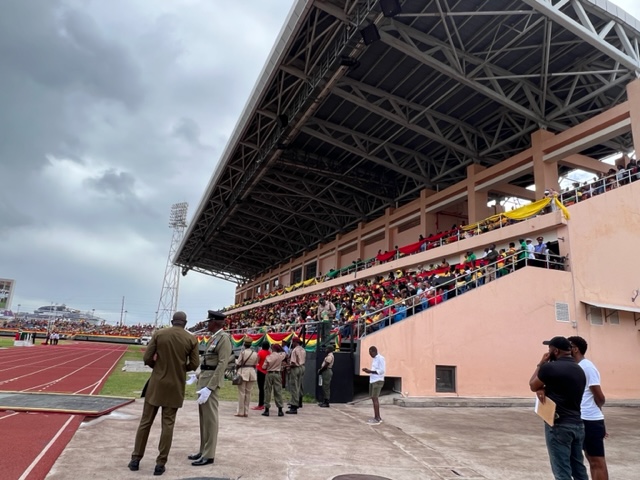
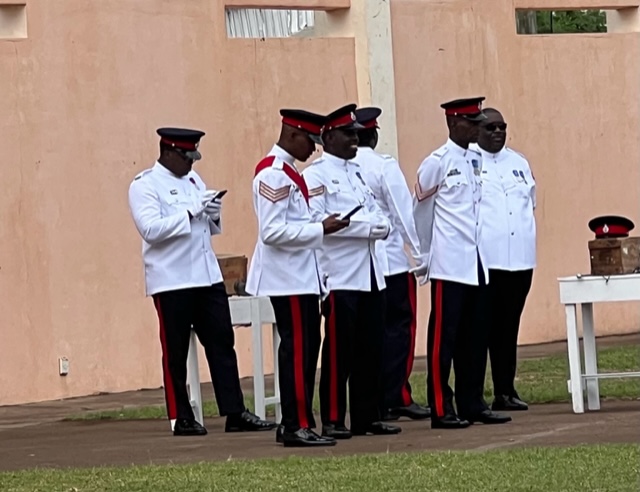
Before the festivities were even over, we had to board the ship—waving goodbye to Grenada as the rhythms of celebration still echoed from the shore.
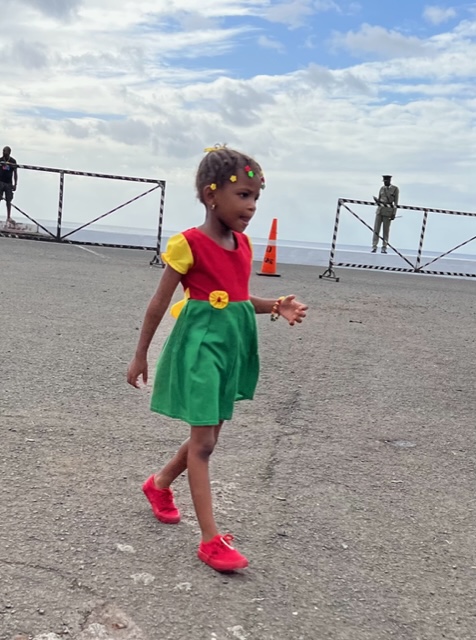
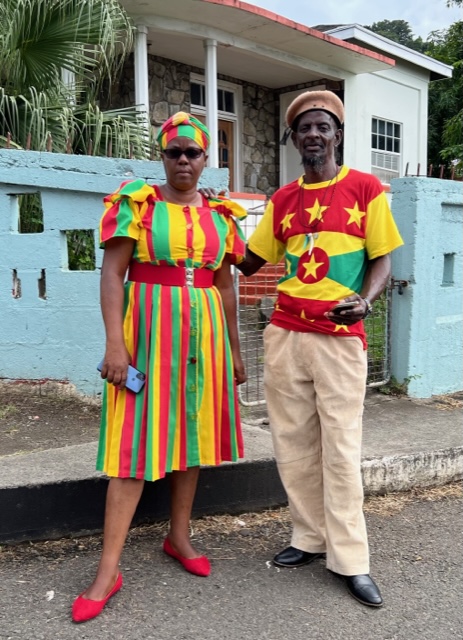
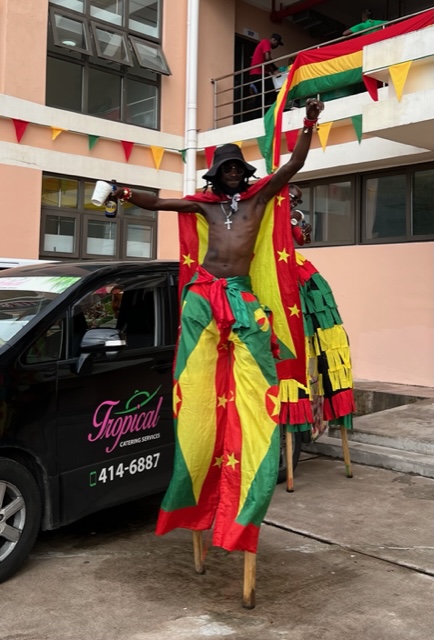
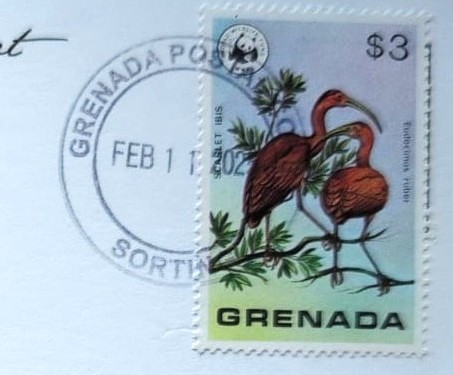
Happy Independence Day, Grenada. May your colors always shine brightly, and may your pride carry you forward. A nation where people celebrate not with military might but with local music, laughter, and love for their flag—well, that’s a country built to last.
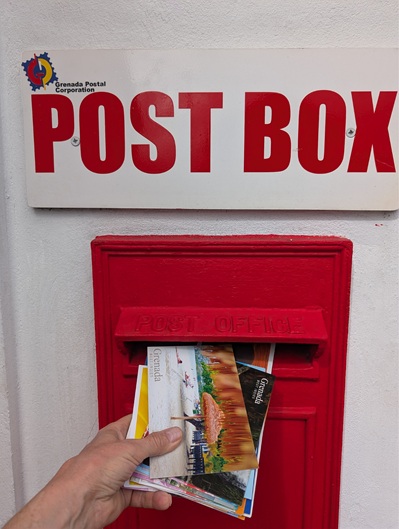
Oh, and the postcards!
All of them eventually received a local date stamp—February 11, 2025. The first one to arrive reached Canada in just 13 days, but the ones sent to Estonia only made it yesterday, which means they took almost half a year to get there…but hey, maybe they just wanted to enjoy the Caribbean sun a little longer before heading to to the addressee.
If you’d like to read future entries from this post office diary, you can subscribe here:
 Exploring the Unexpected