
- Visit date: 17.06.2025
- The visited post office: Danmarks Filatelist Forbund, Birkerød
- Cost of sending mail: 50DKK (6,50 EUR) all over the world exc. Denmark 25DKK (next day delivery 35DKK)
- Postcard Delivery Times: fastest: 5 days to Germany
⚠️ Current situation note (January 2026): While PostNord continues to deliver letters in Sweden, it ended letter and postcard services in Denmark on 30 December 2025 and announced a limited refund period for unused Danish stamps. From 1 January 2026, letters and postcards in Denmark are handled by the private delivery company DAO. Current DAO prices are 23 DKK (Denmark, up to 100 g) and 46 DKK (international, up to 100 g). Postage is purchased digitally within DAO’s system, and letters must be dropped off at DAO shops or collected for an additional fee.
.
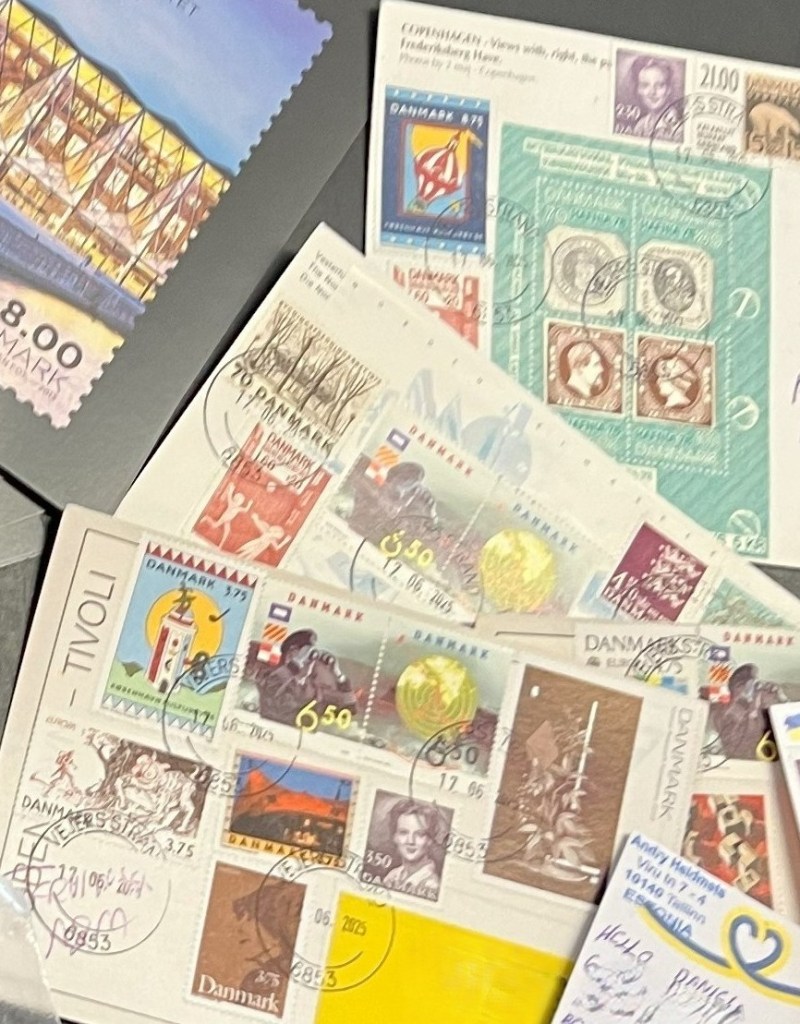
Very brief Denamrk postal history
Denmark was among the first countries to establish a state-run postal system, founded in 1624 under King Christian IV. It also played a key role in early stamp history, issuing its first postage stamp in 1851, just eleven years after Britain’s Penny Black. For centuries, the Danish postal service was known for its reliability and strong national reach. In 2025, that long tradition quietly came to an end.
.
In
In March 2025, PostNord Denmark announced that traditional letter delivery would cease by the end of the year, citing a sharp decline in letter volumes and rising costs.
That’s also why we came—before it was too late to send something through what was once one of Europe’s oldest and proudest postal systems.
Postnord News, Denmark Post History Wikipedia, https://danfil.dk/ stempling
Our Visit to the Last Place of Danish Postmarks
A few years ago, I came across a note on a Danish Postcrosser’s profile. He had stopped sending cards from Denmark and switched entirely to Travel Mode. “It’s just too expensive,” he wrote on his Postcrossing profile. That was the first time Denmark’s postal system really caught my attention.
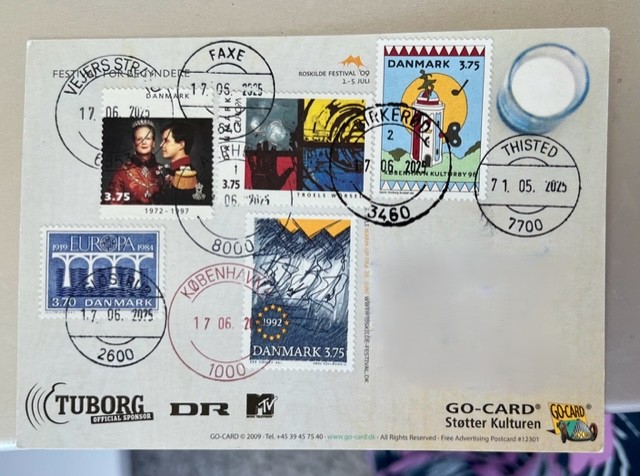
And he wasn’t wrong. Until the end of this year, it’s still possible to send postcards from Denmark, but at a cost—€6.50 per card, once converted. With most post offices either permanently closed or no longer offering full services, we weren’t aiming to find one. Instead, we set our sights on a different kind of destination: the headquarters of the Danmarks Filatelist Forbund. According to their website, they’re open on Tuesdays, so we emailed ahead to confirm.
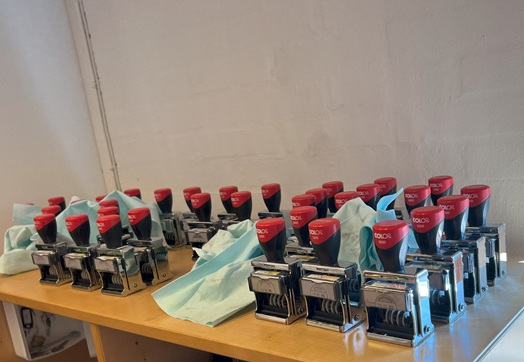
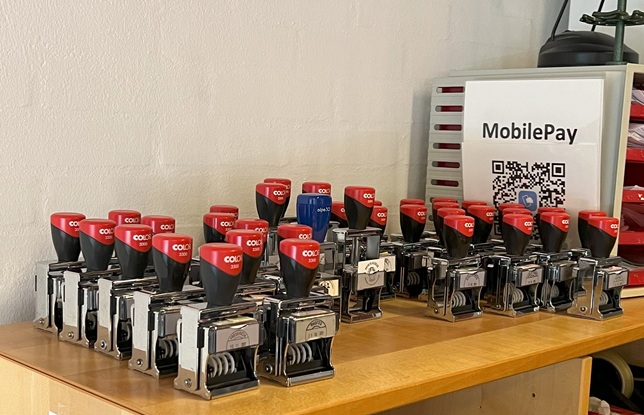
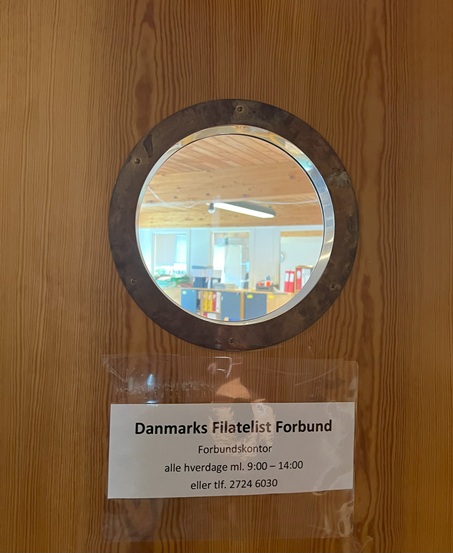
What drew us there? This small red building, tucked away in the town of Birkerød, 30 km outside of Copenhagen, holds something remarkable: cancellation stamps from every post office in Denmark. You can even send in pre-stamped postcards by mail, and volunteers will postmark them with the correct local date stamp and forward them through the Danish postal system to their recipients. https://netbutik.postnord.dk/stempling

An interesting detail: for international destinations, any Danish stamp issued since 1933 is still valid. But for domestic mail sent 2024 and 2025, only the most recent stamps are accepted. We had come prepared—with a selection of older, valid stamps sourced from European philatelic resellers, as all our postcards were addressed outside of Denmark.
It’s a nice system—run entirely by dedicated enthusiasts. And in Denmark, there are many of them: the country has a vibrant philatelic community, with numerous local clubs spread across the country and a national magazine published by the Danish Philatelic Federation to keep collectors informed and connected.
It took us a little while to find the building. No visible signage, just a back entrance and a few cars parked behind it.
When we stepped inside, we found ourselves in a large room with a big table. Four people were there—only one of them a staff member, the rest volunteers.
They simply waved us in and asked: “Which towns do you want postmarked?” We could have said all of them, but that would’ve meant setting the date—17 June 2025—on each cancellation stamp and checking that each pad was inked properly. Instead, we had already chosen a handful of locations: smaller towns and, naturally, the capital.
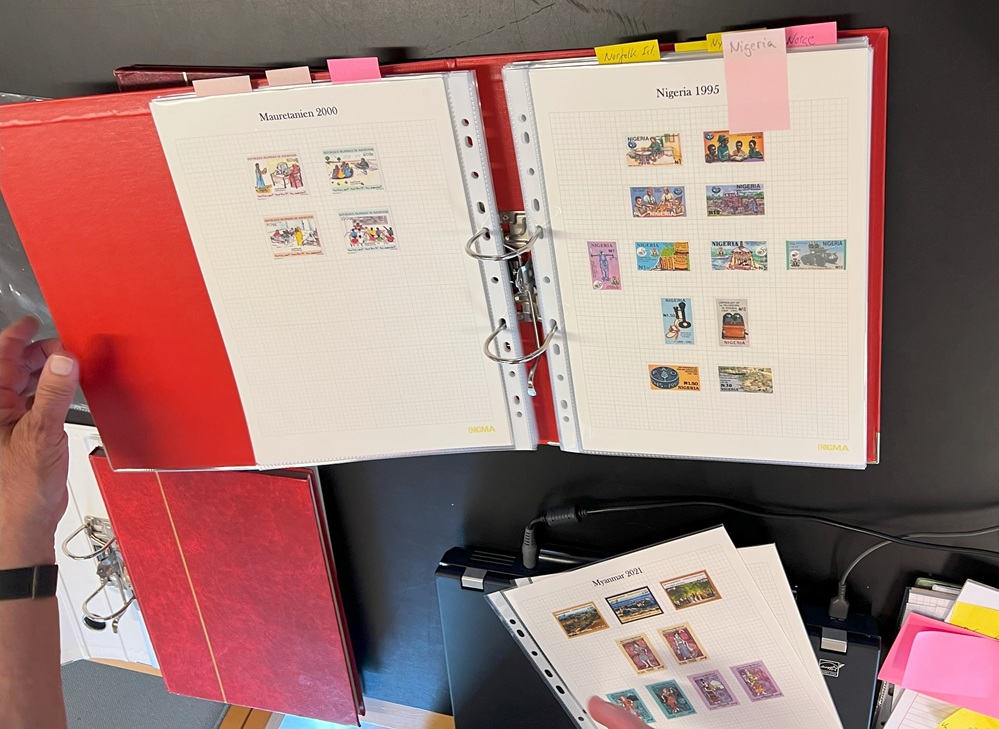
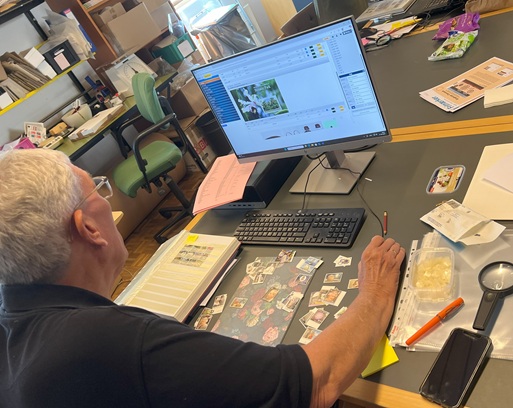
I asked one of the volunteers, Ole, how many volunteers are there usually on Tuesdays. The number varies, he said, but the most they’ve had at once is seven. As we talked, he was carefully sorting stamps from various countries—new issues sent by the Universal Postal Union (UPU). In theory, every time a member country issues a new stamp, they send one to the UPU, which then redistributes them to every other member. In practice, though, many countries haven’t done this for years.
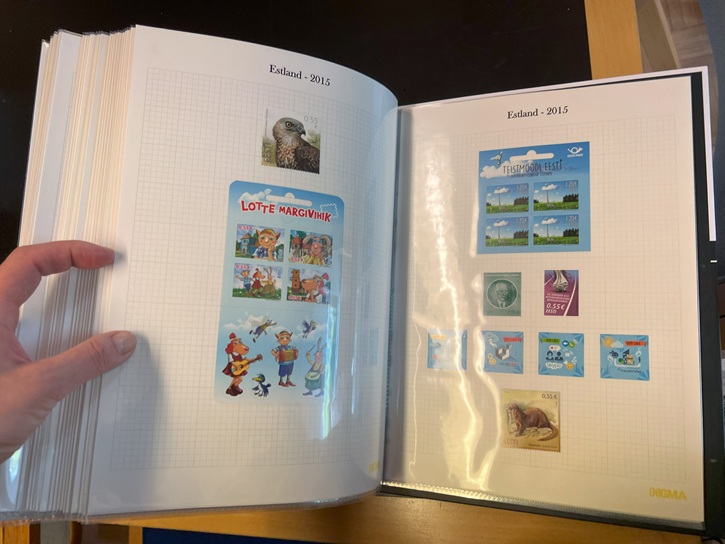
On the table lay an Estonian stamp catalog, last updated in 2017. Ole was currently filing stamps from Nigeria. Another volunteer was comparing stamps against listings on Stampworld, one of the largest online stamp databases.
And us? We were writing and stamping postcards—glad to be doing it while we still could, because we know a real card still has a certain kind of magic — for the sender and the one who receives it.
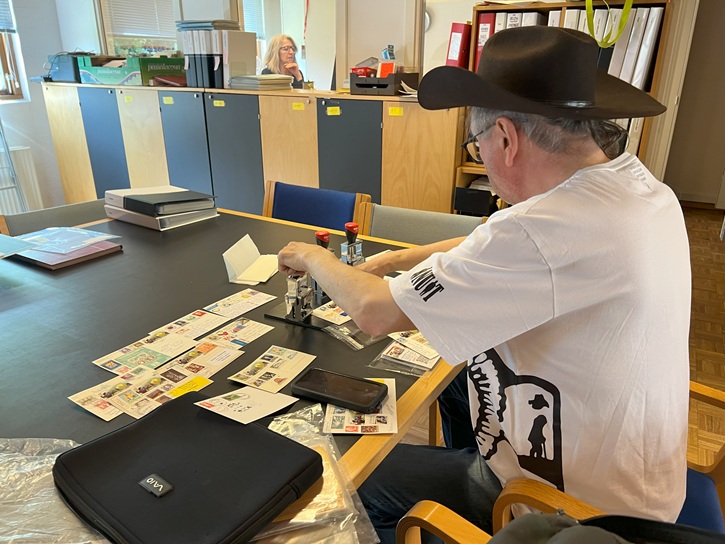
I asked Ole what he thought about it all. Surely it had been debated many times among the philatelists here. He smiled, shrugged, and said simply:
“A sign of the times.”
Nothing more to be done.
Before we left, I asked for a small note in my travel journal and also how many people actually come here to cancel their mail. “Some,” he said, “but many just send their cards by post and we postmark them.” Then, with a smile and a gesture toward us, he added, “Now our visitors are international.”

Once our postcards were postmarked, we headed upstairs. The same building houses Denmark’s largest philatelic library. There we met Jørgen, the librarian, who has worked there for 22 years.

The library, he explained, is only open on Tuesdays, when the downstairs stamp room is also staffed. With a sweep of his hand to the left, he said:
“More than 7 500 stamp-related books from around the world—some very rare.”
With another wave to the right:
“Catalogues, journals, exhibition guides… I couldn’t even guess how many,” he added.
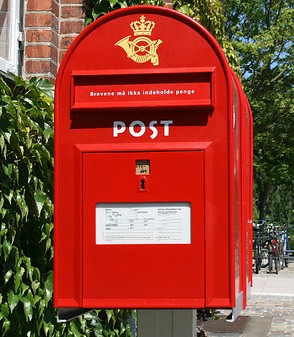
Talk about timing! The very same month we were visiting, Postnord Denmark began the process of removing its iconic 1,500 red postboxes. They are all scheduled to be gone by December 31, 2025. So if you spot one, be sure to snap a photo while you still can!
As for us, it was time to move on.
P.S. My apologies for any potential misspellings of the names mentioned. I did my best to get them right.
If you’re interested in how postcard sending still works in European countries where traditional mail remains viable, you might also enjoy my posts about Liechtenstein, Vatican City, and postal extremes in Germany.
If you’d like to read future entries from this post office diary, you can subscribe here:
 Exploring the Unexpected