
- Visit date: 10.06.2025
- The visited post office: Ilulissat Post Office , Nuuk Post Office
- Cost of sending mail: Europe 28 DKK (3,6 EUR), USA, Japan, China.. 37 DKK (4,8 EUR)
- Postcard availability in Ilullissat: IceCap Gift shop, Butic Ulu
- Postcard Delivery Times: Fastes: 8 days to Germany and 9 days to Poland

Greenland is the world’s largest island on the world, that is not a continent, stretching over 2 million square kilometers — but with only around 57,000 people, most living in small communities along the ice-free coast. Though it’s part of North America geographically, Greenland has long been linked to Denmark, which still handles much of its foreign affairs.
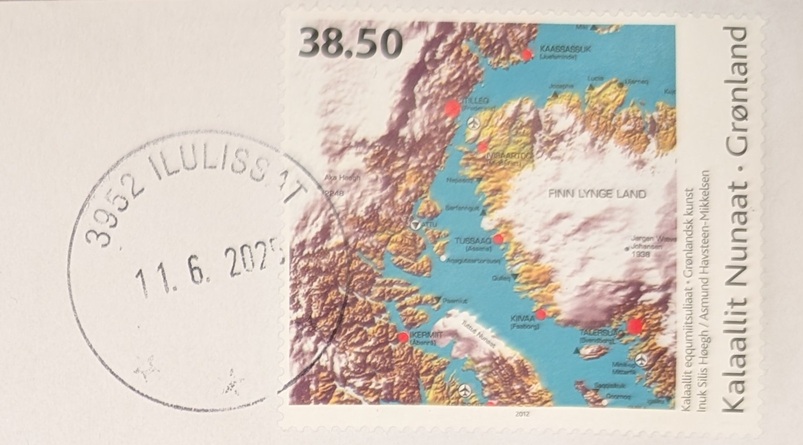
Mail delivery here has always faced some special challenges: long distances, harsh Arctic weather, and remote settlements. In the early days, letters were simply carried on the ships of the Royal Greenland Trading Department. There were no stamps or post offices yet — and mail between Greenland and Denmark traveled for free, as long as you could wait for the next ship.
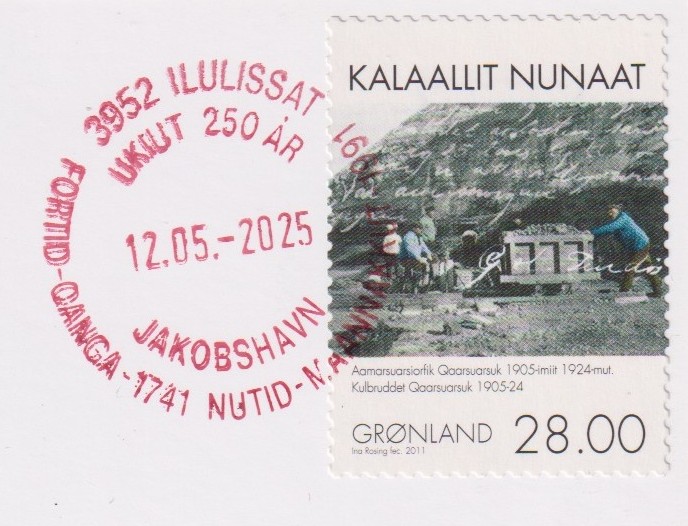
Greenland’s first official postage stamps appeared in 1938, featuring King Christian X and the polar bear — a symbol that still appears on many of its stamps today. But even earlier, starting in 1905, parcel stamps with the same polar bear design were used for packages.
During World War II, Greenland was cut off from Denmark and started printing stamps in the United States to keep international mail moving. After the war, the postal network slowly expanded, with more post offices opening across the island.

For a while, even small local posts existed, like the Thule local post in northwest Greenland between 1935 and 1937 — their small print runs have become collector’s items today.
In 1997, Greenland combined its postal and telecom services into one company, TELE-POST, which was later renamed Tusass in 2021.
References: visitgreenland.com, Greenland, Postal history of Greenland, www.tusass.gl
Our Experiences in Greenland
In Greenland, we had planned to visit two towns: Ilulissat—famous for its UNESCO-protected Icefjord—and Nuuk, the capital. We started in Ilulissat. The beauty of the town, with icebergs visible from many places around it, took our breath away. So did the air—quite literally. While summer was just arriving in Europe, here we felt like we had stepped straight back into winter. Though technically, it was early summer in Greenland, with temperatures between +2 and +6°C, on our second-to-last day it even snowed.
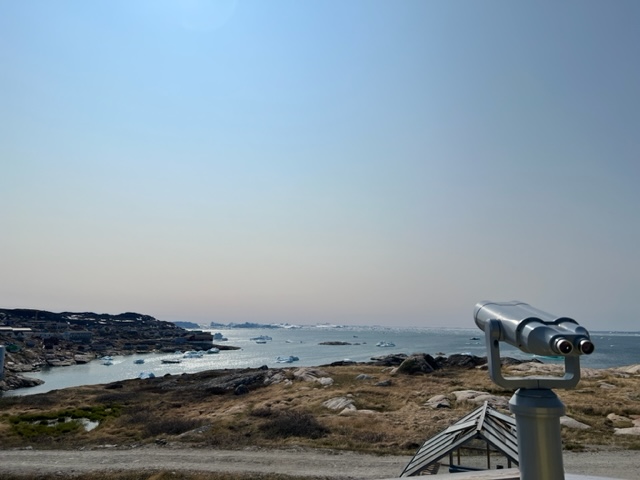
But there was no darkness.
From May 21 to July 24, the midnight sun shines over the Ilulissat Icefjord. One night, when I woke briefly and peeked through a gap in the blackout curtains, the light outside looked exactly like daytime. We had come prepared—with winter clothes for the cold and sunglasses for the brightness—so neither caught us off guard.
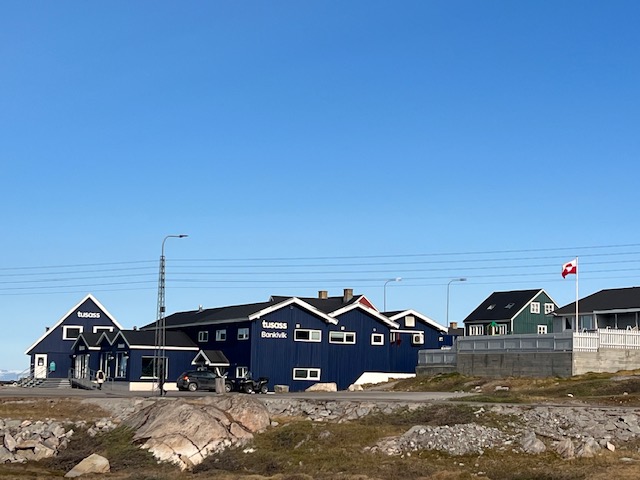
After checking into our hotel, we headed straight to the post office. But almost everything was closed—it was a public holiday: Pentecost. Shops, cafes, and the post office were all shut. Our search for postcards wasn’t going well. We did find some, but they were mostly large-format and quite expensive—30 to 50 DKK (3,9-6,6 EUR) each. The standard 10×15 cm tourist postcards we were looking for were nowhere to be found that day.
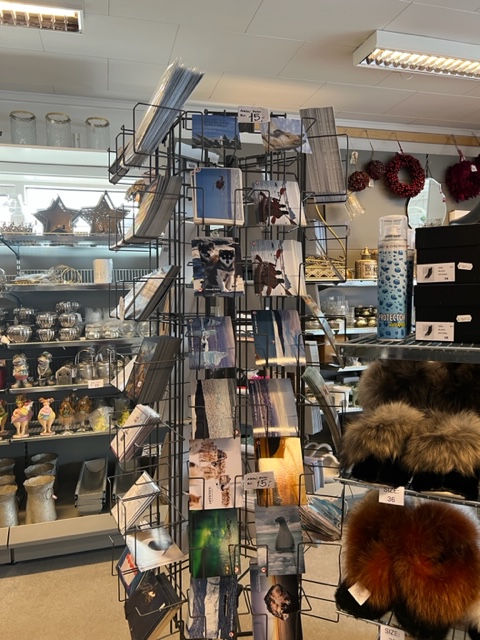
The next day, the picture changed. We found standard-sized tourist postcards—10×15 cm, just like we wanted—for 10 to 15 DKK (1,3-1,95 EUR) in gift shops around Disko Bay. Many of these shops were connected with local tourist information centers. And the post office was finally open.
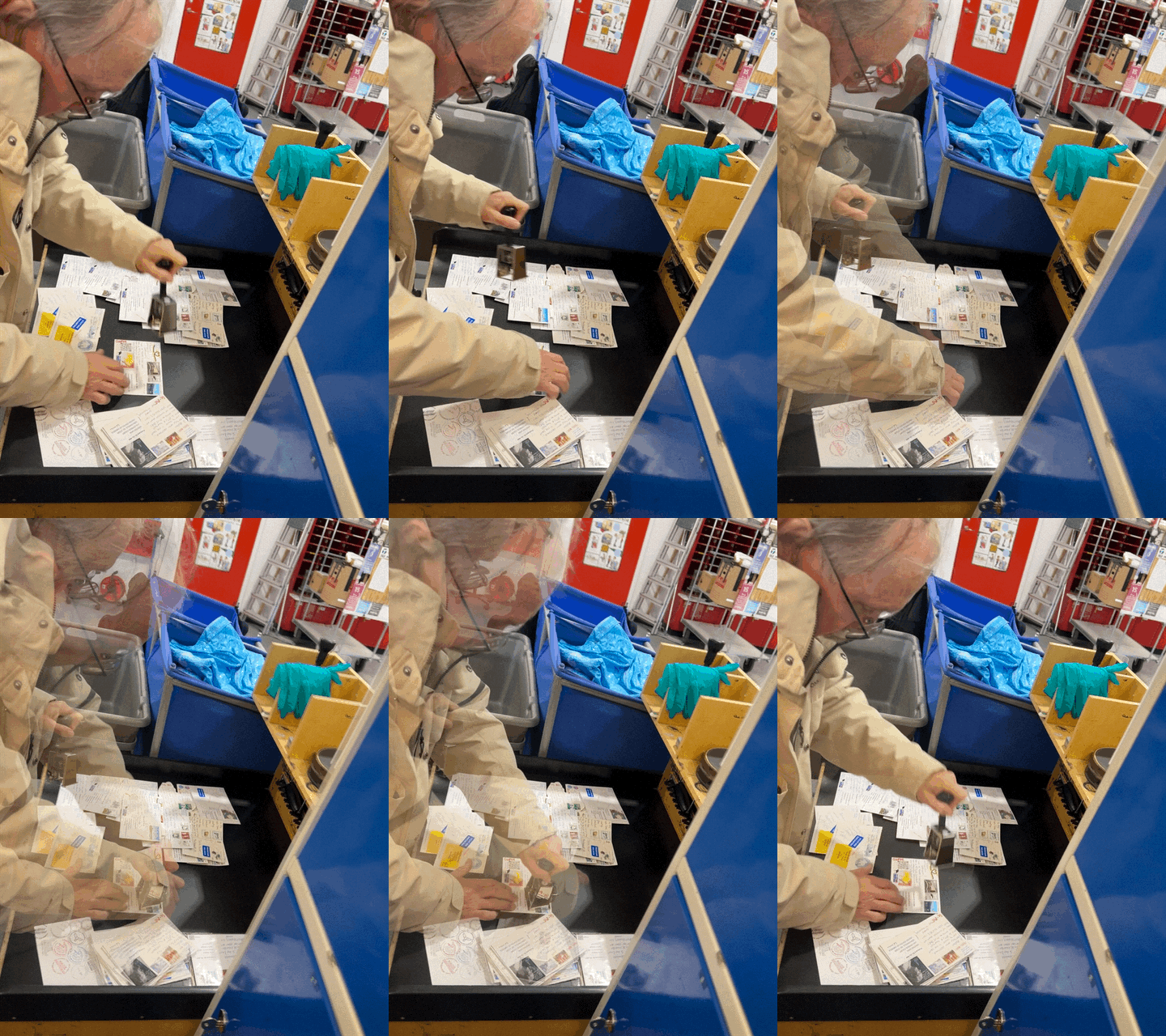
We came prepared—with our postcards already written and addressed. Juliana, the clerk, noticed this right away. She asked just once if we truly wanted to do the stamping ourselves, and when we nodded, she invited us behind the counter. We followed her into the back, where there was a rubber-covered table with stamps and ink pads ready.
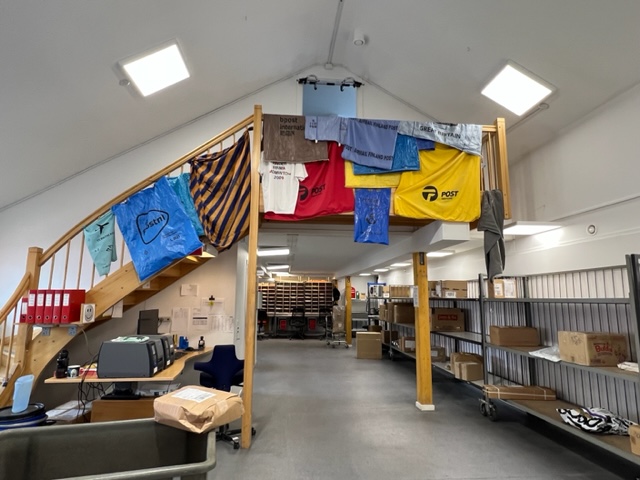
I found Juliana again to ask how mail reaches people living far from town centers. She explained that our postcards would leave that same day—first to Nuuk, then to Denmark, and from there across the world. But for locals, the delivery story is quite different. “They come pick it up themselves,” she said. “No postman goes out to them.” In summer, mail can sometimes be delivered by boat to remote settlements. In winter, it travels by plane. And in some places, people travel to town by snowmobile and bring their post back with them.

In addition to the regular date stamp marked Ilulissat (which means “iceberg”), we also used an older stamp labeled Jakobshavn, the town’s former name. We didn’t exactly ask permission to use both—we just did. While Andry carefully stamped the date over the postage on each postcard, I looked around. Next to the table stood a sorting shelf. All our postcards were placed in the slot marked Ausland—for international mail.
And that’s perfectly understandable. Greenland has the lowest population density in the world—only 0.03 people per square kilometer. Most people live in settlements along the coast, as 80% of the island is covered in ice. But some still live far from the edges of any town or official route.

On our Air Greenland flight from Copenhagen (and back), I watched several Greenlandic films. Sumé: The Sound of a Revolution left a lasting impression—the desire of Greenlanders to be seen and accepted on their own terms was deeply moving, and something we would sense again in person. The other films also gave insight into local life, though many followed an unusual rhythm. Two of the Greenland films were in Greenlandic (in inuit: kalaallisut) only, another two included Danish, and only four had subtitles in English.
Whether people we spoke with supported independence or preferred staying with Denmark (no one ever brought up joining the U.S., not even as a joke), they all agreed on one thing: the global attention Greenland is receiving today has been a positive thing. During our stay, both Emmanuel Macron and Mette Frederiksen visited the country—something that didn’t go unnoticed.
But back to postcards.
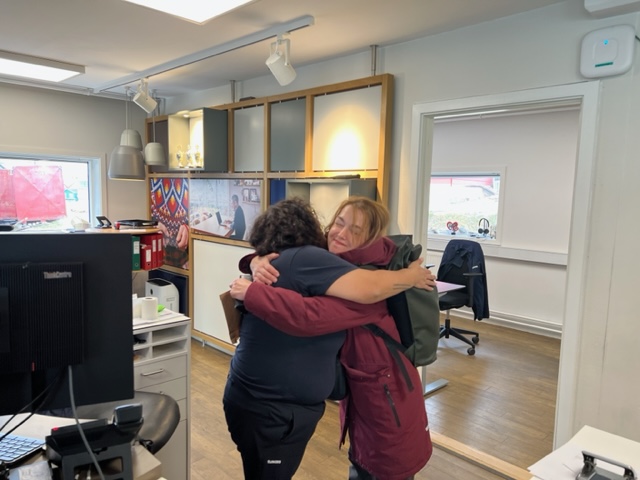
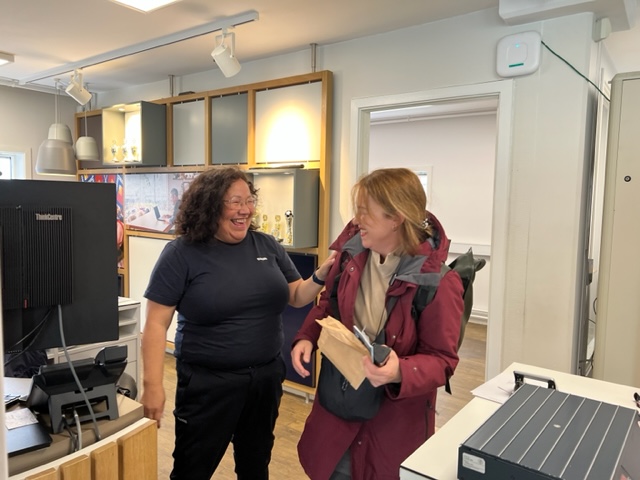
When we returned to the post office the next day, Juliana and her colleague recognized us immediately and greeted us warmly. To our surprise, they handed us a small gift—a local postcard and a fridge magnet. We had brought along several packs of Kalev candies from Estonia and gave them one in return, happy to share a bit of home as thanks for their kindness.

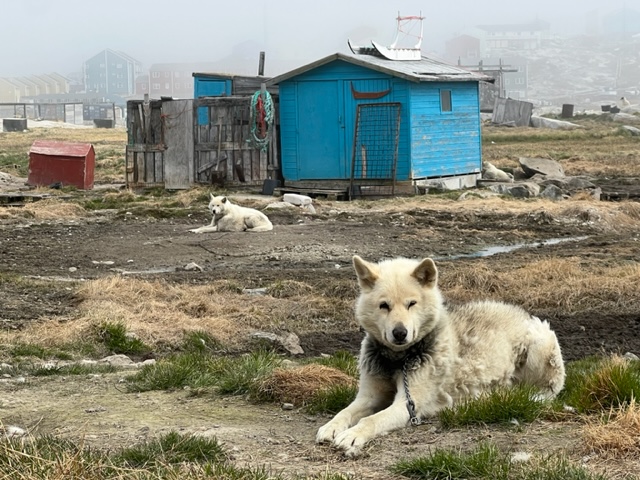
In Ilulissat, I went on hikes across rocky, open land where, according to legend, the qivitoq—spirit-wanderers—roam. I kayaked among icebergs close to midnight and had silent conversations with Greenlandic sled dogs —one of the purest breeds in the world—who simply stared back. (In summer, they bark only a few times a week, usually when their owner comes by with food.)
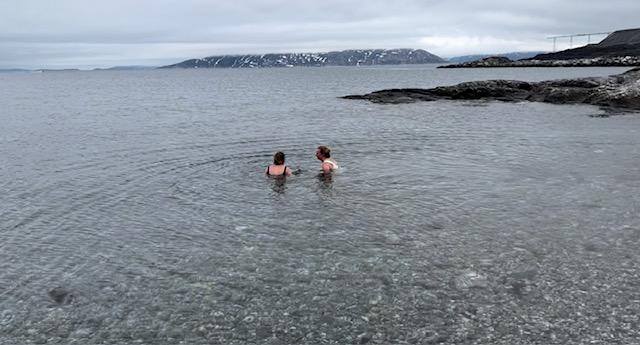
One evening, in Greenland, I also went to a sauna—a small wooden cabin perched on the rocky coast, overlooking the Arctic Ocean. Between sauna brakes, I stepped into the freezing water. My brain told me not to—loud and clear. But one of the other sauna guests, Annasofie, a woman who had moved here from Denmark earlier this month for her husband’s job, walked into the water with me, speaking calmly the whole time. And before I knew it, I was neck-deep in Arctic sea, no longer thinking—just being…. till I run out 😀
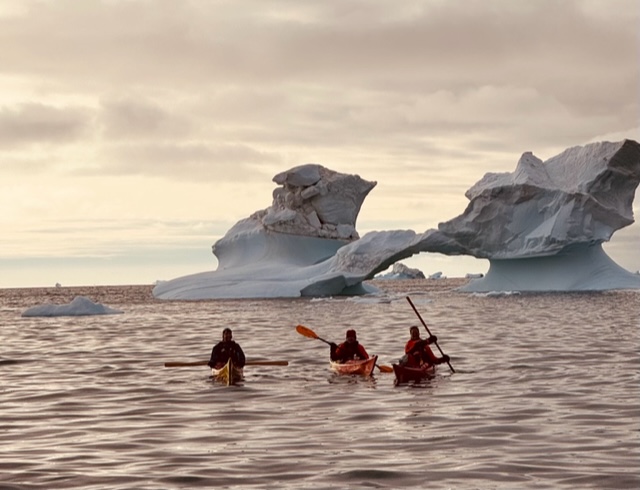
Although we were constantly exploring, I still made time—almost every day—for a quiet stop at the post office. Andry found even more time. While I followed the pull of new experiences, he made sure our postcards found their way—each one carefully stamped and sent. And in those still, bright mornings, I liked to believe that a little of Greenland’s calm and strength traveled with the postcards themselves.

Later in Nuuk, we also visited the central post office. It was modern, well-staffed, and stood right in the center of town. But by then, Ilulissat had already made its way into our hearts. And some places, once they do, never really leave.
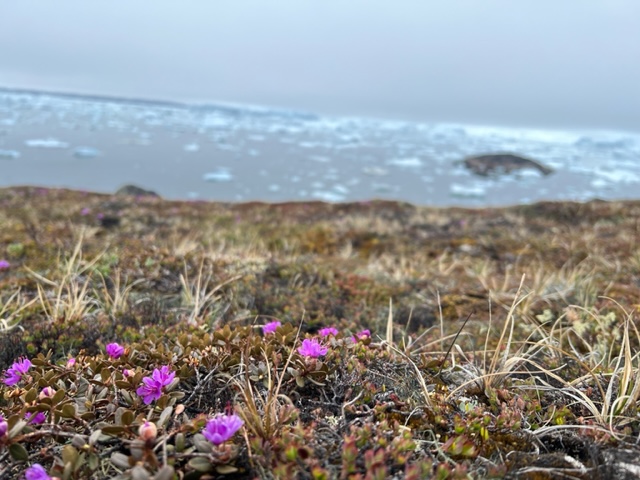
Some places don’t ask for your attention—they simply stay with you. And long after we’d left, Greenland still felt closer than I ever imagined it could.
If you’d like to read future entries from this post office diary, you can subscribe here:
 Exploring the Unexpected