
- Visit date: 12.02.2019
- The visited post office: Palestine Bethlehem Post Office
- Cost of sending mail: Europe 350 fils
- Postcard availability: Gift shops
- Postcard Delivery Times: Fastest USA 24 days
Palestine consists of the West Bank and Gaza Strip, bordered by Israel, Jordan, and Egypt. It has declared Jerusalem as its capital, though its administrative center is in Ramallah. As of 2024, 147 countries recognize Palestine as a state, although it is not a full member of the United Nations. The Palestinian Authority governs parts of the West Bank, while Gaza is controlled by Hamas.

A Brief Palestine’s Postal Story
The first postage stamps of Palestine were issued during the British Mandate in 1920, featuring “Palestine” in English, Arabic, and Hebrew. After 1948, mail services were managed by Jordan in the West Bank and Egypt in Gaza, until Israel took over both areas in 1967.
Following the Oslo Accords, the Palestinian Authority launched its own postal service and began issuing stamps in 1994. Palestine became a special observer at the Universal Postal Union (UPU) in 1999, and though its 2019 bid for full membership was rejected, it secured rights to exchange terminal dues and, in 2020, gained international support to send mail directly via Jordan.
Until the 2023 Gaza conflict, most international mail passed through Israel. With the escalation, Israel blocked mail routes, and Jordan stepped in, offering to route Palestinian mail through the King Hussein Bridge.
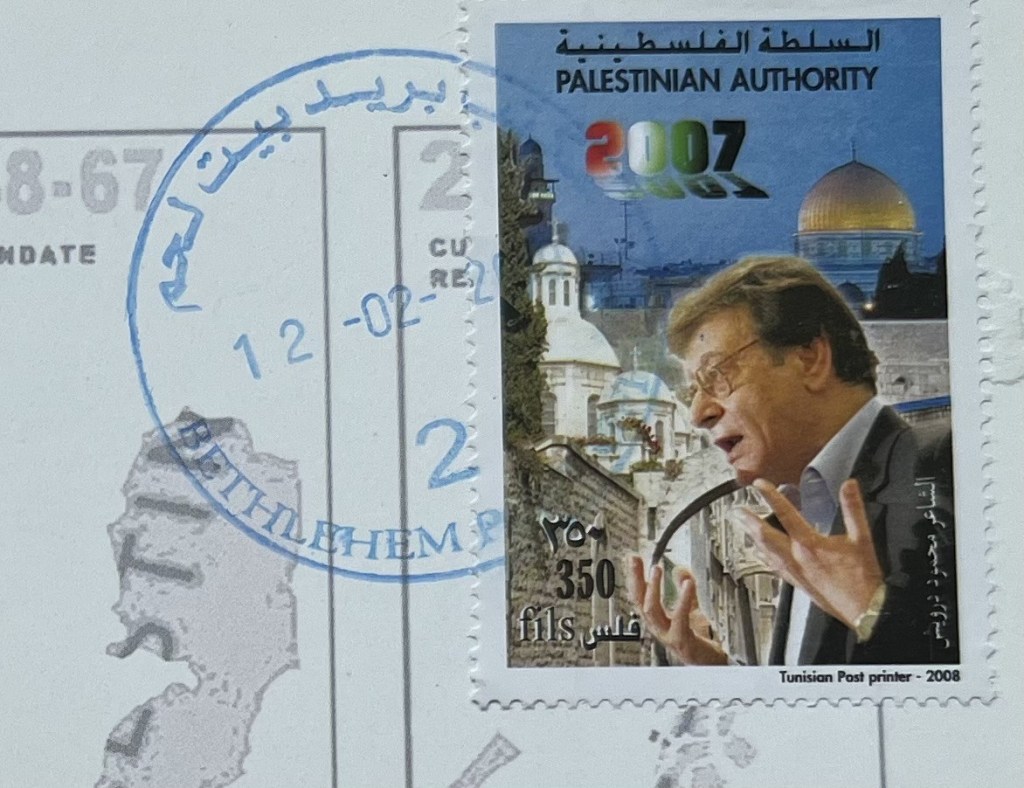
Despite setbacks, Palestine maintains its own postal system and continues to issue stamps that express its history, culture and aspirations for statehood.
References: Palestine wiki, JPC News, UPU News 2008, Palestine post, UPU Palestine 2019 News, february-2019/Palestine
Andry`s Postal Experience in Bethlehem
In February 2019, Andry traveled through Israel, Palestine, and Jordan—this time without me. The full story came later, after he returned home, and just this week I asked him to revisit the memories and share them in detail.
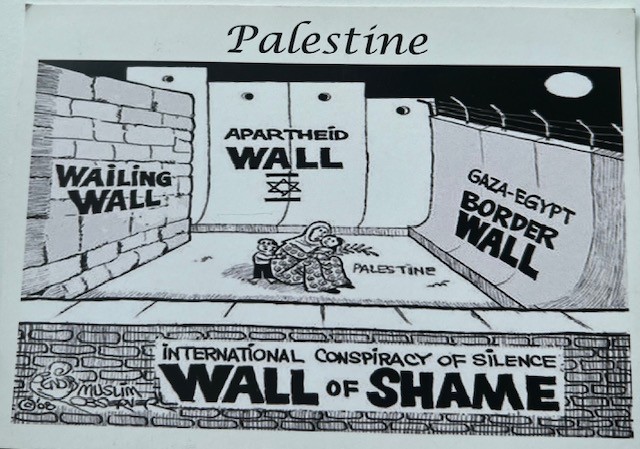
Their group entered Palestine by bus from the Israeli side. Near the border, their Israeli tour guide said his polite goodbyes—Israeli citizens are not allowed to enter Palestinian-controlled areas—and stepped off. The group continued on with a Palestinian driver behind the wheel. The gates opened smoothly, and they passed through without document checks.
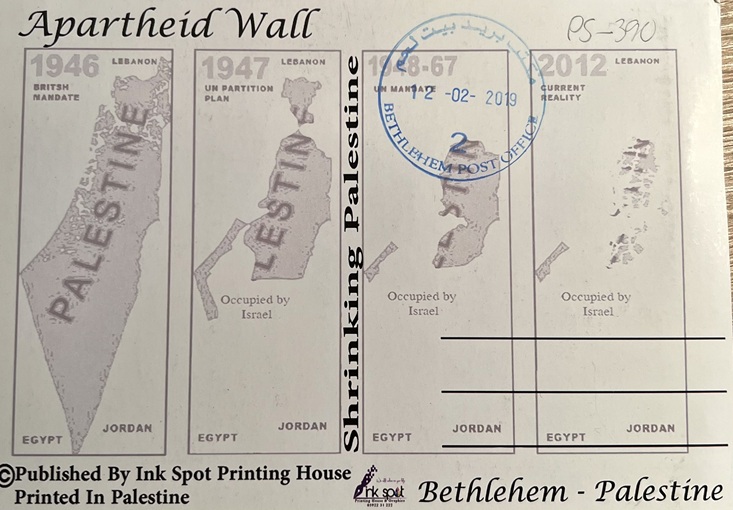
That night, they stayed at the Russian Pilgrims’ Residence in Bethlehem. The next morning—12 February 2019—while the rest of the group headed off for more guided sightseeing, Andry had a different mission in mind. As a true enthusiast of all things postal, he decided to visit the local post office instead.
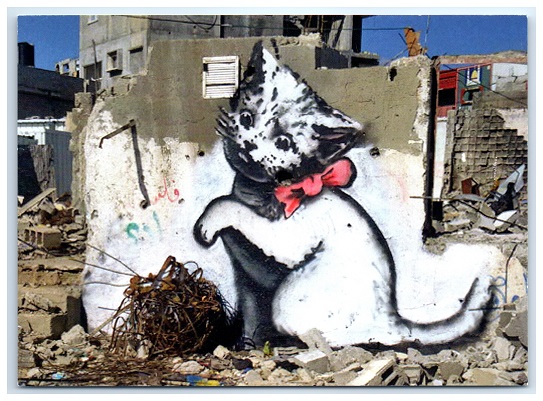
Coincidentally, on that very same day, Palestinian Authority President Mahmoud Abbas was away on an official visit to Riyadh and met Saudi Arabia’s King Salman bin Abdulaziz. So while the president conducted state business in Saudi Arabia, Andry made what he considered a diplomatic visit of his own—this one to the Bethlehem post office.
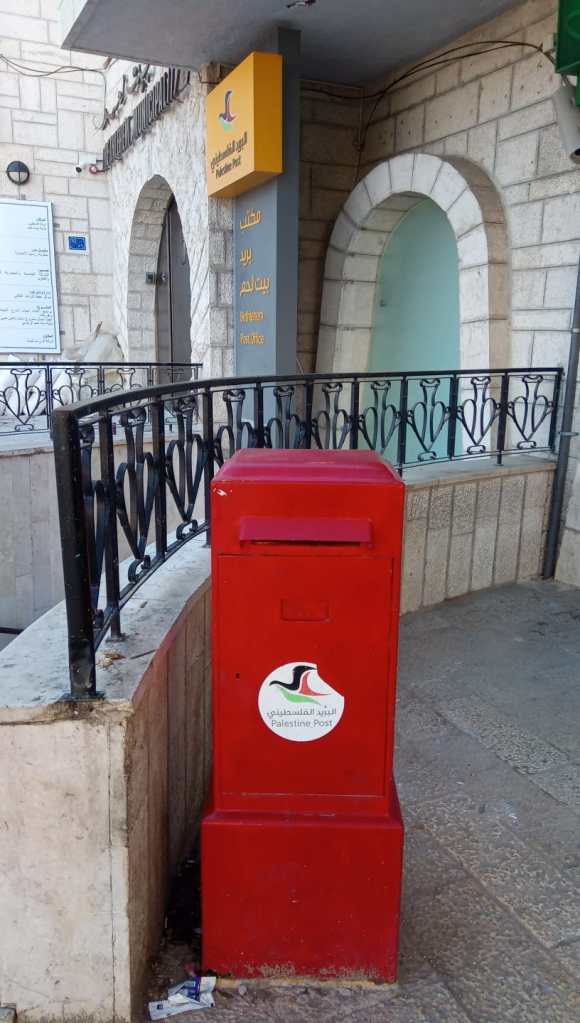
He walked alone down a narrow, car-shared street, past mostly closed shops and a few open gift stores with a surprisingly good postcard selection. The post office was just a few hundred meters away, near the Church of the Nativity. To enter, he stepped a few stairs down from street level. Though conversation with the clerk was limited, mutual enthusiasm for stamp cancellations created an instant connection. Andry was handed the date stamp and given a desk to cancel the postmarks himself—pure happiness for a philatelist.
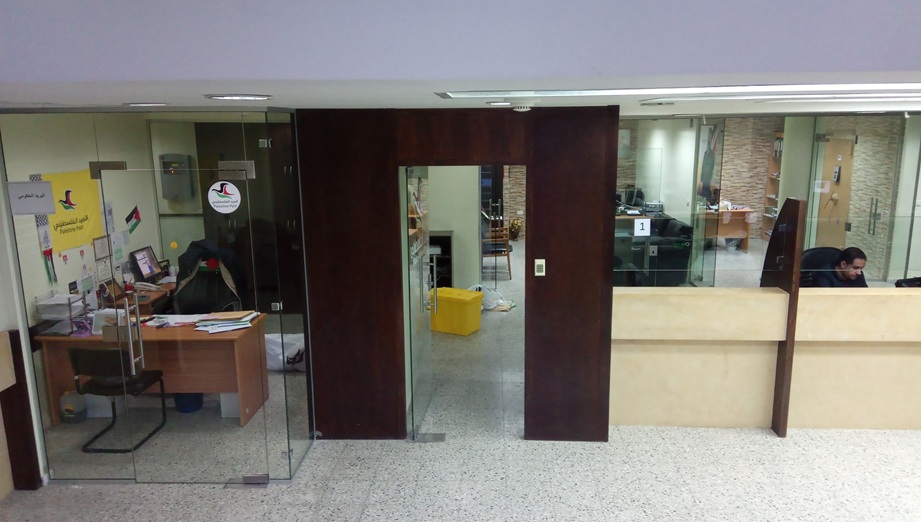
But as he exited, reality reminded him where he was. The region was tense that February. A few local boys threw stones his way before quickly disappearing. Whether it was his foreign presence, or most likely the ever-present cowboy hat that made him stand out—no one can say for sure.
The fastest postcard Andry sent from Bethlehem made it to Pennsylvania in just 24 days—arriving as a perfectly timed surprise for Nancy, a fellow postcrosser, on International Women’s Day, March 8th.
Andry came back with stories—and a memory that left its mark on both his mind and this travel journal.
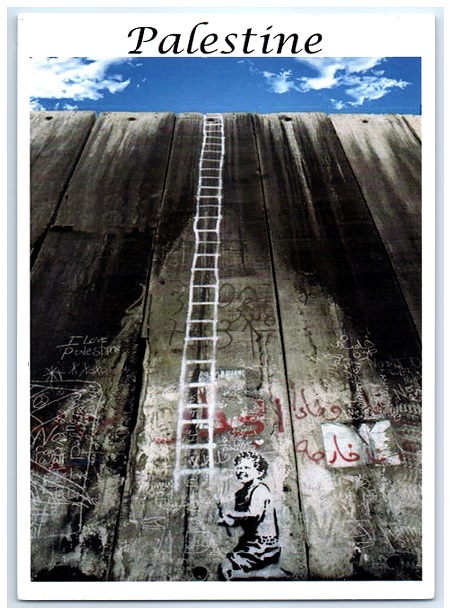
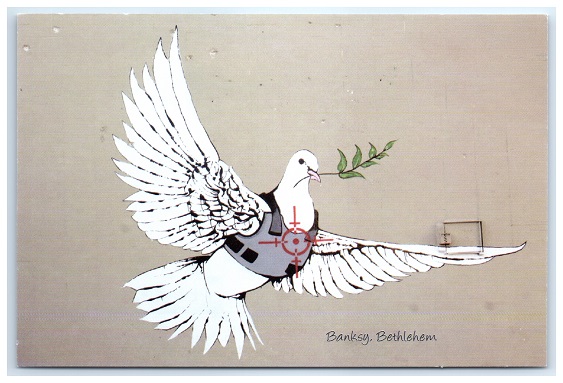
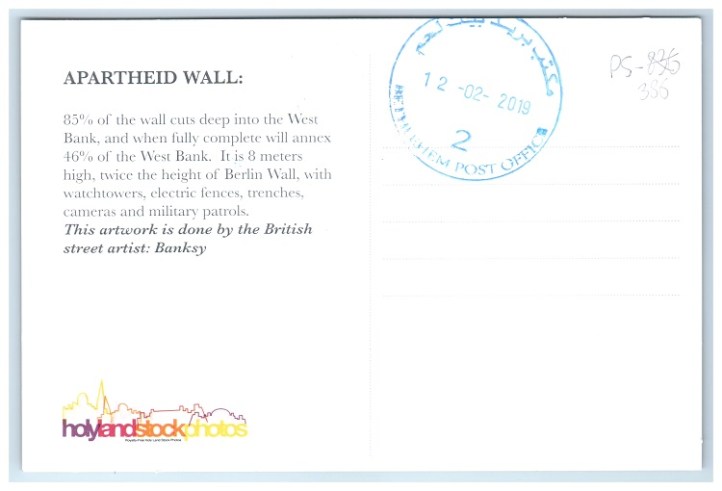
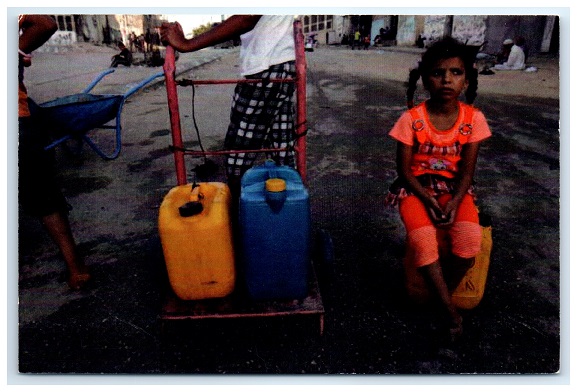
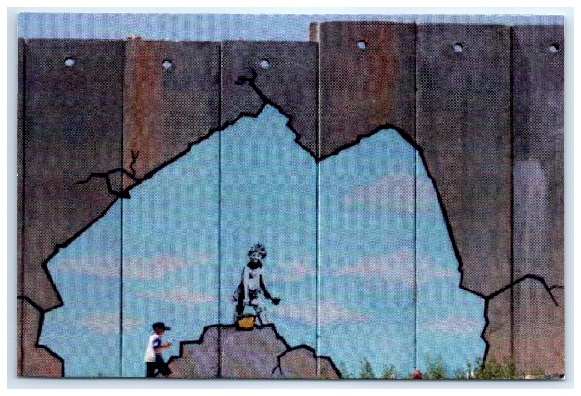
Most of the photos in this post are actually postcards bought locally—each showing different sections of Bethlehem’s separation wall. Covered in layers of graffiti and striking political artwork, the wall appears on these cards as both a canvas and a symbol, capturing the complex reality of life in the region.
If you’d like to read future entries from this post office diary, you can subscribe here.
 Exploring the Unexpected