
- Visit date: 04.11.2022
- The visited post office: Labe Post Office, Poste de Labe
- Cost of sending mail: Europe: 88 000 GNF (9,61 Eur), America 104 000 GNF (11,42 Eur) registered mail Europe 95 000 GNF (10,44 Eur), America 111 000 GNF (12,20 Eur)
- Postcard availability: 4 pcs in post office
- Postcard Delivery Times: Fastest: 42 days to reach the Netherlands
Guinea’s postal history is a journey from a French colony to an independent nation. During the colonial era, Guinea used French West Africa stamps, but after gaining independence in 1958, it quickly began issuing its own. While the postal system has faced challenges over the years, especially during periods of political instability, it remains an important link for communication both within the country and beyond.
References: Postal History of Guinea, Guinea, Budapest Bamako rally, https://laposteguineenne.com
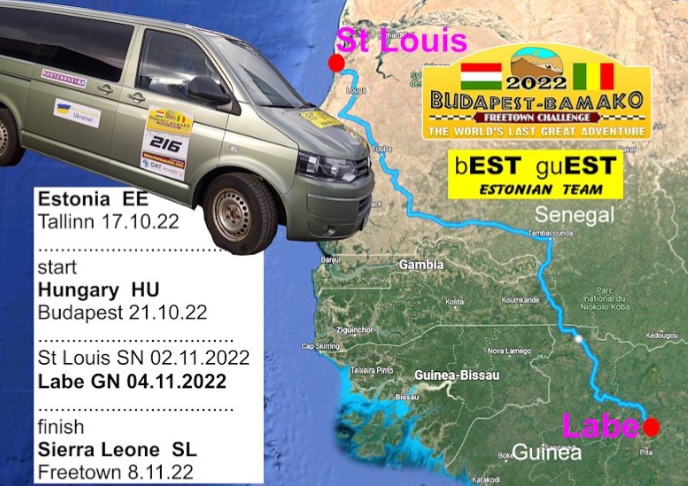
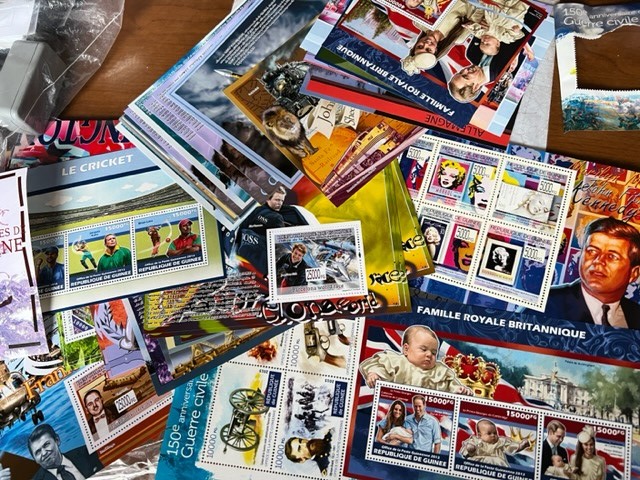
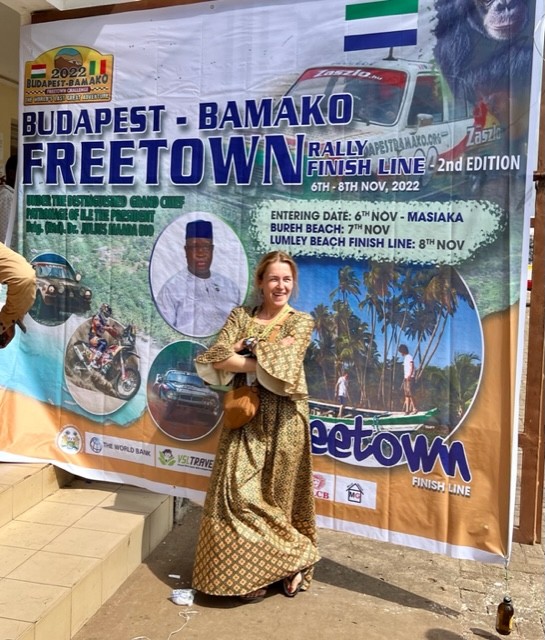
Our Guinea (République de Guinée) adventure was part of the Budapest–Bamako rally—10,000 km by car all the way from Estonia to Freetown. Andry came prepared: he’d bought Guinean stamps on European philately aftermarket and ordered Guinea postcards from Zazzle and postcardsmarket.com in case we couldn’t find any locally. But when it came to postage rates, even he couldn’t get reliable information—emails to La Poste Guinéenne went unanswered.
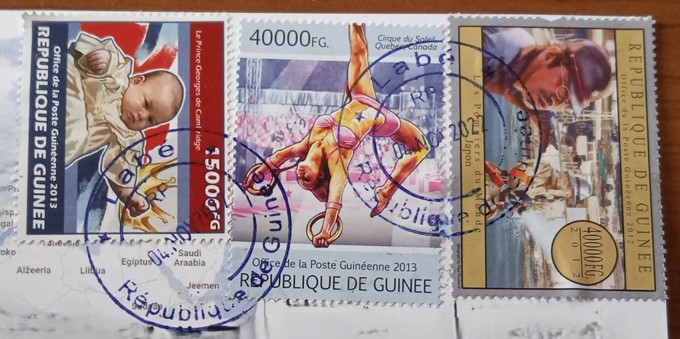
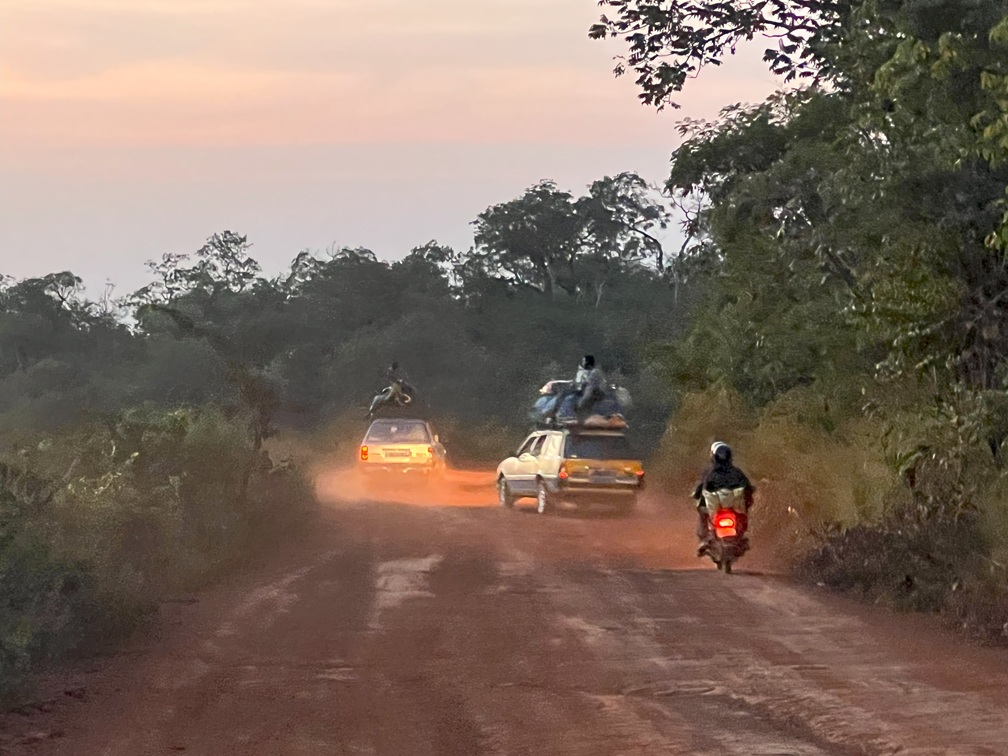
What we did learn was that there are only four post offices in the entire country. We targeted the one in Labé, Guinea’s second-largest city. Reaching Labé was an adventure: the final 27 km over the mountain track was more potholes than pavement, and two broken-down trucks blocked our way. Locals urged us to turn back, but we’d already crossed 100 km of bad road—and as night fell, our rally bus squeezed through the gap without a scratch. A small miracle, really.
We rolled into Labé late on November 3rd and stayed at a campground-style “hotel” run by a local woman and her husband—an Italian who settled here in 1986. The next morning, we asked if the post office was really where we’d found it online and whether it would be open. They looked puzzled: “You really believe what’s on the internet?” the Italian asked. “This isn’t just Africa; this is Guinea,” as if that explained everything.
Still, the post office was open and right where Google Maps had indicated. The building was large, emblazoned with the PTT (Postal Telegraph and Telephine) logo — it seemed unbelievable that our hotel hosts hadn’t known it existed.
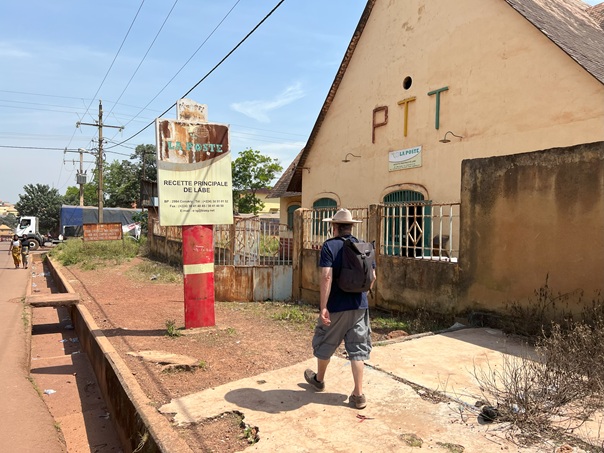
We stepped into a vast, empty hall and asked the clerk about postcards and postage rates.
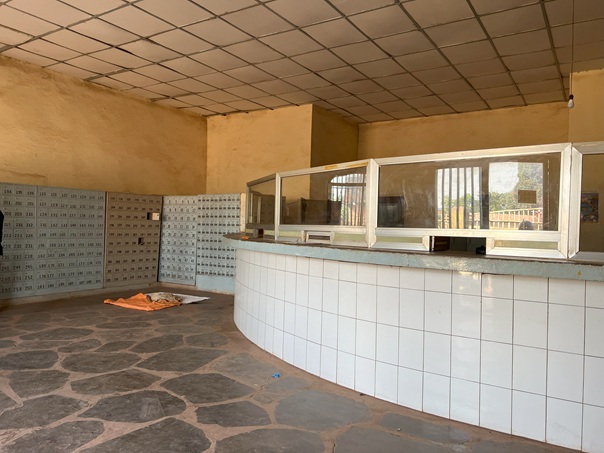
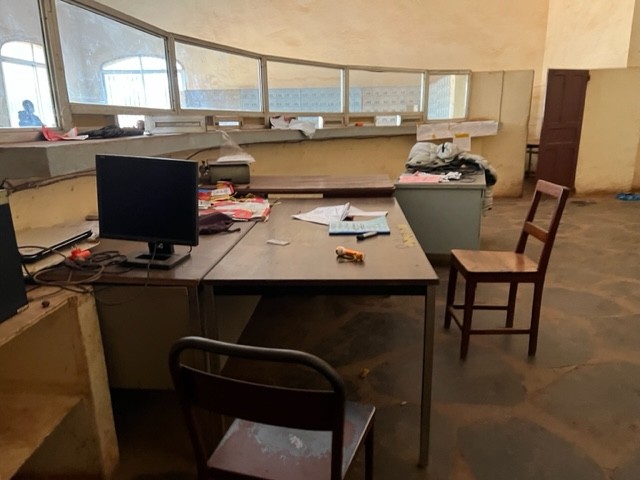
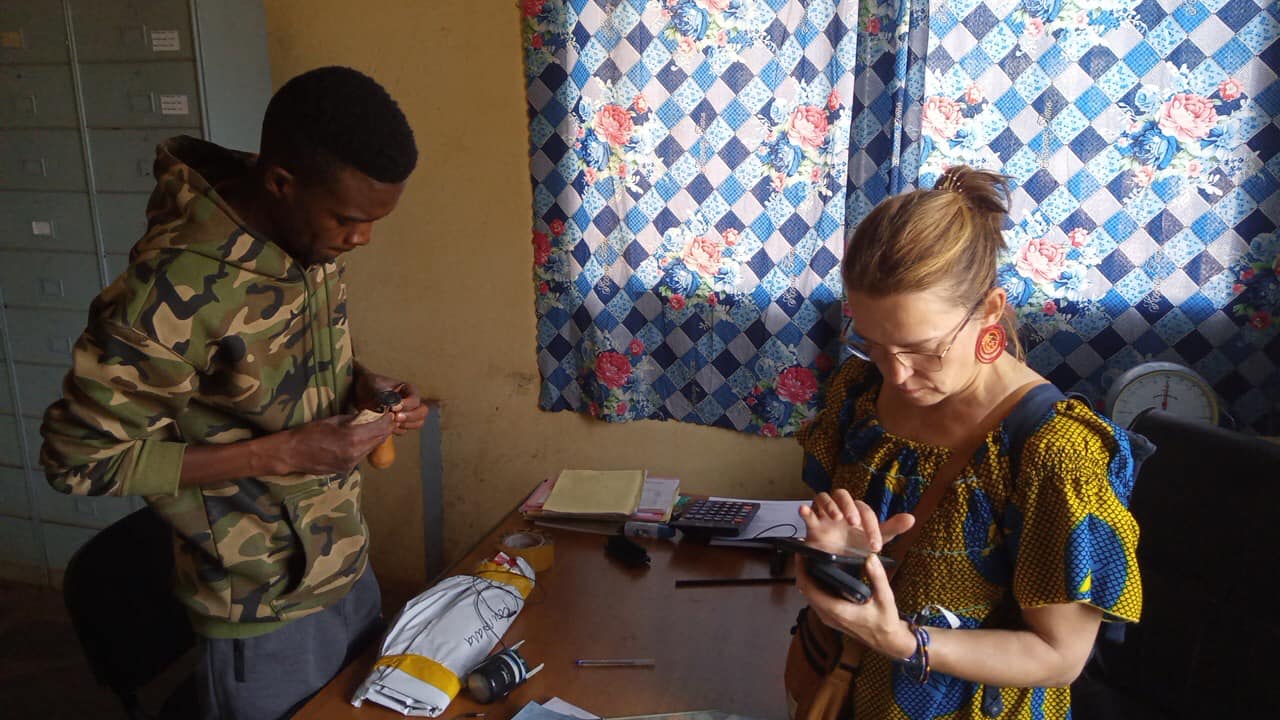
He immediately led us from the main hall into a smaller office — clearly, this was a larger issue. Although there was a wide selection of stamps, only four identical postcards were on sale— showing a local hotel. He seemed astonished that we actually wanted to send postcards, then showed us the price list: both standard and registered mail cost around €10 per card (up from about €1 before April 2021). Fortunately, we’d stocked up on identical stamps back in Europe at much lower prices.
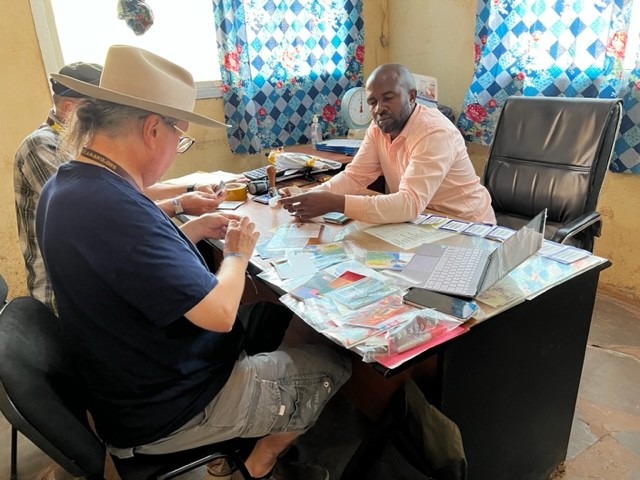
At first, the clerk refused to accept our stamps, but after he called his supervisor and we showed him the UPU website on our phones, he relented. That first visit stretched over two hours: he produced ten RR labels, fixed the postmark from 2019 to 2022, and then handed stamping duties to Andry—our resident postal expert—who ensured each card received a perfect mark and all the paperwork was correctly completed. Once everything was sorted, we actually returned to the post office several more times over the following days. Understandably, we still sent fewer cards than originally planned.
Exiting the post office, we met a young motorcycle taxi driver who offered a town tour (Andry declined), a second hunt for postcards (none to be found),and help finding a dress—since local women here wore such beautiful outfits against the backdrop of rough streets and buildings.
I couldn’t resist. First, he took me to a bustling market where I sifted through bolts of fabric until I found a light, perfect pattern. Then he led me to a humble workshop on the edge of town.
At the workshop, the tailor took my measurements, and the taxi driver whisked me back to the hotel. Three hours later, he returned with a dress that fit perfectly. I felt honored to don one myself. In a place where so much can feel makeshift, that level of craftsmanship was truly remarkable.
What truly surprised me in this country was the optimism. “We have a good country,” my moto-taxi driver said, praising President Doumbouya and the upcoming census meant to prevent double voting—something we take for granted in Europe. Our host, too, trusted the system: instead of settling things himself, he was preparing to take his noisy neighbors to court.
After four whirlwind days it was time to leave this warm, welcoming country.Our postcards may have traveled slowly, but the hot sun, those stunning dresses, shadowed streets, and that unforgettable post-office visit still flash vividly in my mind whenever I think of Guinea.
If you’d like to read future entries from this post office diary, you can subscribe here.
 Exploring the Unexpected