
- Visit date: December 15 2011
- The visited post office: Post office in Aguas Calientes
- Cost of sending mail: 5,50 sol (2,70eur) remained the most expensive country for a long time
- Postcard delivery time: From Aguas Calientes, Peru to Tallinn, Estonia – 25 days
Peru, officially the Republic of Peru, is a country in western South America bordered by Ecuador, Colombia, Brazil, Bolivia, Chile, and the Pacific Ocean. With a population of over 34 million, it’s the fifth most populous country in Latin America. Peru is best known as the heartland of the Inca Empire — one of the most important pre-Columbian civilizations. The country declared its independence from Spain in 1821, and its cultural heritage blends Indigenous, Spanish, African, and Asian influences. Geographically diverse, Peru spans the arid Pacific coast, the towering Andes mountains, and the lush Amazon rainforest, offering dramatic scenery and rich biodiversity. Today, it’s a fascinating mix of ancient traditions and modern life — a place where history is very much alive.
Peru’s Postal Past: A Glimpse Through Machu Picchu
Peru’s postal history stretches back to colonial times, but it took on new cultural weight with the global fascination around Machu Picchu. After Hiram Bingham brought the Inca citadel to international attention in 1911, Machu Picchu began to appear on Peruvian stamps. It was first depicted on a Peruvian stamp in 1948 to commemorate the 35th anniversary of its discovery. Since then, the iconic Inca city has been featured on several different Peruvian stamps, often with tourism, history, or world heritage themes. In addition to Peru, Machu Picchu has also appeared on stamps from other countries.
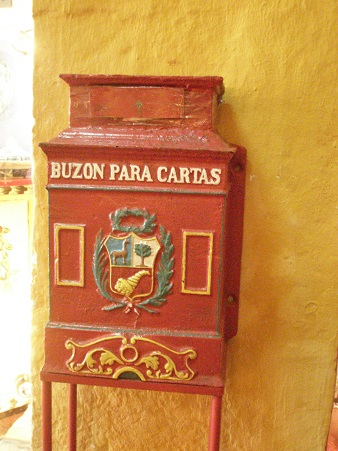
The exact opening date of the Post office in Aguas Calientes is not publicly documented. According to the latest available information, the Serpost office in Aguas Calientes has been closed since January 2018.The nearest operational Serpost offices are located in Cusco and Urubamba.
Sources: Machu_Picchu, Aguas_Calientes, serpost, Peru, Machupicchu_Historic_Sanctuary.pdf
Searching for Serpost: The Machu Picchu Edition
In December 2011, we left snowy Estonia with a small group of travelers to Peru. The plan? See the sights, explore local culture, breathe some thin mountain air — and, of course, visit post offices wherever we could. From Lima to Arequipa, Cusco and finally to the edge of the rainforest. And in every place we could, we looked for Serpost, Peru’s national postal service.
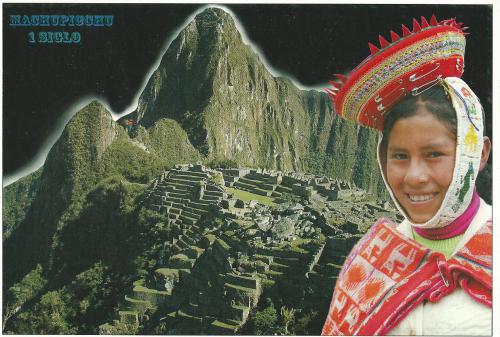
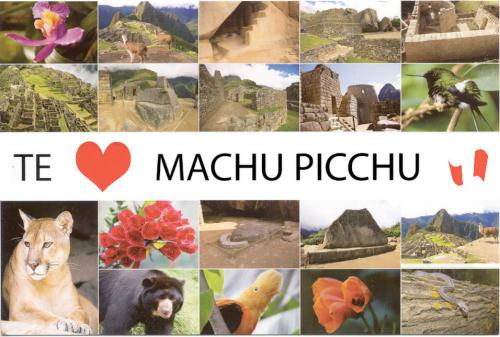
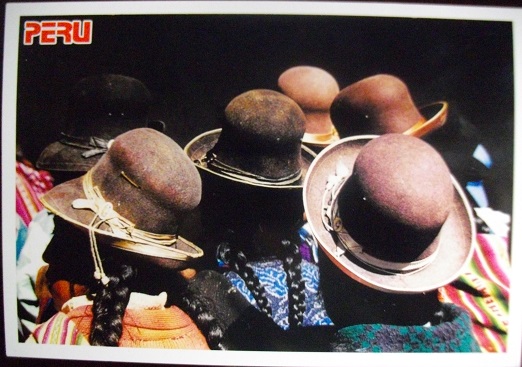
From Lima, we sent a few postcards — a quiet warm-up. In Cusco, we went bigger: a parcel of rich Peruvian cocoa made its way home.
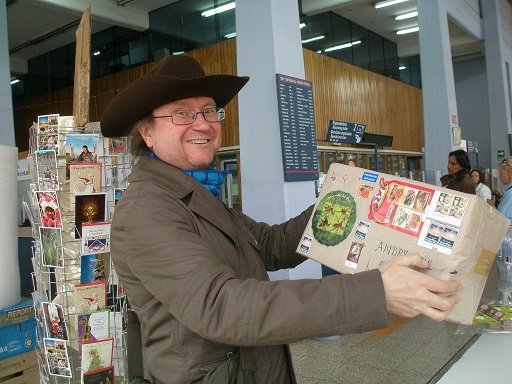
But the most memorable post office was in Aguas Calientes, the lush mountain town just below Machu Picchu. Our hotel was only 100 meters away, so I popped in more than once. We’d even managed to infect others in our group with the postcard bug — by the end of the day, everyone wanted their own Machu Picchu-stamped memory.
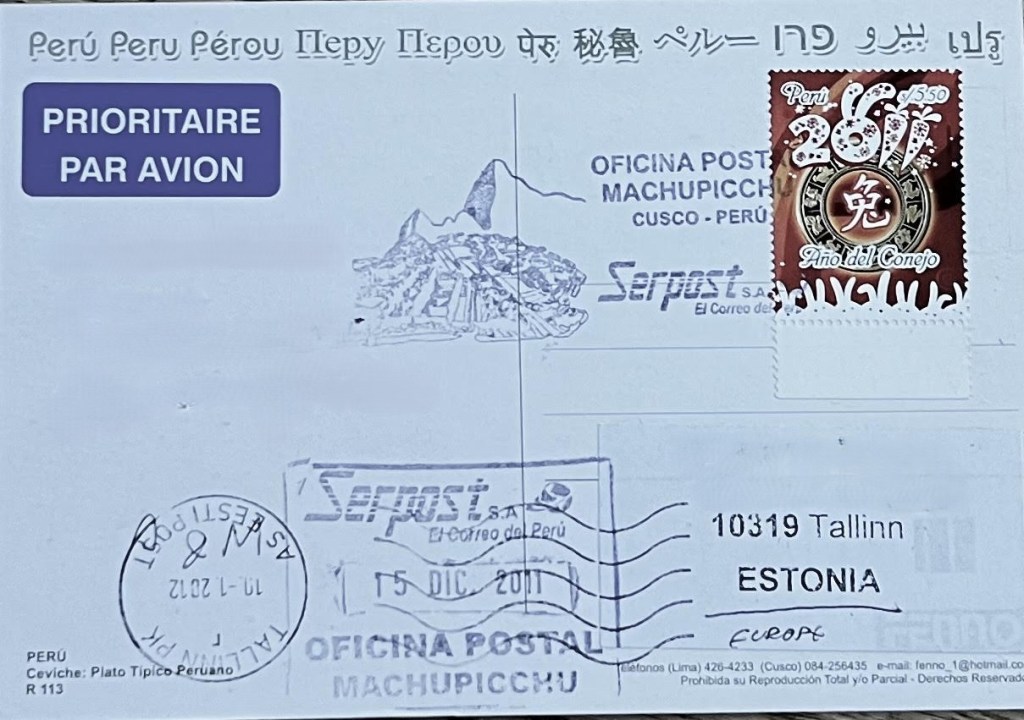
That special postmark, featuring the iconic mountain silhouette, made our cards feel like collector’s items. Some tourists even asked for it in their passports. We stuck to postcards, of course — but the temptation was real. Nearby, the town lives up to its name (“hot waters” in Spanish) with wonderful hot springs where you can soak and relax, perfect before or after visiting the famed ruins.
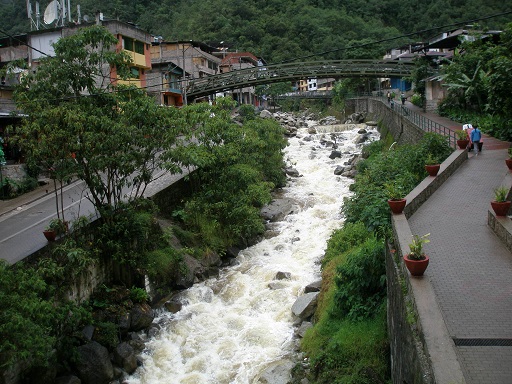
The Story Behind Machu Picchu and Aguas Calientes
Machu Picchu, the legendary Inca citadel nestled high in the Andes at about 2,430 meters (7,970 feet) above sea level, is believed to have been built in the mid-15th century during the reign of Emperor Pachacuti. Though abandoned in the 16th century and swallowed by jungle over time, it remained remarkably well-preserved and hidden from the outside world. Local Quechua communities always knew of its existence, but it wasn’t until 1911 that American explorer Hiram Bingham introduced it to the wider world. As fascination with the “Lost City of the Incas” grew, the small settlement of Aguas Calientes sprang to life in the valley below. Originally a modest railway camp in the early 20th century, it evolved into the lively village now known as Machu Picchu Pueblo — the final stop for travelers making their way to the ancient heights above
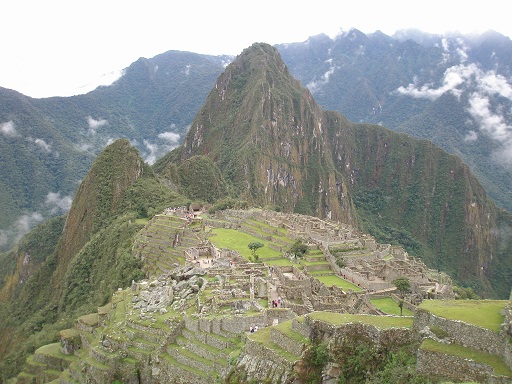
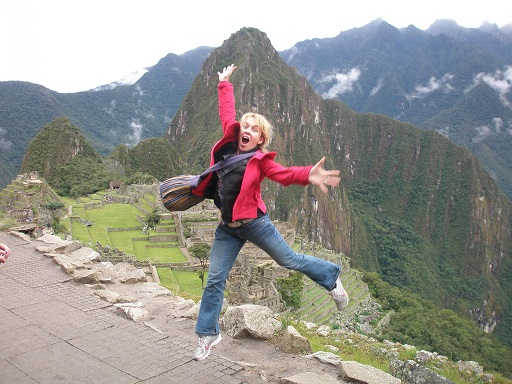
And the mountain itself? Bigger, older, and more dramatic than I’d imagined. Built in the 15th century and rising 2,430 meters above sea level, Machu Picchu was everything people say and more. I thought I knew what to expect – but the size, good preservation, ingenious construction, distance from cities, and that and something else special created a very awe-inspiring feeling.
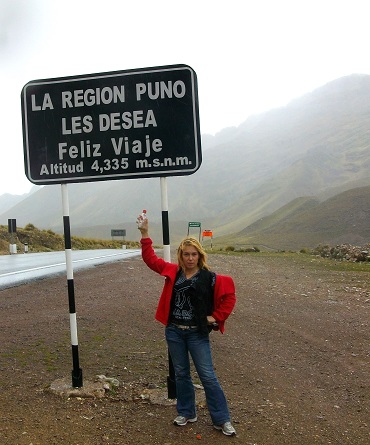
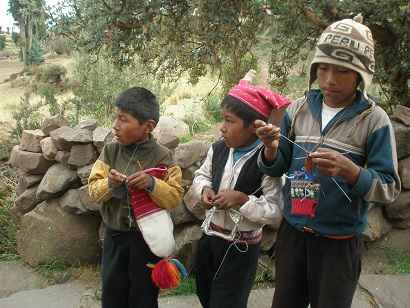
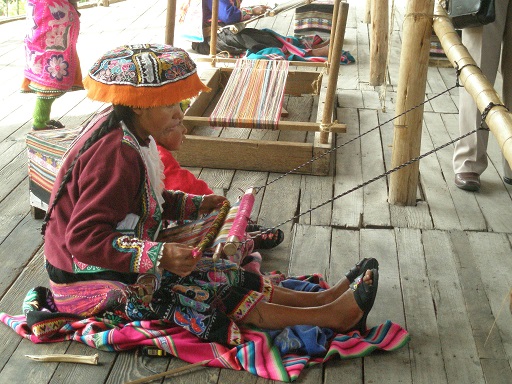
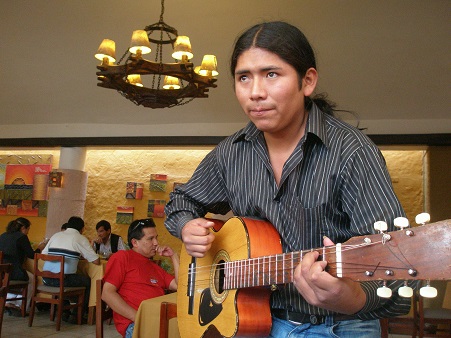
But Peru wasn’t just about ruins. Somewhere between Cusco and Puno, our minibus crept up a mountain road to 4,335 meters — still my highest altitude ever (I climbed Mt. Fuji in 2024, the highest mountain in Japan — and it was only 3,776 meters.). No headaches, no altitude sickness, just wide eyes and wow-moments. So was the culture — woven belts, colorful skirts, painted houses, music, excellent food and local people.
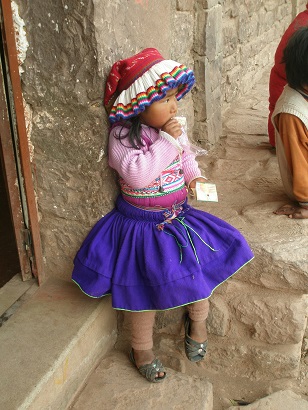
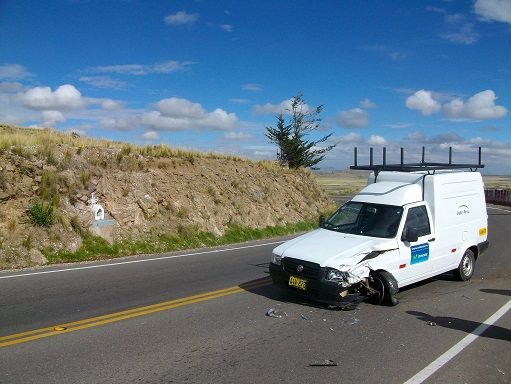
Not everything went smoothly, of course. On our way back from the Titicaca lake, the driver of the oncoming car misjudged a curve and slammed into our minibus. The police arrived, shrugged, and said: “Es lunes, señores” (“It’s Monday”) Apparently, that explained everything. But even this roadside mishap had its unexpected upside.
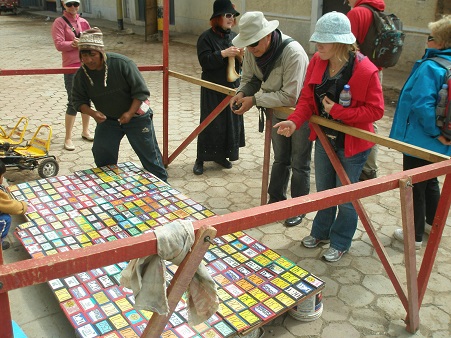
Not far from the crash site was a small village, where we waited hours for a replacement bus. No post office there, but I ended up playing a coin-toss game with some locals — kind of like lotto. I lost. But it was fun for everyone, and the laughter made the wait feel shorter.
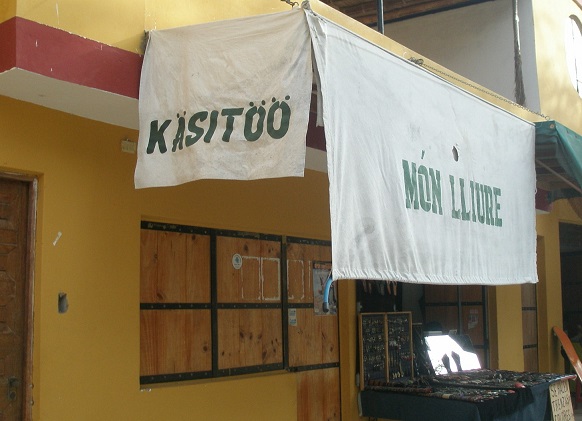
And before any of that? Earlier on, we’d been blocked by a farmers’ strike on the Pan-American Highway. With the road closed, we detoured through a village we’d never planned to visit. That’s where we saw a shop with an Estonian sign reading “Käsitöö.” (Handicrafts.) The shop was closed, and the guy next door had no idea what the word meant.. “Maybe it’s just “souvenir”, he guessed. For us it’s still a mystery how a piece of Estonian got there.
And that’s what Peru became for us: a journey of detours, surprises, and altitude highs — both geographic and emotional. And in the middle of it all, a postcard stamped with the postmark of Machu Picchu. A precious memory.
Thanks for reading, and we’ll see you next time at another fascinating post office!
Subscribe so you don’t miss the next one!
 Exploring the Unexpected