
- Visit date: January 29 2013
- The visited post office: Cocos (Keeling) Islands Post Office (West Island)
- Cost of sending mail: 1,65 AUD worldwide (2013), (update 01.2025 3 AUD worldwide)
- Postcard availability: Post Office, nice selection
- Postcard delivery time: 15 days to Germany, 20 days to China, one month to USA
The Cocos (Keeling) Islands, a remote and often overlooked paradise in the Indian Ocean, about halfway between Australia and Sri Lanka. This small archipelago, consisting of two atolls and 27 stunning coral islands, is an Australian territory, is surrounded by the Indian Ocean, and was first discovered in 1609 by Captain William Keeling, though it remained uninhabited until the 19th century. Today, only two of these islands, West Island and Home Island, are inhabited, offering visitors a unique glimpse into a remote and fascinating island culture
The Basics of the Cocos Islands Postal Story
Located in the Indian Ocean, the Cocos (Keeling) Islands have a fascinating postal history shaped by their remote location and changing administration. For many years, the archipelago’s mail delivery was quite unusual. From around 1909, mail, and other essential items, were delivered to the islands by barrels dropped from passing P&O and Orient Line ships. The ships would alert the cable station on Direction Island, where staff would collect the barrels from small boats called jukongs. Outgoing mail was sealed in a tin can and attached to a line trailing from the ship as it made its drop. This unique system resulted in some mail being marked with phrases such as “Tin Can Mail” or “Orion Barrel”.
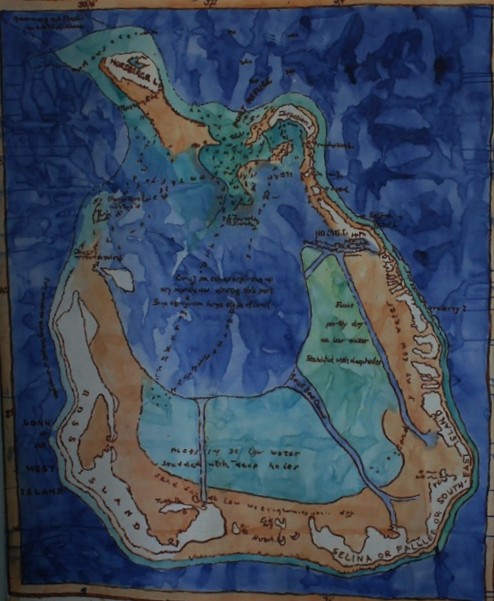
A postal agency was established on the islands between 1933 and 1937, then permanently from 1952 onward. During the first of these periods, the islands, administered by the Straits Settlements, used stamps of that colony. During the Second World War, the islands’ telecommunication devices were defended by British forces, but there was no regular postal service. After the war, when the postal agency reopened, the islands used stamps of Singapore.
In 1955, as Singapore prepared for self-government, the United Kingdom transferred control of the Cocos (Keeling) Islands to Australia. This transition led to the introduction of Australian legislation, including their postal system, currency, and stamps. Initially the post office was not official. This meant the local postmaster’s income depended on their financial results. It wasn’t until 1963 that the Australian Post Office issued the first stamps specifically for the Cocos (Keeling) Islands, featuring local scenes and life on the islands. By 1966 the island was fully using Australian currency and stamps.
In the late 1970s, Australia purchased the Clunies-Ross family’s property and gave more autonomy to the local inhabitants. From 1979 to 1993, the Cocos (Keeling) Islands achieved postal independence with its own postal service, no longer using Australian stamps. The islands’ philatelic program during this time highlighted its natural and cultural heritage, as well as events from the Australian royal family. While the Australian Post Office issued 31 stamps between 1963 and 1979, 264 stamps were issued by the local authority between 1979 and 1993.
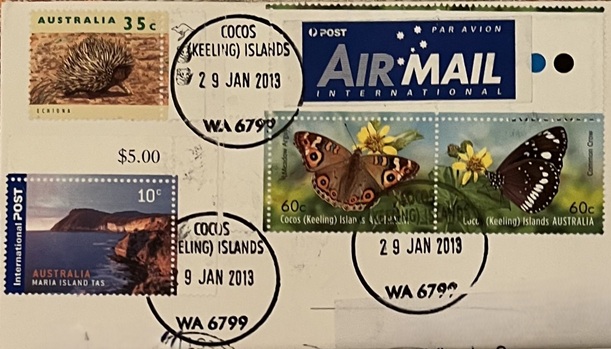
In 1994, the postal service of the Cocos (Keeling) Islands was integrated into Australia Post. Now, Cocos Islands stamps issued since 1994 with the mention “COCOS (KEELING) ISLANDS AUSTRALIA” are valid in Australia, and vice versa.
A Glimpse of Island Life Through Our Eyes
The flight with Virgin Australia from Perth, including a stopover at Christmas Island, took just under five hours, and as we landed, a breathtaking view opened up before us.
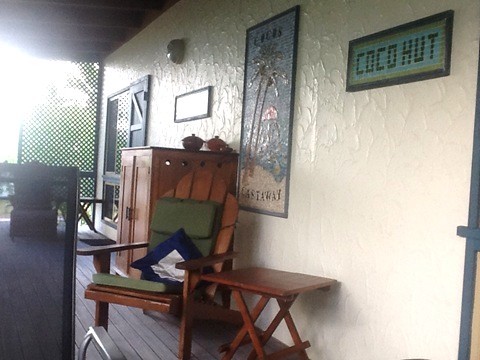
We stayed at Cocos Castaway, a guesthouse located on Home Island. Our neighbors at this hotel were a couple for whom this particular island was the last stop in their journey to visit 312 different regions in the world (the Travelers Century Club considers not only UN countries but also more remote territories). Listening to their travel stories from the 1960s and 70s in the evenings was like the icing on the cake.
The post office was less than a 5-minute walk from the hotel. Everything worked like a charm, and the selection of stamps was quite impressive. On this island, I tried to draw postcards through the Postcrossing system, but since no one had ever sent anything from there before, and the Travel-Mode feature didn’t exist on Postcrossing yet, I didn’t succeed.
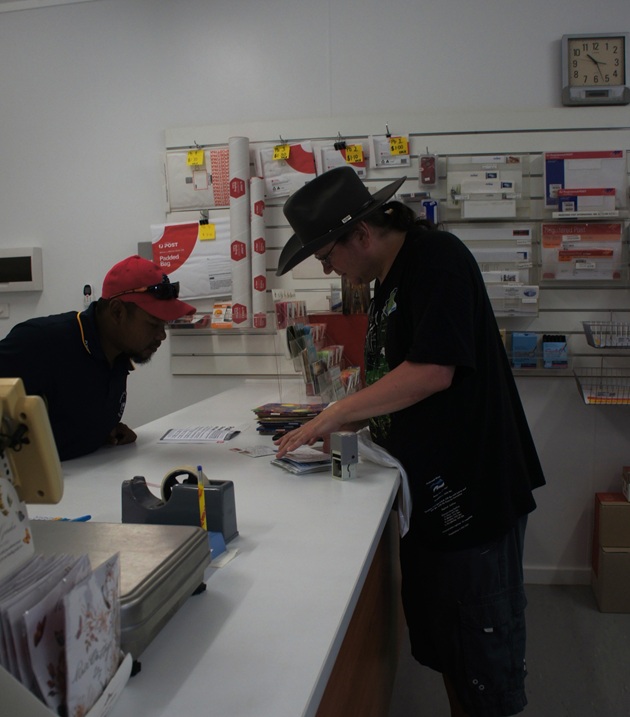
Nevertheless, we sent a lot of postcards to our friends and acquaintances. The postcards travel from this island to Perth with Virgin Australia, and then on to the rest of the world.
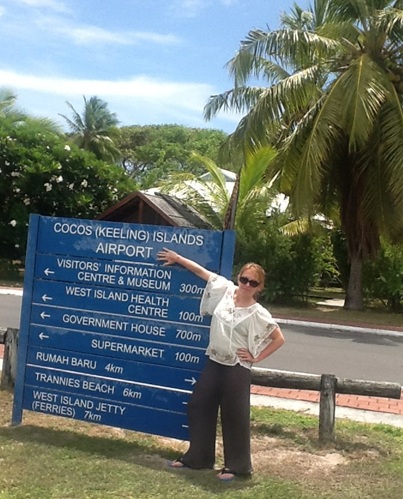
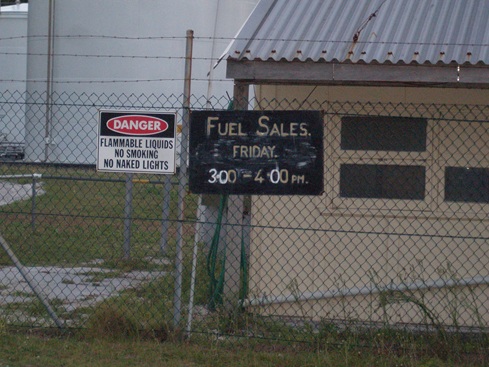
We used bicycles to explore the main island, which, at only about 14 km from end to end, made it really easy. Our visit also coincided with Australia Day on January 26th. On the Cocos Islands, this meant that a large part of the island’s population took ferry named Cahaya Baru to Direction Island for a barbecue.
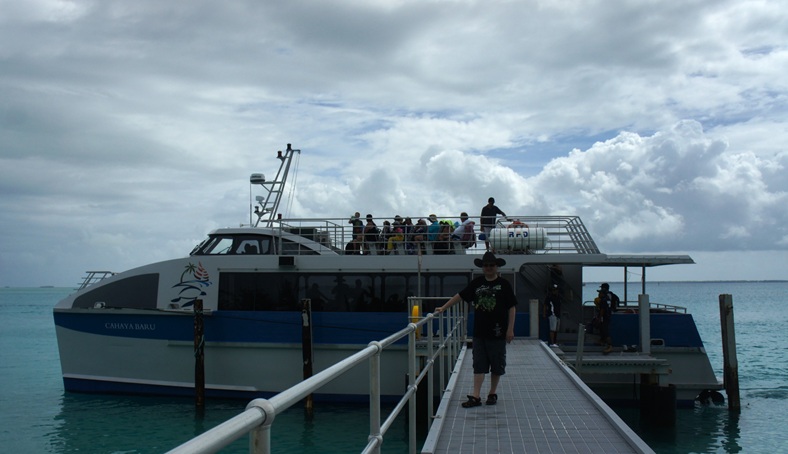
There they were enjoying a picturesque beach (which was voted the most beautiful beach in Australia four years later). We joined them. They were grilling, swimming, and enjoying water sports. Even though we were visitors to the island, different groups welcomed us like old friends.
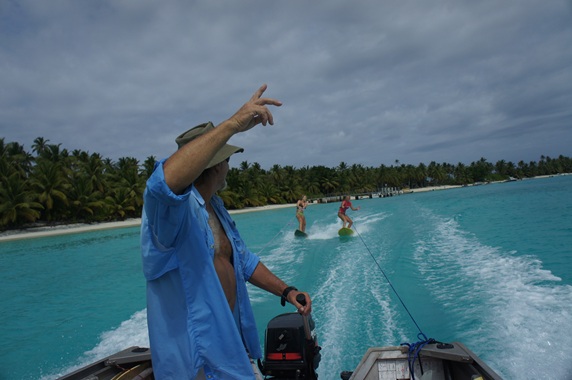
And so, the remote and unforgettable Coconut Islands will forever be remembered as the place where I got the worst sunburn of my life—because I didn’t want to miss a single special moment and forgot myself under the sun for far too long.
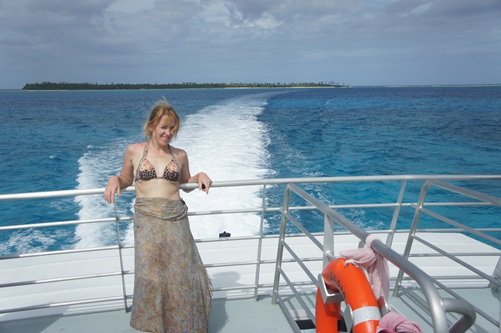
Postcards sent and skin a shade redder than before, we left the Cocos (Keeling) Islands, taking with us a piece of this remote paradise – and a reminder to always pack and use sunscreen.
If you’d like to read future entries from this post office diary, you can subscribe here.
 Exploring the Unexpected