
- Visit date: January 31 2025
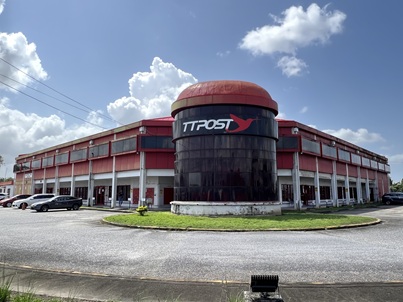
- The visited post office: General Post Office, TTPost, Labrea, TTPost Port of Spain.
- Cost of sending mail: America 3.75 TTD, Europe 4.50 TTD rest of the world 5.25 TTD (0,55, 0,65 and 0,75 Eur)
- Postcard availability: Close to cruise terminal, General Post Office, Souvenir shop in Independent Street
- Postcard Delivery Times: one month to USA and to Germany
Trinidad and Tobago, often referred to simply as Trinidad & Tobago, is a dual-island nation located in the southern Caribbean, just off the coast of Venezuela. These two islands, while distinct in their character, form a vibrant country with a rich blend of cultures and traditions, all set to the infectious rhythms of calypso music. Trinidad, the larger of the two, is known for its bustling cities and diverse population. Tobago, on the other hand, is smaller and more laid-back, famous for its beautiful beaches and slower pace of life. Together, they create a captivating destination that’s quite unique in the Caribbean
The Basics Behind Trinidad Tobago Postal services
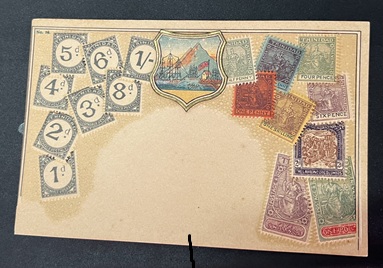
The first post offices were established on the islands in the late 18th century under British rule. The early postal system in Trinidad and Tobago was closely tied to the British postal system. Initially, the islands used stamps of Great Britain. However, the need for a distinct postal identity emerged, and in 1851, Trinidad began to issue its own stamps. These stamps were some of the first colonial stamps, and are now highly sought after by collectors. They were simple designs with the words ‘Trinidad’ written on them, and as time went on these stamps were updated to include various portraits of the British monarchs, as was the norm in British colonies.
Tobago, which was initially a separate colony, later became part of the united British colony with Trinidad in 1889. Before that point, Tobago also had its own stamps, beginning in 1879. These were more colorful than the Trinidad stamps and often included local scenes, though many of the Tobago stamps also included portraits of the Queen Victoria, as well as the local Coat of Arms. This all ended with Tobago joining Trinidad and a unified postal system being created. In 1897, the stamps of Trinidad were re-issued and some were inscribed with “Trinidad and Tobago”, followed by the complete abandonment of previous Tobago stamps.
Today, the postal system is managed by the Trinidad and Tobago Postal Corporation (TTPost), which is working hard to provide postal services to both the local population and internationally. Though like many other postal systems they are also working to innovate and adapt in the digital world, but the physical delivery of mail continues to be a part of their daily lives
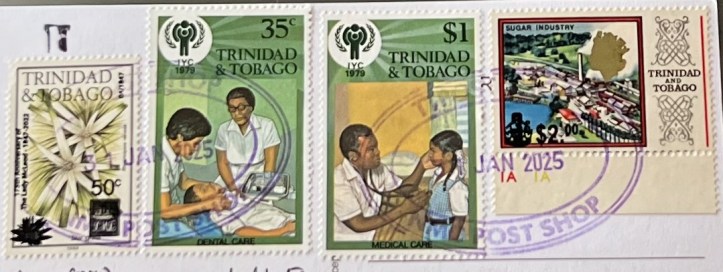
The islands remained a British colony until gaining their independence in 1962. After independence, Trinidad and Tobago continued to operate their own postal service, and new stamps were designed to reflect their national identity. These stamps often celebrated local culture, history, and nature, moving away from colonial-era designs, and bringing a new found sense of national identity.
Sources: Postal history, Trinidad_and_Tobago
Our Personal Experience
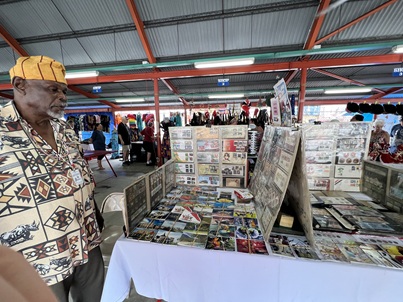
Trinidad greeted us with heat, calypso rhythms and a welcome that sounded for us like “Kõdikõdi” in Estonian “tickle-tickle) their local way of saying “hello” or “good day” . Even though English is the official language, their local dialect was different enough that we couldn’t understand everything. We stayed in the capital city, Port of Spain. The old town was bustling with people, which wasn’t surprising, as the country is only slightly larger than all of Estonia’s islands combined, but it has a population of 1.5 million. On our second day, a cruise ship arrived at the port, and since we hadn’t found any postcards in the city, we decided to try our luck there. It was like winning the lottery! Among the other vendors, we found an older gentleman who sold postcards for 50 US cents each. He even offered us a rare historical postcard for $6 USD.
Post offices are located in several places across the island, and we visited a couple of them. One was near our hotel on St Vincent Street, where we bought some stamps. However, it was only at this post office that we had a slight misunderstanding about the price with the postal worker, who initially thought a postcard and a letter in an envelope cost the same, until she found the official price list.
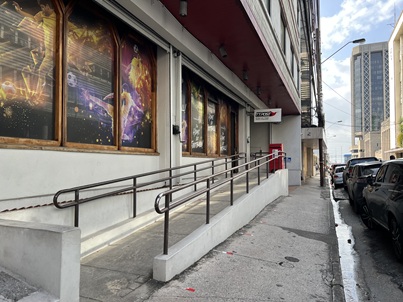
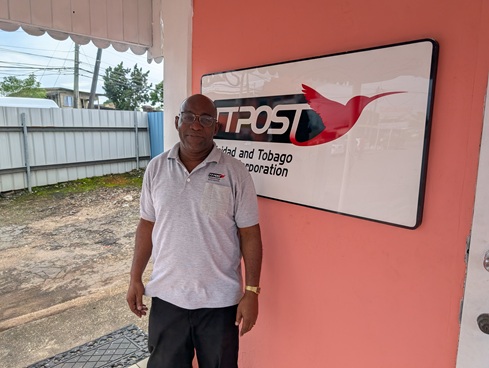
The other, which we visited the next day, was much further away, on the other side of the island, at TTPost, Labrea, which was managed by the hospitable Marvin. He was exactly the kind of warm, informative, and helpful person that everyone would love to see at their local post office.
On the last day we had something else planned as well, which was that we would visit the philatelic department located in the main post office near the airport.
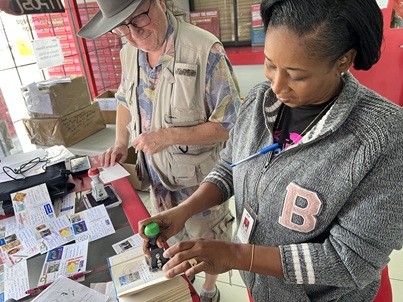
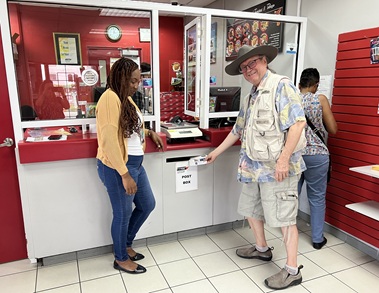
The post office near the airport sold both regular postcards and First Day Covers. But the real treasure were the employees- Nikeisha, Laureen and Denise. The philatelic department was closed and under construction, so we couldn’t enter those rooms. Regardless, the staff came out to the main post office side and introduced us to their stamps and stamped our cards with a date stamp. What made it even more interesting was that some of the stamps we bought had been surcharged during different periods, which made them all the more unique.
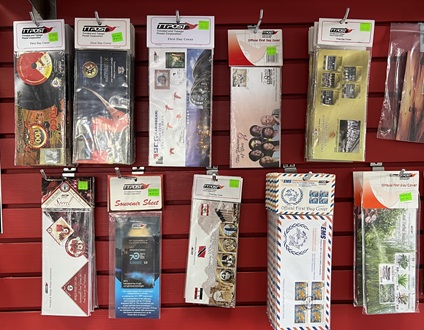
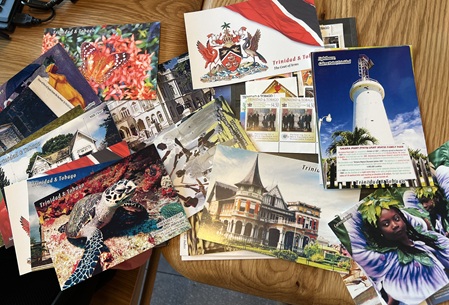
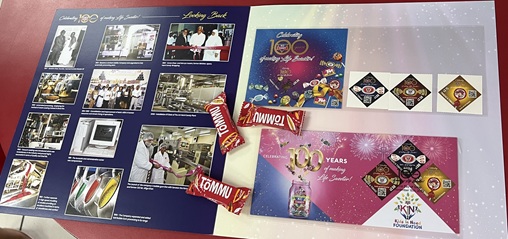
One of the last sets released, was a particularly sweet treat – a series celebrating 100 years of KC candy! We ended up adding some of these to the postcards we were sending off. Before leaving we gave them a package of Kalev sweets Tõmmu we had brought from Estonia.
It was time to move on. As we left after midday, the postal worker sent us off with a cheery “Godahvgodahv,” a local greeting that we learned meant “good afternoon” in their language. And so, while we’ve long since left behind the sunny shores of Trinidad and Tobago, we hope that the postcards still on their way will reach their destinations soon.
If you’d like to read future entries from this post office diary, you can subscribe here.
 Exploring the Unexpected