
- Visit date: October 26 2023
- The visited post office: Central Post Office Thimpu
- Cost of sending mail: 30 BTN (0,35 EUR)
- Postcard availability: The main post office in Thimphu had a great selection of postcards, and we found a few more at the souvenir shop across the road.
- Postcard delivery time: The firsts postcard arrived in the Netherlands and Germany in 17 days
Bhutan, nestled in the Himalayas and known as the “Land of the Thunder Dragon,” is a unique country. While you might think Finland is the happiest country (WHR) on earth, Bhutan prioritizes happiness above all else. However, Bhutan’s approach to happiness doesn’t involve comparisons with other countries. Instead of measuring success based on economic indicators, they use the Gross National Happiness (GNH), which emphasizes a holistic approach to well-being, including spiritual, environmental, and social factors. The concept of GNH was introduced by Bhutan’s fourth King, Jigme Singye Wangchuck, in the 1970s as a way to measure development beyond material wealth. This commitment to happiness is evident in all aspects of Bhutanese life, from their vibrant Buddhist culture to the warmth and kindness of their people. Bhutan Post plays a key role in connecting this special place with the world, and I want to share the love we experienced there.
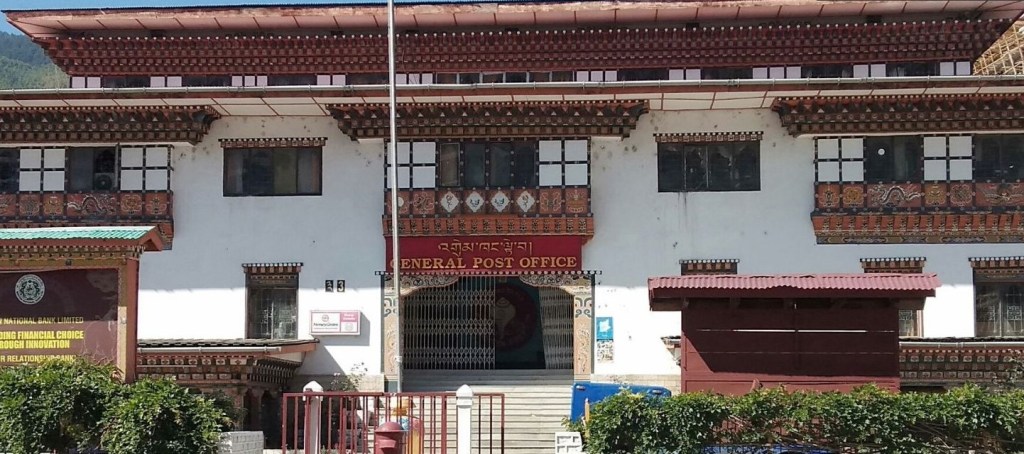
A brief history of Bhutan Post
The history of Bhutan’s postal service began in 1962, the year the country gained independence. The first post office opened in Phuentsholing, followed by branches in Paro and Thimphu. Prior to this, Bhutan had been part of India’s postal and telecommunications system. Initially, basic services like letter mail, postcards, and parcels were offered, with international mail exchange restricted to India. Correspondence within Bhutan and with India utilized a unique transport system involving runners, carriers, mules, and motor vehicles. Despite the challenges posed by the rugged terrain and extreme winter conditions, this system ensured efficient communication and contributed to the country’s development. Today, the Post’s network consists of 38 outlets, including 4 General Post Offices and 34 Post Offices.
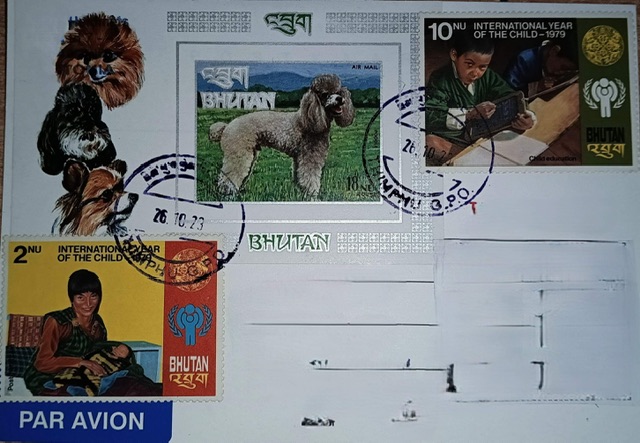
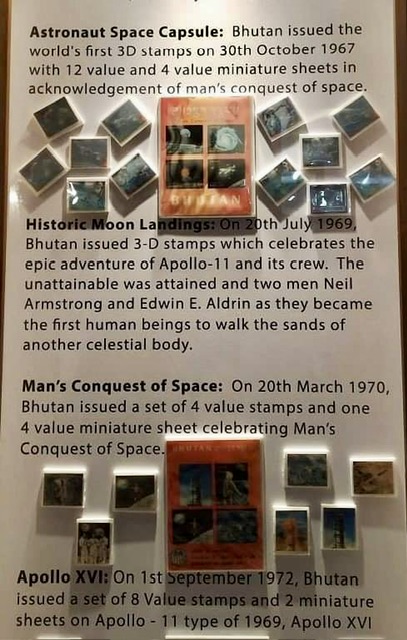
Bhutan’s first postage stamps, issued in 1962, quickly became known for their unique designs and materials. American entrepreneur Burt Todd, who established the country’s philatelic program, used these unconventional elements to draw attention and raise funds for Bhutan’s infrastructure. The World Bank had refused to provide loans, so Todd’s innovative approach, which included the world’s first 3D stamps, lenticular printing, and even scented rose stamps, was crucial. While Bhutan’s stamps have become more traditional in recent years, their early, eye-catching designs continue to captivate collectors.
Sources: BhutanPost, Wikipedia, GNH, WHR
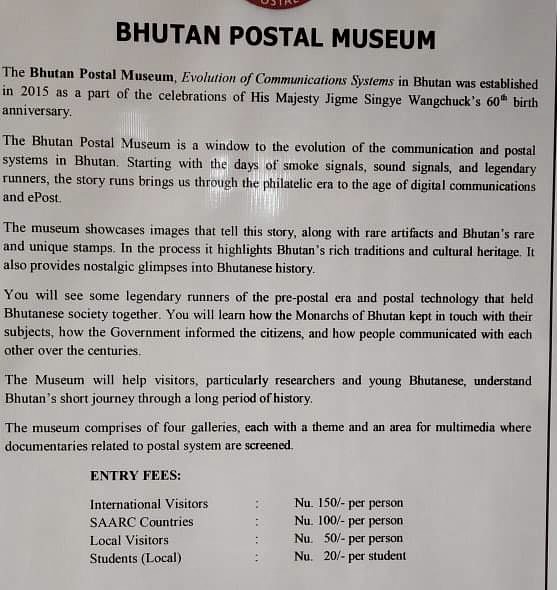
Our trip to Bhutan Post Office
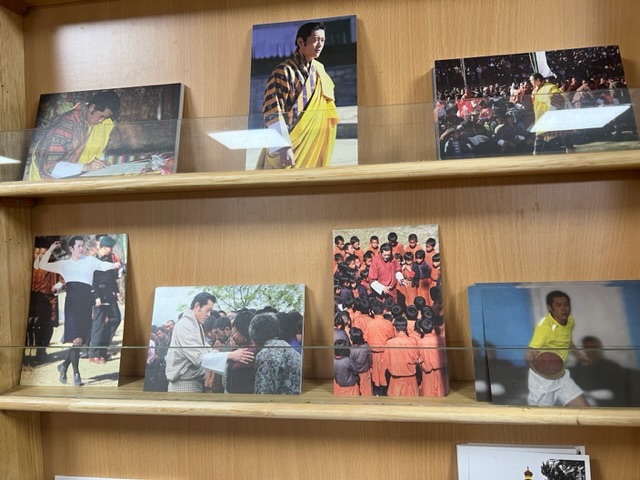
Bhutan was only accessible through organized tours, so we joined a small Estonian group with Albion Reisid. In Thimphu, Bhutan’s capital city, we visited the General Post Office. The building also houses the Bhutan Stamp Museum, which is well worth a visit. The philatelic section of the post office offered a good selection of stamps, locally made souvenirs, and of course, postcards. I was particularly drawn to the postcards featuring Bhutan’s King Jigme Khesar Namgyel Wangchuck. These postcards were printed on high-quality, subtly shimmering paper. This king is deeply loved in Bhutan.
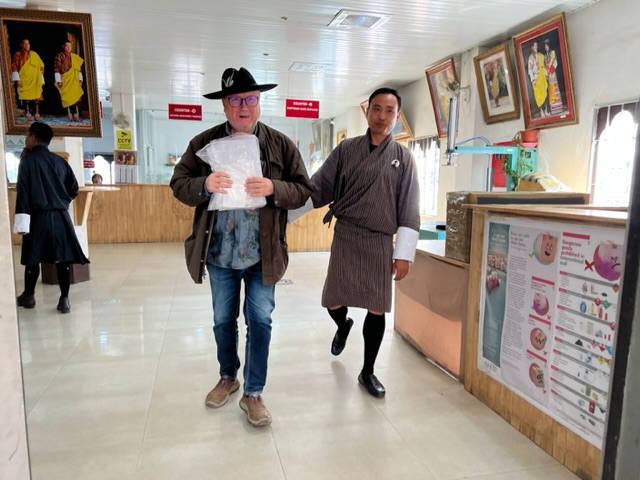
Seeing the number of postcards Andry planned to send and cancel, the post office staff led us to a back room. A separate table was set aside for stamping, and we were treated to suja (butter tea) and Gayzasip (beaten corn snacks).
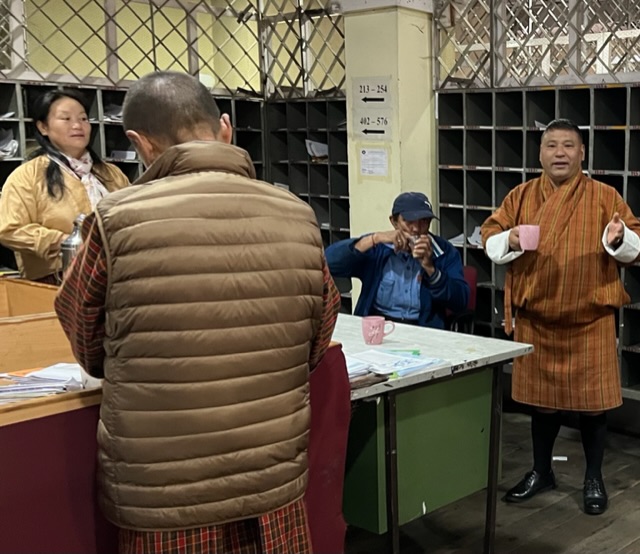
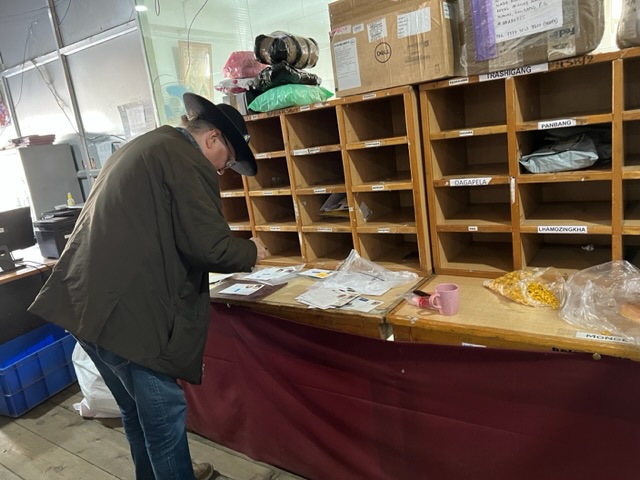
While sending postcards is common for tourists here, those who are also keen on stamping their own are rarer. Andry’s passion for sending postcards took on a whole new meaning in Bhutan. Our guide, impressed by the quantity and fervor with which Andry approached this, called it a Buddhist act, a statement he maintained despite our protests.
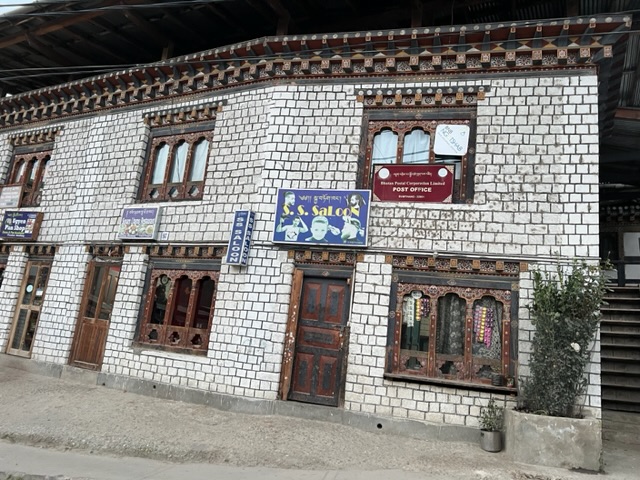
We were hoping to visit more post offices, but our tight schedule in Bhutan and Andry’s unexpected health issue made it impossible. During our trip to Bumthang, Andry experienced a sudden health emergency. He spent a night in the hospital and was evacuated by helicopter to Thimphu, only to leave on his own two feet after a couple of nights. Naturally, I accompanied him. How could he leave the hospital so soon? Was it a miracle, the skill of the doctors, or just good luck? It seems like a combination of all three. This unfortunate incident unexpectedly revealed the kind and smiling face of this not-so-wealthy country. There were more than a few people willing to help without expecting anything in return. Two of these kind people – our local guides – we even immortalized on a stamp.
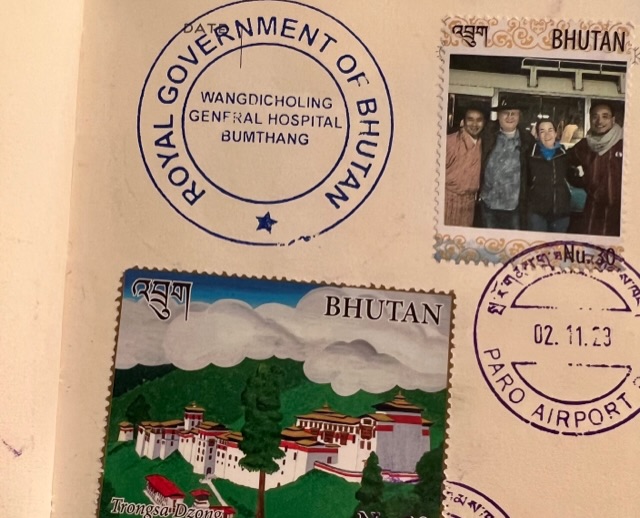
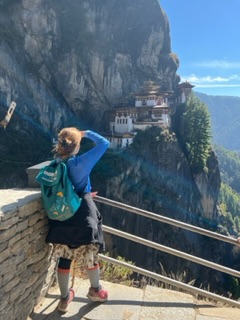
Yes, you can order stamps with your chosen image in some post offices in Bhutan. You can send your own picture to the postal worker or have them take a special photo with a Tiger’s Nest backdrop – a symbol of Bhutan. The process takes about 5-10 minutes, and these new stamps can be used like regular stamps. We finally found time for it at the airport post office just before leaving Bhutan.
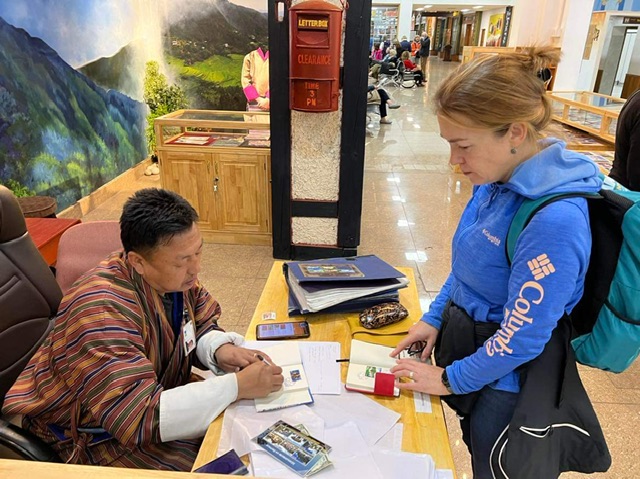
This country has truly gotten under my skin. My heart is full of gratitude but it’s time to leave.
If you’d like to read future entries from this post office diary, you can subscribe here.
 Exploring the Unexpected